June 12, 2026 • Elena Garcia • 10 min reading time • Specs verified June 25, 2026
ULV Cold Fogger Maintenance: Cleaning, Storage, and Clog Prevention That Extends Machine Life
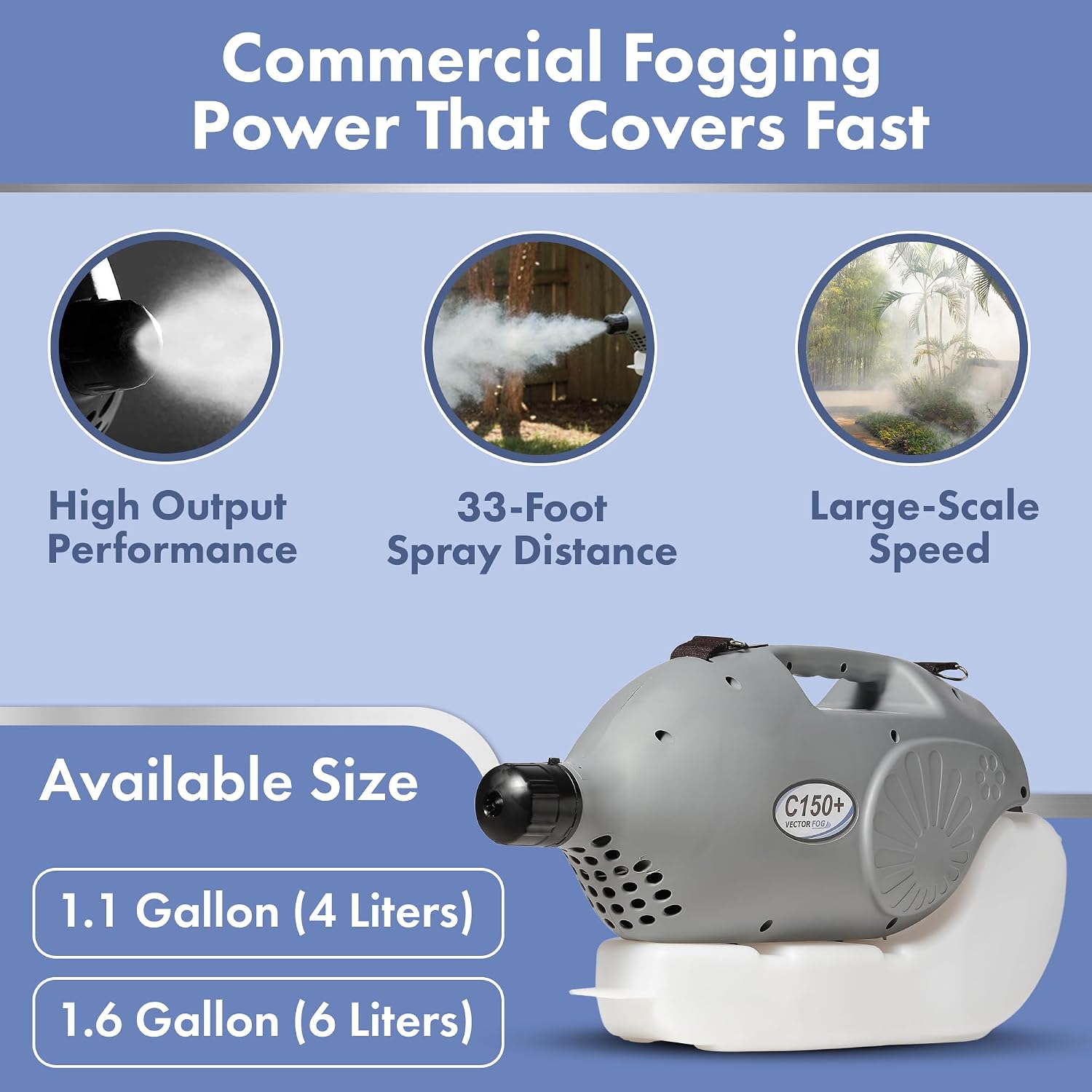
A ULV cold fogger — “ULV” stands for ultra-low volume, meaning it produces an extremely fine mist of tiny droplets rather than a soaking spray — is a precision piece of equipment. That mist is the whole point: droplets in the 10–50 micron VMD (volume median diameter) range stay airborne long enough to contact insects, pathogens, or humidity targets in ways a coarse spray never could. But that same precision engineering is what makes these machines unforgiving when neglected. The internal passages, nozzle orifices, and pump components that create those fine droplets are tight tolerances operating with chemically active liquids. Skip a cleaning cycle, store the unit wet, or run an incompatible solvent through the wrong pump material and you won’t just shorten the machine’s life — you’ll compromise droplet quality and application effectiveness before the hardware visibly fails.
This guide is for operators who’ve moved past the initial learning curve: you understand what your fogger does, you’re running it on a schedule, and now you want to make sure you’re not quietly burning through a $500–$1,500 machine faster than necessary. We’ll cover daily flush protocols, chemical compatibility decisions that matter more than most operators realize, seasonal storage procedures, and clog identification before it becomes nozzle replacement. The math on total cost of ownership heavily favors maintenance discipline — but only if you’re doing the right maintenance.
| EDITOR'S PICK[Hurricane Ultra II Corded ULV H…](https://www.amazon.com/dp/B08RC881KP?tag=greenflower20-20) | Mid-tier[XPOWER F-16 ULV Cold Fogger](https://www.amazon.com/dp/B08B45B27S?tag=greenflower20-20) | Budget pick[C150+ 110V Electric ULV Fogging…](https://www.amazon.com/dp/B00MMX1T94?tag=greenflower20-20) | |
|---|---|---|---|
| Tank capacity | 1 Gal | 1.6 L | — |
| Particle size adj. | 10-50 µm | — | — |
| Spray distance | — | 30+ ft | — |
| Price | $382.99 | $217.81 | |
| See on Amazon → | See on Amazon → | See on Amazon → |
Why ULV Foggers Fail Early (And It’s Almost Never the Motor)
The motor in a quality ULV unit — a Vectorfog C100+, a Pulsfog K-10, or a comparable Hudson commercial unit — is typically the last thing to fail in normal operating conditions. What operators actually replace, often well before the unit’s rated service life, are nozzles, pump diaphragms, check valves, and O-rings. These components share a common failure mode: chemical degradation accelerated by incomplete cleaning and storage with residual formulation left inside the fluid path.
PCT Online’s coverage of ULV equipment care for pest management professionals makes the failure sequence clear: residual pesticide concentrate sitting in the pump chamber between uses attacks elastomer components — particularly nitrile and natural rubber — while mineral deposits from water-based carriers accumulate on nozzle orifice edges and incrementally shift droplet sizing upward. Neither failure is dramatic. Both are invisible until the machine either stops producing consistent output or starts requiring noticeably more formulation per treatment area to achieve the same result.
By the numbers:
- Nozzle orifice replacement cost: $8–$40 per orifice depending on brand
- Pump diaphragm replacement: $25–$120, depending on unit tier
- Full fluid-path flush at end of each use: under 5 minutes, ~$0.10 in isopropyl alcohol or rinse solution
- Typical time-to-first-major-repair without maintenance discipline: 6–14 months
- Typical time-to-first-major-repair with consistent flushing and storage protocol: 3–5 years
That math is not close. The repair you’re avoiding with a 5-minute flush costs 50–100x the rinse fluid.
The Daily Flush Protocol: What to Run, In What Order
Every professional-tier ULV manufacturer — Vectorfog, Pulsfog, and Hudson all address this in their operator documentation — specifies a post-use flush sequence. The details vary by pump material and formulation type, but the logic is consistent.
Step 1: Drain the tank completely. Don’t leave formulation sitting. If you’re mid-job and storing overnight, this still applies. Residual concentrate in a warm tank accelerates degradation of pump seals and can partially polymerize (thicken and stick) inside fluid passages.
Step 2: Run a rinse fluid through the full fluid path. The right rinse fluid depends on what you were running:
-
Water-based formulations (most pyrethrin-based pest control products, water-soluble fungicides): flush with clean water first, then follow with a 70% isopropyl alcohol solution. Water alone doesn’t remove the surfactant film that lets residue bind to internal surfaces. Per the NPIC pesticide storage and disposal guidance from Oregon State University Extension, residue removal is most effective when the rinse solvent matches the polarity of the carrier — which is why water-based products still benefit from an alcohol follow-up.
-
Oil-based or petroleum-carrier formulations (some thermal fogger concentrates adapted for cold ULV use, oil-based insecticides): water is counterproductive. Flush with the same petroleum-based carrier used in the formulation, then follow with a mineral spirits rinse if your pump materials are compatible (see chemical compatibility section below). Never mix water and oil-based rinse sequences in the same flush cycle without a full dry-out period between them.
-
Disinfectants and quaternary ammonium compounds (common in greenhouse and food service fogging applications): these are hard on pump elastomers. Flush with clean water immediately, run a distilled water secondary flush, then follow with isopropyl alcohol. The Vectorfog C100+ operator documentation specifically calls out quat-based disinfectants as requiring a two-stage water flush before alcohol.
Step 3: Let the unit run until the flush fluid has fully cleared the nozzle. Running dry for 15–20 seconds at the end ensures residual flush fluid doesn’t pool in the pump chamber. For units with adjustable flow rates, do this at medium flow — high flow for the dry-run step can stress the pump if it cavitates.
Step 4: Wipe the external nozzle tip. This is the most skipped step and one of the most consequential. Formulation residue on the external nozzle face creates a nucleation point for crust buildup. A dry microfiber wipe or lint-free cloth takes 10 seconds. Pulsfog’s TS-22 technical service bulletin specifically identifies external nozzle-tip buildup as the primary driver of droplet-size drift in units with more than 200 operating hours.
Chemical Compatibility: The Decision That Matters Most Before You Ever Run the Machine
If daily flushing is the most skipped maintenance step, chemical compatibility is the most misunderstood purchasing and operating decision. The pump in your ULV fogger contains seals, diaphragms, and check-valve components made from one or more elastomers — most commonly nitrile (NBR), EPDM, Viton (FKM), or neoprene, depending on the price point and intended application.
Here’s the compatibility landscape that operators consistently get wrong:
Nitrile (NBR) — the most common pump seal material in mid-range ULV foggers — is well-suited to water-based formulations and light petroleum carriers. It degrades rapidly when exposed to concentrated aromatic solvents, chlorinated solvents, or ketones. If you’re using a formulation with a MEK, acetone, or DMSO carrier (occasionally found in specialty greenhouse fungicides), you will destroy a nitrile-sealed pump in a matter of weeks.
EPDM handles water-based and some polar-solvent formulations well but is not petroleum-compatible. Running oil-based concentrates through an EPDM-sealed pump is the inverse of the nitrile problem — a slow, invisible degradation that shows up first as weeping at seal interfaces.
Viton (FKM) — standard in higher-tier units from Vectorfog’s professional line and Pulsfog’s commercial-grade machines — tolerates the widest range of formulations including aromatic solvents, petroleum carriers, and aggressive disinfectants. It’s the reason the premium machines cost more, and it’s worth the premium if your formulation mix is varied.
Decision rule: Before you buy a ULV fogger, list every formulation you’ll run through it. Pull the SDS (Safety Data Sheet) for each product and identify the carrier solvent. Match that against the pump seal material in the manufacturer’s spec sheet. If that information isn’t in the spec sheet, call the manufacturer’s technical support line — every major brand will tell you. This 20-minute exercise before purchase is worth more than any maintenance protocol after the fact, because no amount of careful flushing fixes a fundamentally incompatible pump material.
Seasonal Storage and Long-Term Layup
For pest control operators running seasonal schedules — or greenhouse operations where fogging frequency drops in winter — the storage period is when most preventable damage occurs. Machines left in storage with residual formulation inside the fluid path, or with elastomers dried out from overly aggressive solvent flushing, consistently come back with clogged nozzles or seized pump components.
Pre-storage protocol:
- Complete the full daily flush sequence described above.
- Run a food-grade mineral oil solution (approximately 1–2% in water, or neat for oil-tolerant pump materials) through the fluid path as a final protective coat. This keeps elastomers conditioned and prevents the micro-cracking that leads to seal failure during storage. Hudson’s technical support documentation recommends a light oil run for units with nitrile seals stored more than 30 days.
- Remove the nozzle assembly entirely. Soak removable nozzle components in isopropyl alcohol for 15 minutes, then rinse with distilled water, dry thoroughly, and store them separately in a sealed bag or container. Nozzle orifices stored assembled inside a machine tend to accumulate corrosion at the tip interface even in clean, dry conditions.
- Store the unit upright, in a dry environment, away from temperature extremes. Elastomers degrade faster when stored hot. If your storage space exceeds 85°F for extended periods, prioritize climate control for your equipment the way you would for your formulations.
Return-from-storage startup: Before running your first application load, run a clean-water flush to clear any protective oil residue and check nozzle output against a dark surface in natural light. The droplet cloud should appear uniform — if you see intermittent spitting, large droplets mixed with fine mist, or an off-center spray pattern, the nozzle needs inspection before you proceed. These are the early warning signs of partial clogging, and they’re far easier to address at the flush stage than after you’ve run a full tank of formulation through a degraded nozzle.
Clog Identification and Nozzle Maintenance
Partial clogs are the stealth problem in ULV maintenance. A fully clogged nozzle is obvious — no output. A 15–20% partially clogged orifice changes your VMD without changing your visible flow rate noticeably, meaning you’re applying coarser droplets that settle faster and cover less volume per ounce of formulation, often without ever suspecting the machine is underperforming.
Indicators of a developing partial clog:
- Spray cone appears asymmetric or “lopsided” when viewed against a dark background
- Formulation consumption per treatment area increases without a change in formulation or flow rate settings
- Post-application residue pattern shows uneven deposition
For brass or stainless nozzle orifices — standard on most commercial-tier units — light mechanical cleaning with a soft-bristle nylon brush and a soak in isopropyl alcohol resolves most mineral or residue deposits. Never use metal probes, wire, or drill bits to clear a ULV nozzle orifice. The tolerance on those orifices is measured in microns; mechanical intrusion with anything harder than the nozzle material itself will permanently widen or distort the opening and shift your VMD.
For units with replaceable nozzle discs (common in Pulsfog and some Vectorfog configurations), the cost math generally favors disc replacement over aggressive cleaning attempts once a deposit is severe enough to require mechanical action. At $8–$25 per disc, the risk of compromising droplet sizing with improper cleaning exceeds the cost of replacement.
The If-Then Decision Frame
If you’re running water-based formulations on a regular seasonal schedule: daily isopropyl alcohol flush, seasonal protective oil layup, annual nozzle disc inspection. This protocol extends a mid-range ULV unit to its full rated service life without exception.
If you’re running varied formulations — mixing water-based pest control with oil-based concentrates or aggressive disinfectants: upgrade to a Viton-sealed unit before maintenance discipline can matter, because you’re fighting the material mismatch every cycle. No flush protocol compensates for the wrong elastomer.
If you’re managing a fleet of ULV units for a pest control operation: standardize on one flush protocol, one rinse solvent, and one nozzle inspection interval across all units. Per PCT Online’s fleet-care coverage, the operators with the lowest annual maintenance cost per unit are invariably the ones who’ve removed variability from their maintenance workflows — not the ones using the most sophisticated procedures.
The machines that last five years in hard commercial use are not better machines than the ones that fail in 18 months. They’re maintained machines. The tolerance for skipping steps is lower than most operators assume, and the cost of the habit is paid invisibly — in gradual VMD drift, in formulation waste, and eventually in repair bills that arrive well before they should.