June 22, 2026 • Elena Garcia • 10 min reading time • Specs verified June 25, 2026
Propane Foggers for Backyard Mosquito Season: Black Flag, Burgess, and Repel Honestly Compared
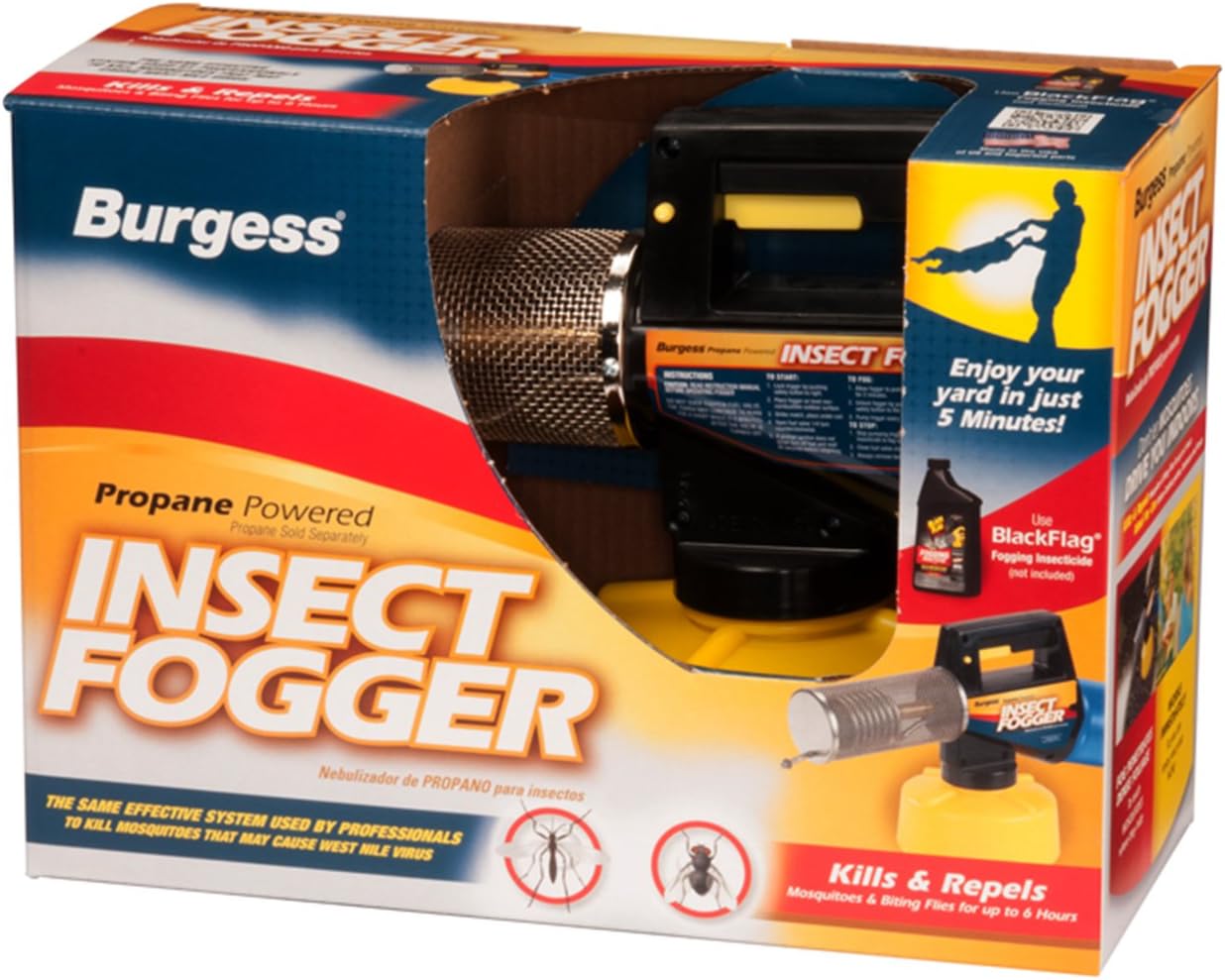
A propane fogger is exactly what the name suggests: a handheld wand connected to a small propane canister that heats liquid insecticide into a visible, fog-like cloud of tiny droplets. Those droplets hang in the air long enough to contact flying mosquitoes on contact, then settle on leaves and grass where they leave a residual barrier that discourages re-entry for hours to a few days. The appeal over sprays or candles is area coverage — a single pass around a half-acre yard before a summer cookout can suppress mosquito activity within 15–30 minutes. If you’re doing this once a month through July and August, the consumable costs are real, the propane handling deserves respect, and the specific unit you choose will determine how efficiently that chemistry actually works. This article maps the three brands that account for the vast majority of residential and light-commercial propane fogger sales — Black Flag, Burgess, and Repel — against each other on the spec details that actually matter.
Why the Brand Choice Matters More Than It Looks
At a glance, these units look nearly interchangeable: a brass nozzle assembly, a propane valve, a heat chamber, and a plastic or metal body. Street prices cluster between $30 and $70. That compression of price and form factor tempts buyers to treat them as commodities and grab whatever’s on the shelf.
That’s a mistake, for two reasons.
First, droplet size (VMD — volume median diameter) varies by nozzle design, and VMD determines whether your fog actually works. Droplets in the 5–30 micron range stay airborne long enough to intercept flying insects; droplets above 50 microns fall out of suspension too quickly and become a ground treatment rather than a contact fog. Thermal foggers in this propane category typically produce droplets in the 0.5–50 micron range, but nozzle wear, fuel pressure, and the viscosity of the insecticide formulation all push that number around. This Old House, in its review of the best mosquito foggers, notes that consistent droplet output is one of the primary variables separating units that perform across a full season from those that degrade by midsummer. A unit with a replaceable brass nozzle lets you maintain consistent output; a unit with a plastic or chrome-plated nozzle degrades faster under repeated heat cycling.
Second, chemical compatibility is the invisible cost driver. The active ingredients in mosquito fogger concentrates — most commonly pyrethrin (a natural extract), permethrin (a synthetic pyrethroid), or malathion (an organophosphate) — behave differently inside the heat chamber. Oil-based carriers can carbon up a heat tube faster than water-based formulations. If your fogger body or internal seals are incompatible with the solvent in a particular concentrate, you’re accelerating component failure. The National Pesticide Information Center, in its fogging insecticides fact sheets published at npic.orst.edu, makes clear that label compliance isn’t just a legal requirement — it functions as a maintenance protocol that directly affects the service life of your equipment.
The Three Contenders: An Honest Spec Comparison
Black Flag 190095 Propane Insect Fogger
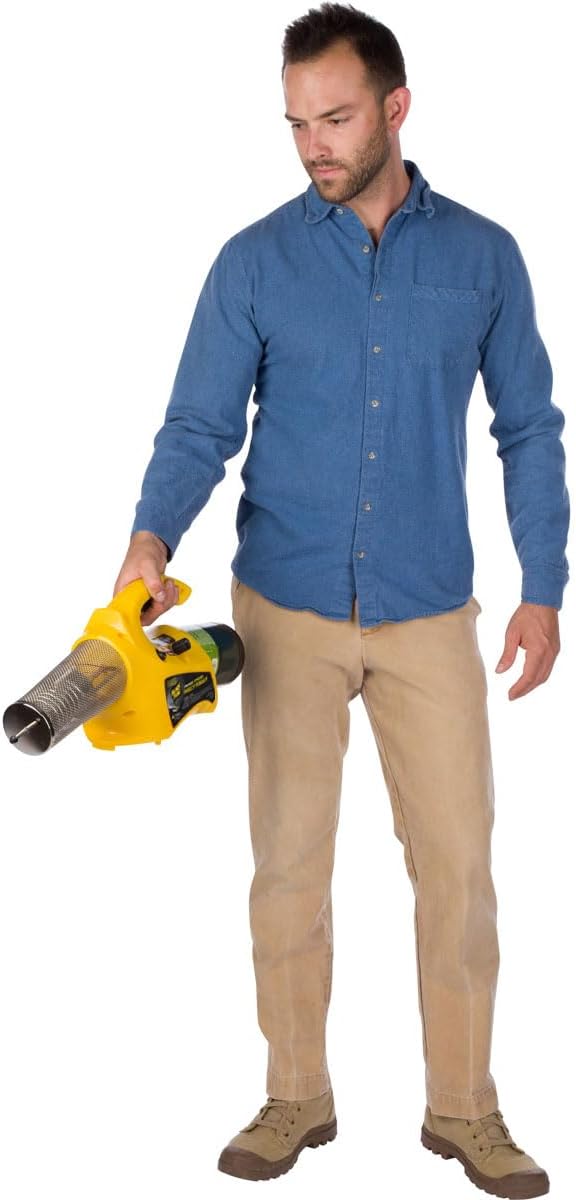
The Black Flag 190095 is the market-share leader by a wide margin. It’s sold through virtually every hardware and big-box channel, and its brand recognition among backyard buyers is effectively universal. Owners consistently report smooth fuel flow, a reasonably tight fog cloud at 15–18 feet, and compatibility with a wide range of concentrate formulations including Black Flag’s own branded concentrate and third-party pyrethrin-based products.
The body is primarily plastic with a metal heat chamber. That plastic body is adequate for seasonal residential use but shows UV degradation and handle stress-cracking in multi-year owner reviews — a pattern consistent with standing concerns about UV light degradation of polymer components in units stored outdoors or used across extended seasons. Here, the unit is handheld and typically stored indoors between sessions, so that’s a manageable tradeoff for the price point.
Published specs put output at roughly 1 gallon per 10 minutes of operation. The nozzle is brass, which is good news for longevity and chemical resistance. The propane valve accepts standard 14.1 oz or 16.4 oz camping-style cylinders, which are available at essentially every hardware, sporting goods, and home improvement retailer.
The honest tradeoff: you’re paying for distribution ubiquity and a well-documented consumable ecosystem. Replacement concentrate is easy to find. Replacement parts for the nozzle assembly are stocked at most hardware stores. If you’re a pest-control operator running these as disposable-season tools rather than capital assets, the Black Flag’s supply chain advantage is genuinely worth something.
Black
$74.88
In stock on Amazon
Check price on AmazonBurgess 1443 Propane Insect Fogger
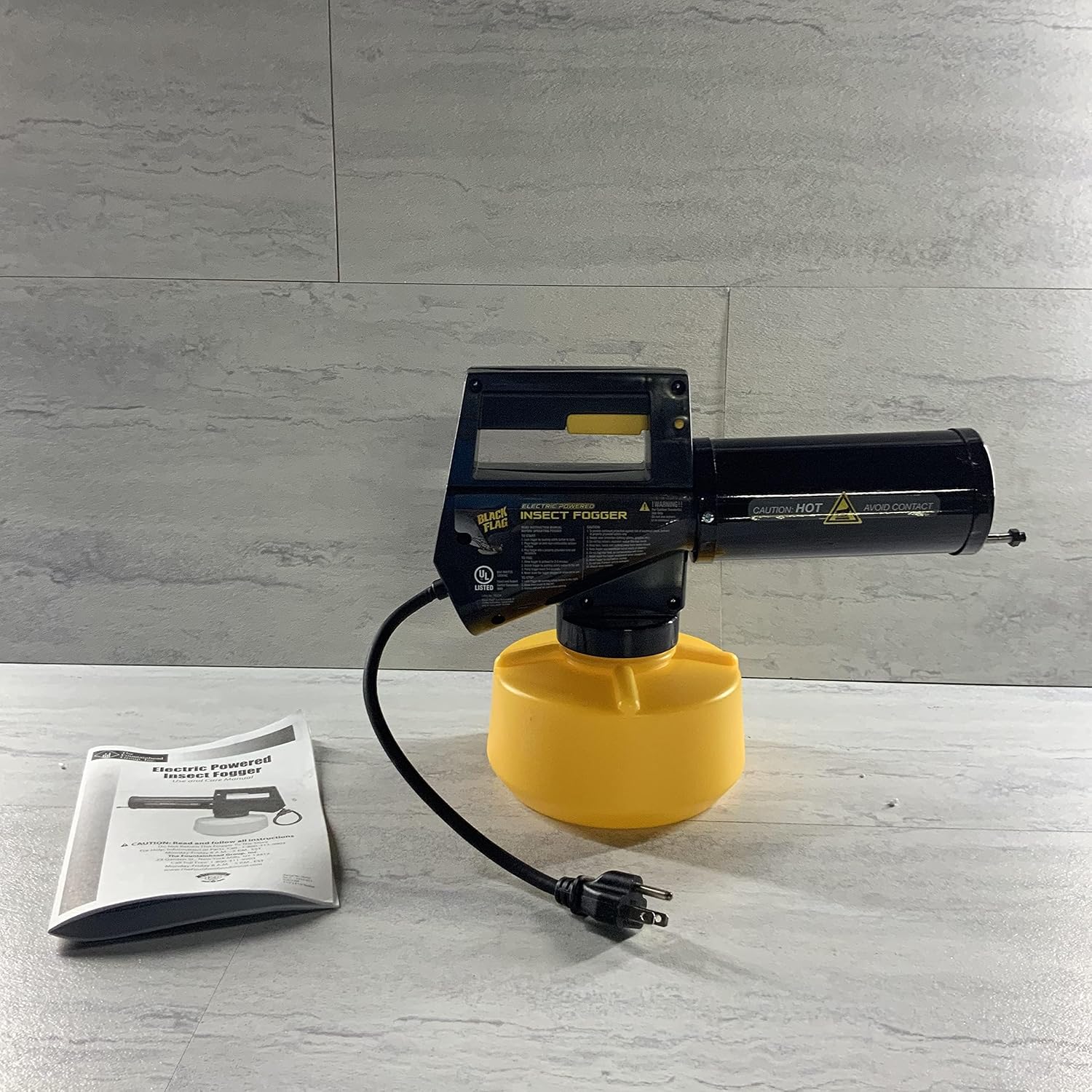
The Burgess 1443 is the other volume player, often positioned as the “professional” option in consumer channels — a label that’s partly earned and partly marketing. The body is metal-dominant, with die-cast aluminum at the tank cradle and nozzle assembly. That construction measurably changes the durability profile for buyers running multiple applications per week through a full season. Operators in multi-season owner reviews consistently flag the Burgess as holding up better through 30-plus applications than equivalent-priced plastic-body units.
Specs: rated output is similar to the Black Flag at approximately 1 gallon per 10 minutes. The fog cone at the nozzle is reported by owners and noted in the This Old House best mosquito foggers review as slightly tighter and more directional than the Black Flag’s, which matters if you’re fogging a screened porch or under a deck where you want to minimize overspray onto furniture or food-prep surfaces.
The Burgess is labeled for use with water-based and oil-based insecticide concentrates, but the manufacturer documentation recommends against high-solvent formulations — specifically those with petroleum distillate carriers above certain concentrations. Per EPA pesticide registration guidance (epa.gov, Pesticide Registration overview), label compliance here means checking the insecticide label for heat-chamber compatibility, not just the generic “fogger use” designation. This is where buyers get into trouble: they assume all fogger concentrates work in all foggers, when in fact the carrier chemistry matters as much as the active ingredient.
The honest tradeoff: the Burgess costs $5–$15 more at retail than comparable Black Flag units (prices as of May 2026). That premium buys a more durable chassis if you’re running 20-plus applications across a season. If you’re doing 4–6 applications on a standard suburban lot, the incremental durability is harder to justify on a pure cost-per-use basis.
Black
$99.89
In stock on Amazon
Check price on AmazonRepel Propane Fogger
Repel’s propane fogger occupies a slightly different market position — it’s most commonly bundled or sold alongside Repel-branded pyrethrin concentrate, and the system is designed with that chemical pairing in mind. That’s not a criticism; it’s a design philosophy with real merit for buyers who want a low-friction purchase and don’t want to cross-reference compatibility tables.
The hardware specs are broadly comparable to the Black Flag unit: plastic body, brass nozzle, standard propane canister fitting. Where reviewers distinguish the Repel is on ignition reliability — the piezo igniter in the Repel unit draws consistently better marks than the Black Flag in multi-season use. That’s a small-but-real operational quality-of-life difference if you’re igniting the unit in humid or windy conditions, where a balky igniter becomes a genuine frustration.
The Repel system’s key limitation is concentrate flexibility. The unit is optimized for Repel’s own water-based pyrethrin formulation, and third-party oil-based concentrates have produced more variable results in owner reviews — higher rates of clogging and inconsistent fog density. If you’re already using Repel concentrate and happy with it, this is a non-issue. If you want the flexibility to run different active ingredients — switching between pyrethrin in the spring and permethrin late-season as mosquito populations shift — the Black Flag or Burgess give you more headroom.
The honest tradeoff: Repel is the right call if you want a turnkey ecosystem and Repel concentrate is already in your rotation. It’s the wrong call if you value chemical flexibility or plan to run the unit hard across a commercial application schedule.
MGK
$196.09
In stock on Amazon
Check price on AmazonSide-by-Side at a Glance
| Specification | Black Flag 190095 | Burgess 1443 | Repel Propane Fogger |
|---|---|---|---|
| Approx. retail price (May 2026) | $35–$45 | $45–$60 | $35–$50 |
| Body material | Plastic / brass nozzle | Metal-dominant / brass nozzle | Plastic / brass nozzle |
| Output rate | ~1 gal / 10 min | ~1 gal / 10 min | ~1 gal / 10 min |
| Concentrate flexibility | High | Moderate–High | Moderate (optimized for Repel) |
| Igniter reliability (owner reports) | Average | Average | Above average |
| Best application volume | 4–8 seasonal uses | 20+ seasonal uses | 4–8 seasonal uses, single-brand |
| Best for | Supply chain access; light seasonal use | Multi-season durability; heavy use | Single-brand ecosystem; low setup friction |
Chemical Compatibility: The Decision Variable Nobody Reads
This is the section that actually separates good purchasing decisions from expensive mistakes, and it doesn’t get enough attention at the point of sale. The National Pesticide Information Center’s fogging insecticides fact sheets (npic.orst.edu) address this directly: the carrier solvent in a concentrate interacts with the heat chamber and the material components of the fogger body in ways that are separate from — and sometimes more consequential than — the active ingredient interaction.
The core rule: match your concentrate formulation type to your fogger’s material spec. Oil-based concentrates (common with malathion and some permethrin products) run hotter through the heat chamber and are more aggressive on polymer seals. If your fogger body includes any PVC or lower-grade plastic in the fuel line or concentrate pathway, you’re accelerating seal failure.
All three units reviewed here use brass nozzles — brass is compatible with pyrethrins, pyrethroids, and most organophosphates at label concentrations. The variance is in the body construction and the concentrate pathway materials that buyers can’t see from the outside of the box.
Practical checklist before you buy:
- Identify which active ingredient(s) you plan to run. CDC vector control guidance (cdc.gov, Mosquitoes and Disease section) notes that pyrethrin and permethrin remain the most common residential-scale active ingredients, with malathion appearing more often in larger-scale or municipal applications.
- Check whether your chosen concentrate is water-based or oil-based. This information appears on the product label under “Inert Ingredients” or “Carrier” — not always on the front of the bottle.
- Match that to the manufacturer’s compatibility statement for the fogger. All three brands publish this; it’s in the product documentation, not just on the retail box. If you’re buying online, look for the downloadable instruction PDF, not the marketing copy.
If you’re procuring for a light-commercial or multi-property operation where you’re running different chemistries across different treatment scenarios, the Burgess’s metal-dominant construction gives you more margin for error on compatibility edge cases.
The Decision Rules
If you’re a backyard homeowner doing 4–8 applications per season and you want to buy concentrate off the shelf at any hardware store without consulting a compatibility table: the Black Flag 190095 is the pragmatic call. The supply chain is unmatched, the price is right, and the plastic body will survive its useful life at that application rate without issue.
If you’re running 20-plus applications per season — a dedicated backyard entertainer, a small hospitality venue doing weekly treatments, or a pest-control operator using propane foggers as light-duty tools in a larger fleet — the Burgess 1443 earns its price premium. The metal construction, multi-season durability documented in operator reviews, and slightly tighter fog cone justify the $10–$20 upcharge when amortized across a real workload.
If you want the lowest-friction setup and you’re already using Repel concentrate: the Repel unit is optimized for exactly that pairing, and the superior igniter reliability is a genuine daily-use quality-of-life advantage. Just don’t plan to mix in oil-based chemistries later without checking compatibility carefully.
One final note that cuts across all three: propane foggers are a seasonal suppression tool, not a replacement for source reduction (eliminating standing water) or a professionally engineered misting system for permanent perimeter control. CDC vector management guidance is consistent on this point — integrated approaches that combine source elimination, larviciding, and adult mosquito suppression consistently outperform single-method treatments. These units earn their place in the toolkit. Knowing their ceiling is part of buying them honestly.