May 21, 2026 • Elena Garcia • 9 min reading time • Specs verified June 25, 2026
Patio Misting Line Kits from 26 to 120 Feet: Brass Nozzle Count, UV Tubing, and What the Cheap Kits Skip
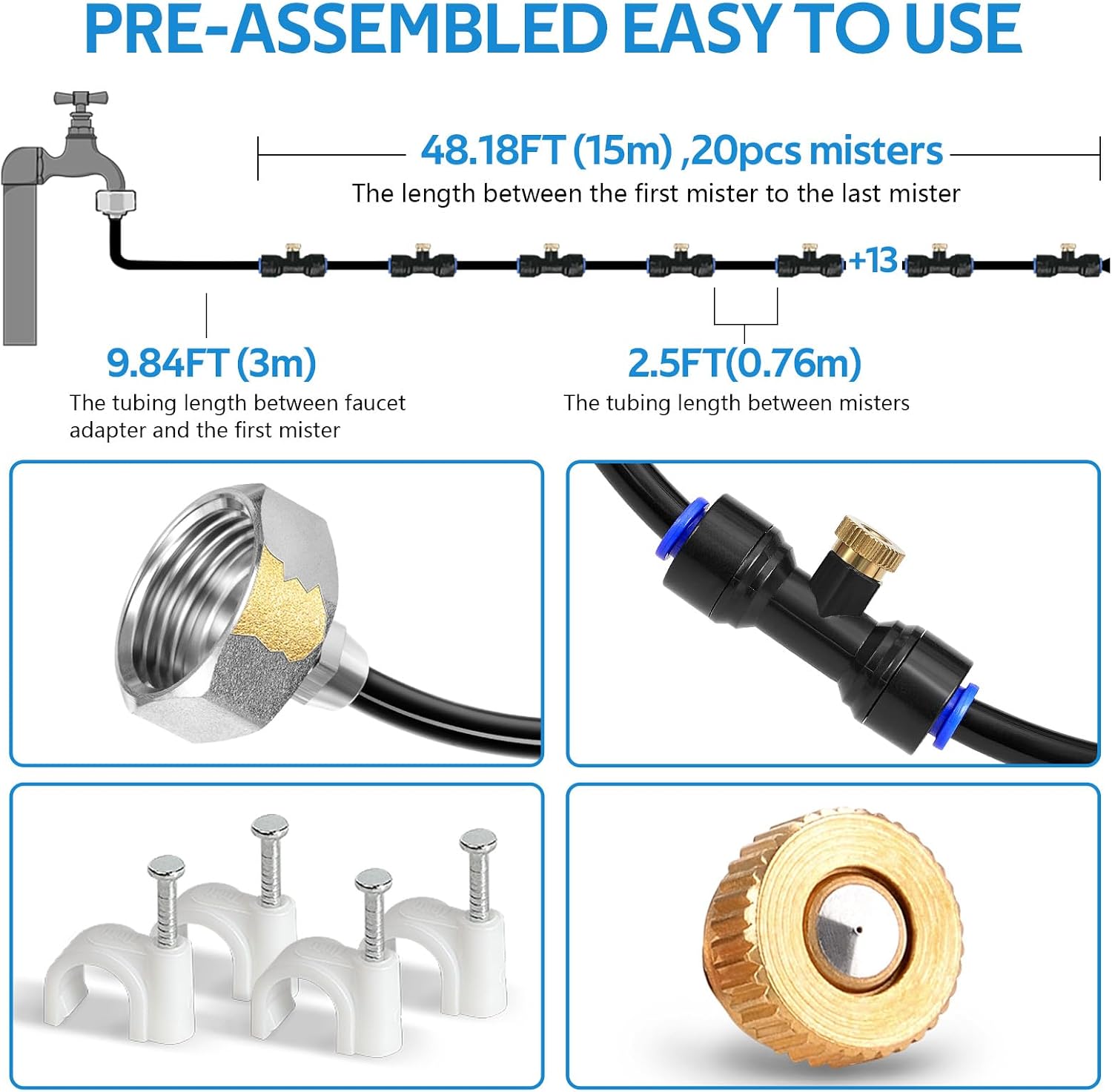
A patio misting system is exactly what it sounds like: a loop or line of small-diameter tubing — usually ¼-inch or ⅜-inch polyethylene — that runs along a pergola, fence, or umbrella frame and delivers a fine spray of water through brass or plastic nozzles (the small threaded inserts that atomize the water into tiny droplets). When those droplets evaporate in warm, dry air, they pull heat with them, dropping the perceived temperature by 10–25°F in the right conditions. The operative phrase is the right conditions: evaporative cooling works best in low-to-moderate humidity. In Phoenix or Sacramento in July, you’ll feel the difference in thirty seconds. In coastal South Florida in August, the mist will feel more like light rain.
If you’re reading this as a first-time buyer, the short version is this: a 26-foot kit handles a small covered patio or pergola bay; a 120-foot kit can line a commercial restaurant terrace or wrap a full backyard pavilion. The difference between a $40 kit and a $180 kit at the same length is rarely coverage — it’s almost always materials, nozzle quality, and the fittings that keep the system from weeping, dripping, or failing after one UV-soaked summer. This article walks through how to read those differences, what the spec sheets actually tell you, and where the budget kits quietly cut corners that only show up months later.
The Length Question: Matching Line Size to Your Application
Kit lengths are typically sold in nominal increments: 26 ft, 35 ft, 50 ft, 65 ft, 75 ft, and 100–120 ft. Before picking a length, the more important number is nozzle count and spacing. Most residential kits space nozzles every 18–24 inches; commercial-grade kits often run at 12–18 inches for denser coverage. That spacing choice drives how many nozzles a given length contains, which in turn drives the water demand on your supply line.
By the numbers:
- 26-ft kit at 24-inch spacing → ~13 nozzles, typical flow ~0.5–0.8 GPH at 40 PSI
- 50-ft kit at 18-inch spacing → ~33 nozzles, typical flow ~1.2–2.0 GPH at 40 PSI
- 120-ft kit at 18-inch spacing → ~80 nozzles, typical flow ~3.0–5.0 GPH at 40 PSI
That flow range matters because standard residential water pressure runs 40–80 PSI, but most misting kits are optimized for 40–60 PSI without a booster pump. Owners of 100+ ft runs consistently report that nozzle output at the far end of a long line drops noticeably unless the supply pressure is on the high end or a low-pressure pump is added. If you’re evaluating a kit beyond 75 feet, confirm whether it’s rated for direct hose-bib connection or whether the manufacturer assumes a pump.
UC Cooperative Extension’s evaporative cooling guidance (published under UC Davis’s agricultural engineering resources) notes that nozzle spacing tighter than 18 inches in residential outdoor settings typically over-saturates the target zone before evaporation can occur, producing wet surfaces rather than cooling effect. Spacing out to 24 inches in moderate-humidity climates often performs better than crowding nozzles — a counterintuitive point that most kit marketing ignores.
Nozzle Material: Where the Spec Gap Shows Up First
The single most consequential material decision in any misting kit is the nozzle — specifically the orifice insert. There are three tiers in the market:
Plastic nozzles (polyacetal or ABS): Found in the majority of kits under $60. They’re light, cheap to manufacture, and fine for seasonal use. The failure mode isn’t immediate — it’s progressive. Over 12–18 months of UV exposure and repeated wet/dry cycling, plastic orifices widen slightly as the material fatigues and the insert loses its press-fit seal. Droplet size (VMD — volume median diameter, meaning the droplet size at which half the spray volume falls above and half below) climbs from the target 30–50 micron range into 80–120 microns, which you’ll experience as “getting wet” rather than “feeling cooler.” Owners of budget kits across aggregated reviews consistently describe this degradation curve — the system works great for one or two seasons, then starts dripping.
Brass nozzles: The material step that actually changes long-run outcomes. Brass holds its orifice geometry through thermal cycling and UV exposure in a way plastic simply doesn’t. It’s also compatible with the dilute chemical additives (algaecides, line-flush compounds) that operators use to keep tubing clean. Spec sheets on mid-tier kits from brands like Orbit, MistCooling residential line, and Fogco’s entry-level outdoor series put brass nozzles in the 0.008–0.012 inch orifice range, producing VMD droplets in the 30–50 micron band at 40–60 PSI — right in the sweet spot for evaporative cooling without wetting furniture. This Old House’s outdoor misting system guide explicitly calls out brass nozzles as the minimum for any installation intended to last more than two seasons.
Stainless steel nozzles: Found in commercial-grade kits and high-pressure systems (above 100 PSI). Overkill for a residential low-pressure patio line — but worth knowing about if you’re evaluating a kit that advertises “stainless” as a premium justification. At low pressure, stainless offers no meaningful performance advantage over brass; it matters primarily at high-pressure misting (500–1,000 PSI) where erosion forces are significant.
The decision rule here is straightforward: if the kit is a permanent or semi-permanent installation, brass nozzles are the minimum spec worth buying. If it’s a single-season rental setup or a temporary event rig, plastic is acceptable.
UV Tubing: The Component That Fails Silently
Polyethylene tubing is the circulatory system of every patio misting kit, and it’s the second place cheap kits cut corners in ways that aren’t visible at purchase. Standard PE tubing without UV stabilization becomes brittle in direct sun exposure within 12–24 months, depending on climate. In the Southwest U.S. and any tropical installation, that timeline compresses. The failure isn’t usually a catastrophic split — it’s micro-cracking along the outer surface that eventually causes the tubing to weep at fittings and snap when you try to reposition it.
UV-stabilized polyethylene — typically black-pigmented to absorb rather than transmit UV radiation — is the correct material for any outdoor misting line. Quality kits from mid-tier manufacturers specify UV-resistant or UV-stabilized PE tubing explicitly. Budget kits often list “polyethylene tubing” with no further specification; that’s the tell.
Greenhouse Grower’s coverage of humidity management in commercial greenhouse installations notes that UV degradation of plastic distribution lines is one of the top causes of premature system replacement in outdoor installations — a finding that maps directly to patio misting lines, which face similar or worse UV exposure with less structural protection than greenhouse-mounted systems.
A related material consideration is fitting construction. Compression fittings (the push-in connectors that join tubing sections and attach nozzle tees) should be rated for continuous use at the system’s operating pressure. Cheap kits use thin-wall plastic compression bodies that work loose over time. Better kits use acetal or nylon fittings with O-ring seals; premium kits use brass compression bodies throughout. For residential low-pressure systems, acetal fittings with O-rings are adequate and represent the performance-per-dollar sweet spot — full brass fittings add cost without changing outcomes at 40–60 PSI.
What the Cheap Kits Skip: A Practical Checklist
When you’re evaluating two kits at the same nominal length and there’s a $60–$100 price gap between them, here’s what to look for:
1. Filter / strainer at the inlet. Water supply lines carry mineral deposits and debris that clog nozzle orifices quickly. Quality kits include an inline filter at the hose-bib connection. Budget kits often omit it entirely, which means your 0.010-inch orifices start clogging within weeks in hard-water areas. This is a $5–$10 part that changes the system’s maintenance burden dramatically. EPA guidance on irrigation system maintenance (EPA water efficiency for landscapes resources) recommends inline filtration at 155 mesh or finer for any micro-irrigation or misting application.
2. End cap with pressure release. The terminal end of the misting line needs a proper end cap to maintain line pressure and direct flow through the nozzles. Cheap kits include a basic crimp cap; better kits include a screw-on end cap with a small bleed port that releases residual pressure when the system shuts off. That pressure release matters because trapped water in a hot misting line can develop enough pressure to push fitting connections loose over time.
3. Nozzle count per foot of line. Read the actual nozzle count in the spec, not just the length. A 50-foot kit with 15 nozzles and a 50-foot kit with 28 nozzles are very different systems. Marketing copy often leads with length; the nozzle count is buried in the product description or only visible on the component list.
4. Stated operating pressure range. A kit spec’d for 30–60 PSI gives you useful information. A kit with no stated operating pressure range is telling you something about how the manufacturer thinks about product performance.
5. Chemical compatibility disclosure. If you ever plan to run a dilute algaecide or mineral-inhibitor solution through the line (standard practice for preventing biofilm in warm-climate installations), you need tubing and fittings that are compatible with the specific chemistry. NPIC (National Pesticide Information Center) guidelines on dilute pesticide and algaecide application note that acetal fittings have limited compatibility with some oxidizing biocides; brass and stainless fittings are broadly compatible. This matters more for commercial installations than residential, but it’s worth knowing before the system is already installed.
The Decision Frame: If X, Then Y
If you’re buying for a single covered patio bay (12–20 linear feet of pergola edge) and want a two-season option with minimal investment, a 26-ft plastic-nozzle kit in the $35–$55 range is rational — just plan to replace nozzles or the whole kit after two summers.
If you’re equipping a full deck perimeter (40–80 linear feet) as a permanent fixture, a brass-nozzle, UV-stabilized kit with inline filtration is the correct specification. Expect to spend $90–$160 for a quality 50-ft kit or $140–$220 for a quality 75-ft kit. The cost-per-year math favors the better kit within 24 months, and you avoid a full reinstallation pulling staples or clips from your pergola rafters.
If you’re speccing a commercial terrace, restaurant patio, or event venue at 100+ feet, the residential kit category — even the premium end — is the wrong procurement frame. You’re looking at zone-controlled systems with a dedicated pump, pressure regulation per zone, and commercial-grade stainless or brass nozzles rated for continuous duty. Brands like Fogco, Mistcooling, and CoolMist publish commercial line specs for exactly this use case, and the per-foot cost of a properly engineered installation typically runs $8–$25/foot installed depending on complexity.
For the majority of residential buyers in the 35–75 foot range: brass nozzles, UV tubing, inlet filter, acetal fittings. That combination is available in the market at a price point that doesn’t require commercial procurement, and owners consistently report multi-year trouble-free operation when those four criteria are met.
The length on the box is the least important number on the label. Nozzle material and tubing specification are the ones that determine whether you’re buying a system or buying a problem.