May 26, 2026 • Elena Garcia • 9 min reading time • Specs verified June 25, 2026
Fogging Insecticide Selection: Matching Chemical Formulation to Your Fogger Type and EPA Label Requirements
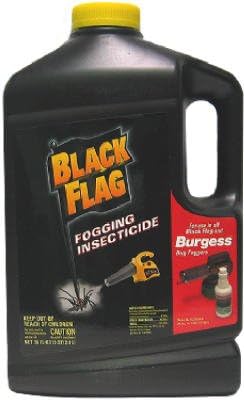
If you’ve ever stood in front of a shelf of insecticide concentrates wondering which one to pour into your fogger, you’re not alone — and the stakes are higher than most people realize. A fogger (any machine that breaks liquid insecticide into a fine mist or aerosol cloud for pest control) is only as effective as the chemical formulation it’s paired with. Pour the wrong product into a ULV cold fogger (a machine that uses high-speed spinning discs or airflow to shatter liquid into microscopic droplets without heat) and you can clog nozzles, corrode pump seals, or — most seriously — apply a pesticide in a way that violates its EPA-mandated label, which is a federal offense under FIFRA (the Federal Insecticide, Fungicide, and Rodenticide Act). This guide walks through how to match formulation type to fogger type, what the label actually requires of you, and where the real-world tradeoffs live for operators building a repeatable, defensible program.
Why Formulation Type Is Not a Minor Detail
The instinct when buying insecticide is to focus on the active ingredient — permethrin, bifenthrin, malathion, pyrethrin — and treat the formulation as packaging. That instinct will get you into trouble. Formulation refers to how the active ingredient is dissolved, suspended, or emulsified in a carrier fluid, and that carrier determines everything downstream: droplet behavior, volatility, pump material compatibility, and legal application method.
The three formulation categories that matter most for fogger operators:
Oil-based concentrates (petroleum carrier): These are the workhorses of thermal fogging and ULV applications targeting mosquitoes and flying insects outdoors. The petroleum carrier — typically a highly refined horticultural or diesel-adjacent oil — atomizes well under heat or high airflow and produces the low-VMD (volume median diameter, the droplet size at which half the spray volume is in smaller drops and half in larger) clouds that drift through a target zone. VMD in the 5–25 micron range is standard for flying insect control via ULV. The tradeoff: oil-based products are harder on certain pump seals (particularly nitrile) over time, and they leave a residue profile that matters in food-handling or enclosed environments.
Water-based / aqueous concentrates (EC or SC formulations): Emulsifiable concentrates (EC) mix a solvent-based active with an emulsifier so it disperses in water; suspension concentrates (SC) keep the active ingredient as particles suspended in water. These are increasingly common because they’re lower-VOC, easier to handle, and better tolerated by EPDM seals common in premium ULV machines. The tradeoff: water-based formulations produce larger, heavier droplets at equivalent pressure settings — operators often need to dial up pressure or reduce flow rate to stay in the target VMD window. They also tend to settle out in standing tank lines, so flush protocols matter more.
Ready-to-use (RTU) formulations: Pre-diluted to label-specified concentration. These eliminate mixing error and are appropriate for backpack ULV sprayers and entry-level thermal units. The cost-per-acre math is punishing at scale — but for a pest control operator doing residential callbacks or a homeowner with an $80–$150 battery fogger, RTU removes a significant compliance risk: you can’t accidentally over-concentrate what’s already at label dilution.
The EPA Label Is the Law — Here’s What That Means Operationally
The phrase “the label is the law” gets repeated often enough to lose meaning. Let’s be specific about what it actually constrains:
Application method must match label language. If a product’s label says “apply with thermal fogger or ULV equipment,” that’s a grant of permission — but it also excludes methods not listed. A product labeled only for “hydraulic spray application” cannot legally be run through a ULV fogger regardless of how well it atomizes. Per the EPA’s Label Review Manual, the application method section must specify equipment type, and using unlisted equipment constitutes misuse under FIFRA Section 12(a)(2)(G).
Concentration and dilution ratios are not suggestions. Labels specify dilution ranges (e.g., “dilute 1–2 oz per gallon for ULV application”). Running above the maximum label rate — even if you believe it will be more effective — is a federal violation. This matters particularly for pyrethroid-based products where operators sometimes believe higher concentration compensates for suboptimal droplet size. It doesn’t compensate, and it’s illegal.
Site restrictions are absolute. Many mosquito fogging labels differentiate between “outdoor residential,” “recreational areas,” “agricultural,” and “near water bodies.” A product labeled for outdoor use only cannot be fogged through a greenhouse, even if the active ingredient would be effective. The UC Davis Extension pesticide application materials make this hierarchy explicit: label site restrictions override operator judgment in every case.
Personal protective equipment (PPE) requirements are non-negotiable. The label specifies minimum PPE for mixing and application. Running a thermal fogger on a public-access property without posted notification periods (where required) or without appropriate respiratory protection during mixing is a compliance failure, not a preference call.
Matching Fogger Type to Formulation: The Decision Matrix
| Fogger Type | Preferred Formulation | VMD Target | Key Compatibility Risk |
|---|---|---|---|
| Thermal / pulse-jet fogger | Oil-based concentrate | 5–15 µm | Viton seals degrade with some aromatic solvents; confirm carrier compatibility |
| Cold ULV (rotary disc) | Oil-based or aqueous EC/SC | 10–30 µm | Nitrile seals + petroleum carrier = accelerated wear; EPDM preferred |
| High-pressure misting system (permanent) | Aqueous EC/SC only | 30–80 µm | No oil-based in stainless nozzle manifolds — clogs and residue buildup |
| Backpack / handheld ULV | RTU or aqueous EC | 20–50 µm | Low-pressure pumps can’t adequately atomize high-viscosity oil concentrates |
By the numbers:
- Flying insect ULV target: VMD 5–25 µm (CDC vector control guidance)
- Residual surface application target: VMD 100–400 µm
- Typical high-pressure misting system operating range: 800–1,500 PSI, VMD 30–80 µm
- Thermal fogger typical output VMD: 5–15 µm (manufacturer-rated, Pulsfog and Vectorfog published specs)
Thermal foggers and oil-based formulations
Thermal foggers (brands like Pulsfog and Hudson are well-regarded in the licensed applicator market) use a heated combustion chamber to flash a metered flow of oil-based insecticide into a dense, visible cloud. This is why the oil carrier matters: water-based formulations introduced into a thermal fogger combustion circuit don’t flash properly — they partially vaporize, produce inconsistent droplet sizes, and can damage the heat exchanger. Operators running thermal units for large-scale vector control (municipal mosquito programs, agricultural perimeter applications) should confirm that any new formulation specifies thermal fogger compatibility on the label before switching suppliers.
Cold ULV foggers and the seal compatibility problem
ULV cold foggers — the Vectorfog C100 Pro and similar units populate this segment — use high-velocity airflow or spinning discs to shatter liquid into droplets without heat. These machines are more formulation-flexible in principle, but seal material is the hidden variable. Operators in long-run reviews on pctonline.com and similar trade outlets consistently flag seal degradation as the primary maintenance cost driver in commercial fleets running oil-based chemistries at high volume. The practical rule: if you’re running a petroleum-carrier formulation more than three days per week through a ULV unit, confirm the pump seals are Viton (fluoroelastomer) rather than standard nitrile. Viton seals run 40–80% more expensive per rebuild, but the cost-per-use math favors them decisively over a season.
High-pressure permanent misting systems
Permanent misting systems — the Fogco, Mistcooling, and CoolMist installations that go into outdoor dining, equine facilities, and greenhouse perimeters — are engineered for water or aqueous-base chemicals. The stainless steel nozzles and poly tubing manifolds that make these systems durable are not compatible with petroleum carriers. Running oil-based insecticide through a permanent misting system will void manufacturer warranties, degrade tubing, and create a residue film on nozzle orifices that destroys droplet consistency within a few applications. For insect control on permanent misting infrastructure, aqueous suspension concentrate (SC) pyrethroid formulations are the correct tool — confirm with the system manufacturer that the specific product’s carrier and pH are within system tolerances before first use.
Where Operators Actually Make Mistakes (and How to Avoid Them)
Mistake 1: Buying the insecticide before checking the fogger’s material spec sheet. The sequence should run in reverse: identify your target pest and legal application site, select a label-compliant product, then verify that product’s carrier and pH against your fogger’s published material compatibility list. Most major ULV manufacturers publish this.
Mistake 2: Assuming “ULV” on the label means any ULV machine. The NPIC overview on foggers notes that labels sometimes specify ULV application but also specify flow rate ranges or droplet size requirements. A handheld ULV that outputs at 30 PSI may not achieve the label’s required VMD for a given formulation — meaning the application is technically non-compliant even with the right product.
Mistake 3: Mixing down to reduce cost without re-checking label rate. Diluting below the label minimum concentration is also a violation — the active ingredient may not achieve the label’s stated efficacy claims at lower concentrations, and the label minimum is the floor, not a suggestion. This is especially relevant when operators switch from RTU to concentrate to cut chemical costs: the dilution math must stay within the label window.
Mistake 4: Ignoring re-entry intervals (REI) and notification requirements. The label specifies how long people and pets must stay out of treated areas. For commercial pest control operators doing residential accounts, failure to communicate REI — even verbally — creates liability exposure independent of the EPA compliance issue.
The Decision Rule
If you take one framework from this guide, make it this:
Start at the label, not the shelf. Before any other consideration — price, active ingredient preference, brand loyalty — pull the full product label (EPA labels are publicly searchable in the EPA’s Pesticide Product Label System database) and confirm: (1) your target site is listed, (2) your fogger type and application method are listed, (3) your fogger’s seal and pump materials are compatible with the formulation carrier. If all three boxes check, you have a compliant starting point. From there, VMD optimization and cost-per-acre analysis are legitimate refinements. Without all three, you’re carrying regulatory and equipment risk that no price advantage justifies.
For operators managing a mixed fleet — thermal units for large outdoor events, cold ULV for residential routes, permanent misting for a greenhouse account — the practical answer is often maintaining two chemical programs: an oil-based concentrate for thermal and high-capacity ULV work, and an aqueous SC formulation for permanent systems and lower-pressure portables. The per-gallon cost difference is real but manageable; the equipment longevity and compliance benefits of running the right chemistry in the right machine are not negotiable.