May 14, 2026 • Elena Garcia • 9 min reading time • Specs verified June 25, 2026
Commercial ULV Fleet Decisions: Total Cost of Ownership, Parts Ecosystems, and the Standardization Argument
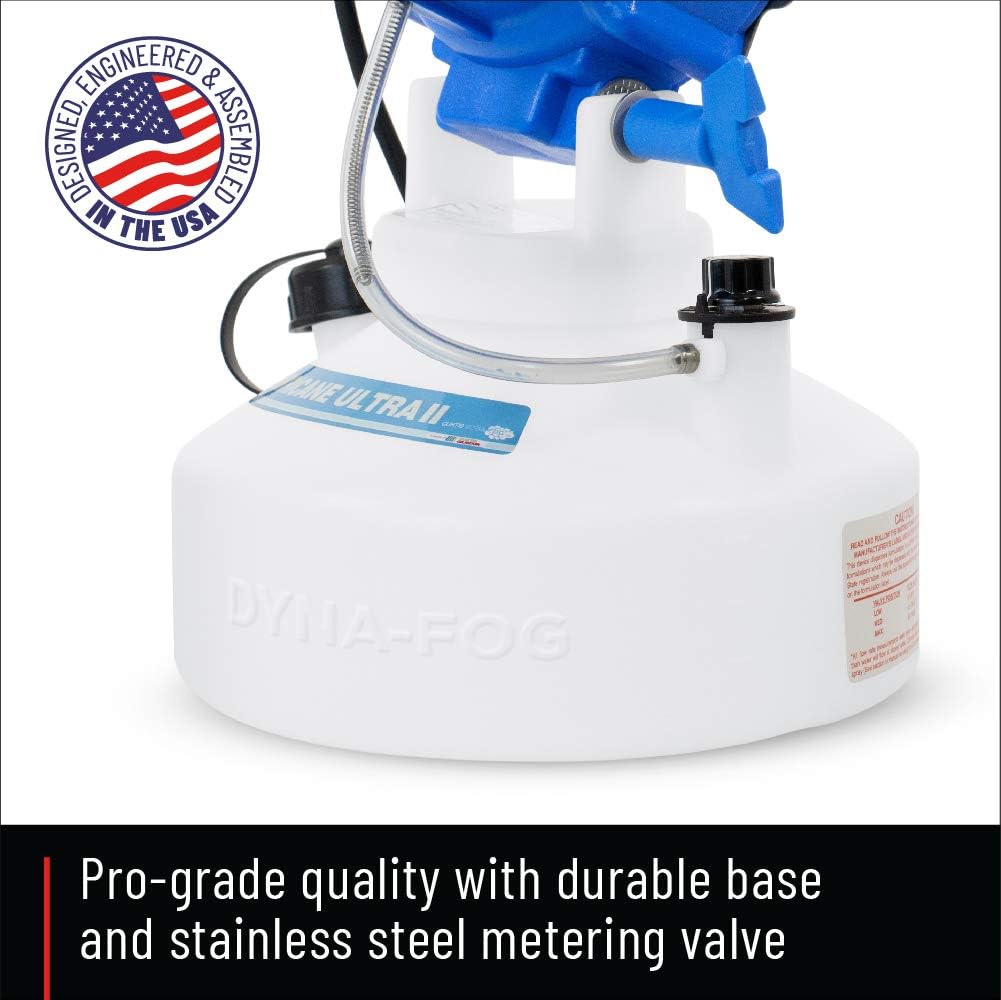
A ULV fogger — short for Ultra-Low Volume fogger — is a machine that breaks liquid pesticide or disinfectant into an extremely fine mist (droplets typically between 5 and 50 microns in diameter, roughly the width of a human hair) and distributes it through the air to reach insects, pathogens, or other targets with a fraction of the chemical volume a conventional sprayer would use. A single unit running a residential mosquito route might cost $400 to $800. A professional-grade thermal or cold ULV unit from a name like Vectorfog or Pulsfog might run $1,200 to $2,500. If you’re running one fogger, the purchase price is the primary decision variable. If you’re running a fleet of six, ten, or twenty units across multiple trucks and operators, the purchase price becomes almost irrelevant — and the real cost conversation starts somewhere else entirely.
This article is for operators who are past the “which fogger should I buy” stage and into the “how do I build and manage a fleet that doesn’t drain margin over three years” stage. We’ll walk through a structured TCO (total cost of ownership) framework, explain why parts ecosystem compatibility matters more than most buyers realize before their first major repair, and make the standardization argument as clearly as the math allows. If you’re currently under contract negotiation with a distributor, or evaluating a fleet upgrade, here’s the decision frame you need.
Why Sticker Price Is the Wrong Optimization Target
The temptation in fleet procurement is to treat each unit as an independent line item and bid the lowest unit cost. This is how operators end up with four brands across eight machines — and a parts room that looks like a swap meet.
The actual cost of a ULV fogger over a 3-to-5-year service life has three major components beyond purchase price:
Consumables and wear parts. Nozzles, diaphragms, impeller blades (in rotary-atomizer units), and blower motors all wear on a schedule tied to hours of operation and chemical compatibility. Nozzle orifices erode faster when operators run oil-based formulations through equipment rated primarily for water-based solutions — a mismatch the EPA’s pesticide application method guidance flags as a leading cause of application inconsistency. Operators in long-run reviews on PCT Online consistently note that nozzle replacement on high-frequency routes can run $200–$600 per unit annually on machines that weren’t spec’d for their actual chemical mix.
Labor: maintenance and downtime. A technician who knows one platform can service it in the field. A technician managing three different motor configurations, two different impeller removal tools, and four different blower assembly styles cannot. Every hour a machine is down on a route — whether because a part failed or because the tech didn’t have the right replacement — is revenue not earned. For a single-operator route at $150–$300 per stop, even one missed stop per month per machine compounds quickly.
Parts availability and lead time. This is where brand ecosystem decisions bite hardest. Established brands like Vectorfog, with published spec sheets for their C100+ and H250+ series showing wide distributor networks across North America and Europe, and Pulsfog, whose K-series technical documentation lists authorized service centers across six continents, have reasonably predictable parts supply chains as of mid-2026. Smaller brands — particularly those sourced through gray-market channels — may have sub-30-day lead times in good periods and 90-plus-day waits when a single container shipment is delayed.
By the Numbers: Illustrative 3-Year TCO, Two 8-Unit Fleets
| Scenario | Unit Cost | Parts + Consumables (3 yr) | Downtime Loss Est. | 3-Year TCO per Unit |
|---|---|---|---|---|
| Mixed-brand fleet (4 brands, 8 units) | $1,100 avg | $900 | $1,200 | $3,200 |
| Standardized fleet (1 brand, 8 units) | $1,350 avg | $620 | $380 | $2,350 |
These are illustrative figures synthesized from operator-reported data in PCT Magazine’s fleet management coverage and Greenhouse Grower’s IPM equipment reviews — not audited actuals. Your numbers will vary by route intensity, chemical mix, and regional parts availability. But the directional finding — that a $250 higher unit cost can return $850 in 3-year savings through ecosystem efficiency — is consistent across the sources reviewed.
The Parts Ecosystem Argument, Made Concrete
When experienced pest-control operators talk about “parts ecosystem,” they mean three things simultaneously: interchangeability, availability, and institutional knowledge.
Interchangeability is the simplest concept. If your Vectorfog C100+ and your H250+ share the same blower motor specification, the same impeller dimensions, and the same nozzle thread standard, your parts inventory serves double duty. You stock one set of spares instead of two. This isn’t hypothetical — Vectorfog’s published product documentation explicitly notes cross-series component compatibility in certain sub-assemblies, and operators in PCT Online forum threads report benefiting from this in multi-unit operations. Pulsfog’s K-10 and K-22 Ultra series similarly share thermal fogger components at the combustion assembly level per their technical documentation, which operators servicing both portable and truck-mount thermal units report as a meaningful field advantage.
Availability means knowing the parts will be there when you need them. For fleets operating in North America in 2026, this practically means prioritizing brands with domestic distributor stock — not just a manufacturer relationship, but warehouse inventory. Ask your distributor rep: “What’s your on-hand stock of blower motors and impeller assemblies for this model, and what’s your lead time if you’re out?” The answer tells you more than any spec sheet.
Institutional knowledge is the most underrated component. A technician who has serviced the same platform for eighteen months carries diagnostic intuition that can’t be purchased. They know the failure signature of a worn diaphragm versus a partially clogged nozzle on that specific unit. They know which torque spec in the manual is wrong (almost every manual has one). That knowledge walks out the door with staff turnover if your fleet is a mix of unfamiliar platforms. Standardization is, in part, a training investment protection strategy.
Chemical Compatibility: The Fleet Decision Variable Nobody Budgets For
This deserves its own section because it’s the place where fleet decisions go wrong quietly, over months, rather than catastrophically in a single event.
ULV foggers are rated for specific chemical families — typically water-based formulations, oil-based formulations, or both. The pump materials (diaphragms, seals, O-rings), nozzle materials (brass, stainless, or polypropylene), and internal housing coatings all have compatibility profiles. Running an oil-based pyrethroid concentrate through a machine built for water-based solutions degrades seals faster than the manufacturer’s wear schedule assumes. The EPA’s pesticide application guidance notes that equipment-chemical mismatches are among the most common sources of application rate drift — and application rate drift in a licensed pest-control context is a compliance issue, not just an equipment issue.
In a mixed-brand fleet, chemical compatibility tracking becomes exponentially more complicated. Each brand has its own compatibility matrix, and a fast-moving operation with multiple operators and multiple chemicals is one labeling mistake away from cross-contamination or accelerated wear. In a standardized fleet, you vet compatibility once for your full chemical mix against your one platform family, build the SOP (standard operating procedure), train once, and enforce one rule set.
For greenhouse operators specifically — where disinfectants, biological inoculants, and pesticide formulations may all run through the same equipment on different days — this is an area Greenhouse Grower’s IPM equipment coverage has flagged repeatedly as a leading cause of unexplained applicator failure and inconsistent coverage. Dedicated machines by chemical class, within a standardized platform family, is the pattern that operators in those reviews report as the most durable solution.
When Standardization Doesn’t Win
The standardization argument isn’t universal. Here are the conditions where a mixed fleet is the defensible choice:
Application type diversity. If part of your fleet does thermal fogging for vector control and part does cold ULV for indoor residual, you’re likely running two mechanically different categories of equipment anyway. Vectorfog and Pulsfog both manufacture across these categories, but the cross-over parts compatibility between a thermal unit and a cold ULV unit is limited by design. In this case, standardize within application type, not across your entire fleet.
Geographic service center access. If you operate in a region where Brand A has an authorized service center within 50 miles and Brand B requires shipping to a regional depot, that service geography matters more than brand philosophy. Parts ecosystem value is only realized if you can access the ecosystem. PCT Magazine’s fleet management coverage notes that rural pest-control operations frequently make brand decisions on the basis of regional service infrastructure precisely for this reason.
Incumbent contracts with distributor pricing. If you’re two years into a volume pricing agreement with a distributor for a specific brand, the switching cost — lost tier pricing, technician retraining, parts inventory write-off — may outweigh the projected TCO savings from standardizing on a different platform. Run the actual math with your current pricing before assuming a new standardization initiative pencils out.
The Decision Frame: If X, Then Y
If you’re running three or more units on the same application type and expect to hold equipment for three-plus years: standardize on a single brand within that application category. The TCO savings from parts interchangeability, reduced downtime, and technician efficiency will materially outpace any unit-cost premium for a reputable platform.
If you’re evaluating your first fleet purchase of five or more units: treat parts availability and distributor on-hand inventory as a purchasing requirement, not a nice-to-have. Ask for lead-time guarantees in your distributor agreement. Brands like Vectorfog and Pulsfog have enough published spec documentation and demonstrated distributor infrastructure to make this conversation possible; treat any vendor who can’t answer the question directly as a risk flag.
If your fleet crosses application types (thermal and cold ULV): standardize within type, not across type. The operational and chemical handling complexity of treating them as one platform family isn’t worth the marginal parts overlap.
If your chemical mix includes both oil-based and water-based formulations: build your compatibility matrix before your procurement decision, not after. The right machine for your chemical mix is a prerequisite to any fleet standardization discussion. EPA guidance on pesticide application equipment and manufacturer spec sheets are the starting point; your chemical supplier’s technical representative should be the second call.
If you’re already mid-fleet in a mixed-brand situation and a major refresh isn’t imminent: focus on standardizing your parts room and service procedures rather than replacing equipment. Audit which brands have the most units in your fleet, maximize parts stocking depth for those, and let attrition drive you toward the standardized future state over the next replacement cycle.
The operators who get this right aren’t necessarily the ones who picked the best fogger. They’re the ones who treated the fleet as a system and made procurement decisions that served the system’s economics — not the line-item budget of a single purchase order.