June 10, 2026 • Elena Garcia • 10 min reading time • Specs verified June 25, 2026
Aerosol Can Foggers vs. Machine Foggers: When Hot Shot and Raid Are Enough and When They're Not
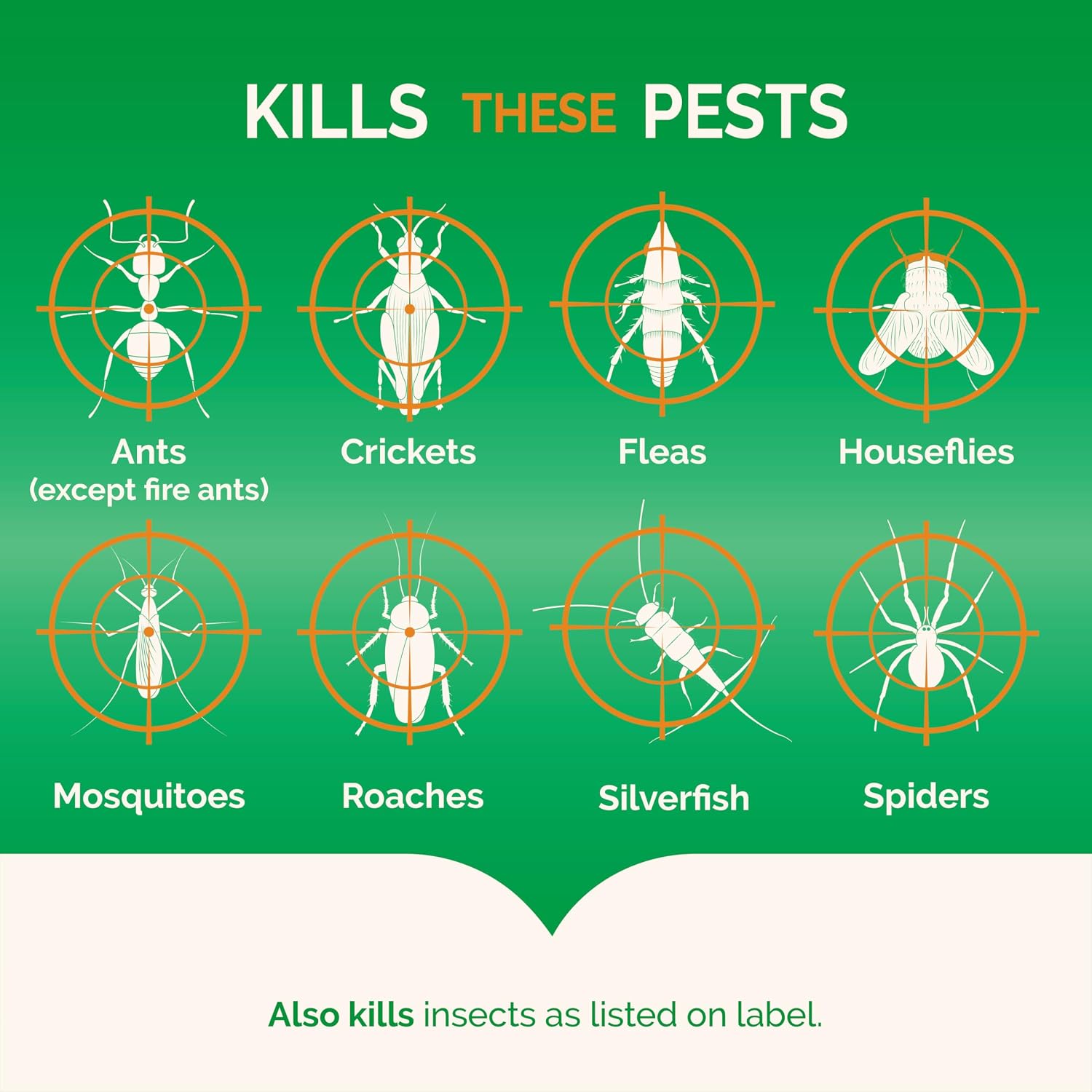
Walk into any hardware store and you’ll see them stacked near the checkout: aerosol “fogger” cans — Hot Shot, Raid, Black Flag — that promise to fill a room with insect-killing mist. You crack one open, set it on the counter, leave for a few hours, and the label says you’re done. That’s the consumer fogger in its simplest form: a pressurized can that releases a cloud of active ingredient suspended in a propellant gas. On the other end of the spectrum, a machine fogger — whether that’s a $150 backpack ULV unit or a $2,000 thermal fogger from Pulsfog — generates its own particle cloud using a motor, pump, or heat source, and applies that cloud wherever the operator directs it. Both tools are called “foggers.” They are not the same thing. This article draws the line between them clearly, shows you the math on where aerosol cans stop working, and gives you a decision rule you can apply to a job you’re pricing right now.
What Aerosol Can Foggers Actually Do — and Where They Fail
An aerosol total-release fogger (the industry name for a bug bomb) works by puncturing or releasing a valve that empties the entire can at once. The active ingredients — commonly permethrin, cypermethrin, or tetramethrin — exit as a fine spray, float briefly, then settle on surfaces. They are not a true fog in the technical sense. The U.S. EPA’s guidance document titled “Bed Bug Information: Total Release Foggers” (available at epa.gov) states that these products do not penetrate into wall voids, crawl spaces, or areas where pests hide, and that they are specifically not recommended for bed bug treatment precisely because the particles settle before reaching the harborage sites where insects actually live.
The National Pesticide Information Center (NPIC), in its document “Foggers (Bug Bombs)” published at npic.orst.edu, reinforces this with several practical limits:
- Coverage ceiling: Most aerosol foggers are rated for 2,000–5,000 cubic feet per can. A single 1,200 sq ft apartment with 8-foot ceilings contains roughly 9,600 cubic feet — meaning you’d need two or three cans minimum, run simultaneously, for even marginal whole-unit coverage.
- Line-of-sight dependency: Because the propellant disperses omnidirectionally from a fixed point and then settles, penetration behind furniture, inside cabinets, or into floor-wall junctions is minimal to nonexistent.
- Label restrictions: Most total-release aerosols require you to vacate the space for 2–4 hours and then ventilate for 30 minutes to 2 hours before re-entry. That’s a half-day of downtime per treatment cycle.
- Chemical concentration decay: Once the can fires, you have no control over deposition rate or concentration gradient. High-traffic kill zones and dead corners receive the same dose — which is to say, whatever happens to drift there.
For a single-family homeowner dealing with a minor flea infestation in one carpeted bedroom, an aerosol can is a reasonable first move. It’s $8–$14 per can at retail, requires zero equipment, and for light-load applications in a sealed room, the EPA acknowledges it can knock down exposed flying insects. That’s the ceiling, not the floor.
Where can foggers stop working: multi-room treatment, any structure over roughly 2,500 sq ft, any application requiring penetration into voids, any recurring-treatment protocol, and any commercial or rental property where documentation, chemical accountability, or re-entry interval compliance matters.
The Machine Fogger Difference: Control, Scale, and Droplet Physics
A machine fogger — ULV (ultra-low volume) cold fogger or thermal fogger — doesn’t come with pre-loaded chemistry. You supply a registered pesticide concentrate, dilute it per label, fill the tank, and the machine generates the particle cloud. That distinction matters enormously for three reasons: concentration control, droplet size control, and spatial targeting.
Droplet size (VMD — volume median diameter) is the most important variable in fogging efficacy, and it’s the one aerosol cans give you zero control over. VMD is measured in microns (µm); it describes the droplet size at which half the spray volume is in smaller droplets and half in larger ones. UC Davis Extension, in its guidance on pesticide application equipment, identifies the optimal VMD range for flying insect knock-down (mosquitoes, gnats, flies) as roughly 10–30 µm — small enough to remain airborne for several minutes and penetrate vegetation or structural voids, large enough to carry a meaningful pesticide payload. Most total-release aerosol cans produce a broader particle spectrum with a VMD in the 30–80 µm range, heavily weighted toward rapid fallout.
A quality ULV cold fogger — such as the Vectorfog C100 or a Hudson Fog Electric unit — is spec-rated to produce output in the 5–30 µm range, adjustable via nozzle or flow-rate settings. Pest Control Technology’s ULV Application Technology Guide (pctonline.com) notes that this size range dramatically extends particle hang time — from seconds to several minutes — and improves penetration into harborage areas. That’s not a marginal improvement; it’s a fundamentally different mode of action.
Budget Tier: Aerosol Can Foggers
Best for: Single-room, one-time knockdown of exposed flying insects in a sealed space under 500 sq ft.
Aerosol total-release cans like Hot Shot HG-95911 and Raid Concentrated Deep Reach Fogger are widely available, require no equipment, and cost $8–$14 per unit. Coverage is rated at 2,000–5,000 cubic feet per can. VMD is approximately 30–80 µm, meaning most particles settle quickly rather than remaining suspended long enough to penetrate voids. Chemical flexibility is zero — you use whatever active ingredient the manufacturer pre-loaded. There is no operator control over output once the valve is released. Cost per treatment for a 1,200 sq ft apartment runs $24–$42 in materials (two to three cans), with no reusability.
Summit...responsible
$8.58
In stock on Amazon
Check price on AmazonMid-Tier: Entry and Prosumer ULV Machine Foggers
Best for: PCOs with small residential routes, homeowners doing yard perimeter or multi-room treatment, small greenhouse operators.
Entry-tier ULV machines from brands including Hudson, Black Flag (electric fogger line), and Vectorfog (C100/C150 models) run $100–$350. Tank capacity is typically 0.5–1 gallon. Flow rates run 0.5–2 oz/min. VMD is adjustable in the 10–30 µm range, keeping particles airborne long enough to reach harborage zones. Chemical flexibility is high — any registered water-based concentrate diluted per label. Cost per treatment for a 1,200 sq ft apartment drops to $1–$4 in diluted concentrate materials. Important caveat: solvent-based products (some pyrethroid concentrates use petroleum-based carriers) can degrade pump seals on entry-tier units over time — verify chemical compatibility before running anything other than water-diluted concentrates.
Hot
$13.99
In stock on Amazon
Check price on AmazonPremium Tier: Commercial ULV and Thermal Foggers
Best for: Licensed PCO fleets, large commercial accounts, outdoor vector management programs, greenhouse and agricultural applications.
Commercial ULV units — Vectorfog C150 Pro, Curtis Dyna-Fog Hurricane Electric, and comparable units in the $500–$1,200 range — deliver flow rates of 2–4 oz/min, larger 1–2 gallon tanks, and pump assemblies rated for extended chemical variety. Parts availability is a real differentiator: Vectorfog and Dyna-Fog maintain domestic distributor networks with stocked replacement nozzles, impeller housings, and seals, which matters when a unit failure costs you a day of commercial route revenue.
Thermal foggers — Pulsfog and Swingfog units in the $400–$2,000+ range — vaporize petroleum-based carrier oils to generate an extremely dense, visible fog with VMD often under 10 µm. Per Pest Control Technology’s ULV Application Technology Guide (pctonline.com), thermal fogging is the preferred modality for large-scale outdoor mosquito abatement programs where fog penetration into dense vegetation is required. Trade-off: they require petroleum carrier formulations (not all concentrates are compatible), carry higher operating cost, and demand more operator training. Cost per treatment at commercial scale runs $0.50–$2.50 in diluted concentrate materials.
Hot
$70.93
In stock on Amazon
Check price on AmazonBy the Numbers: A Direct Comparison
| Aerosol Can Fogger | Entry ULV Machine ($100–$350) | Commercial ULV/Thermal ($500–$2,000+) | |
|---|---|---|---|
| Coverage per fill/can | 2,000–5,000 cu ft | 3,000–8,000 sq ft/tank | 10,000–40,000 sq ft/tank |
| VMD (approx.) | 30–80 µm | 10–30 µm | 5–25 µm (adjustable) |
| Chemical flexibility | Fixed/pre-loaded | Any registered concentrate | Any registered concentrate |
| Cost per treatment (material) | $8–$14 | $1–$4 | $0.50–$2.50 |
| Operator control | None | Moderate | High |
| Documentation capability | None | Log via tank metering | Full treatment log |
The cost-per-treatment math is where the decision snaps into focus for anyone doing more than one job. At $12/can for aerosol and three cans needed for a standard 1,200 sq ft apartment, you’re spending $36 in materials per treatment cycle with no reusability. A 32 oz concentrate bottle of a permethrin-based product — properly diluted — might run $25–$40 and cover 5–10 comparable treatments through a ULV machine. A fleet operator doing 10–15 residential or commercial accounts per week hits the equipment payback point inside a single season, often inside two months.
When Commercial and Specialty Applications Make the Machine Non-Negotiable
There’s a hard line beyond which aerosol cans simply aren’t a legal or practical option.
Licensed pest control operations. The CDC’s guidance on indoor environmental controls for vector management, along with most state structural pest control regulations, requires documented application records: product name, EPA registration number, application rate, target pest, and treatment area. An aerosol can gives you a receipt; a machine fogger with a metered tank gives you a treatment log. For any commercial PCO account, that documentation isn’t optional.
Greenhouse and agricultural use. Fogging efficacy for fungal disease suppression — such as Botrytis control — depends on achieving specific VMD ranges that keep particles aloft long enough to contact leaf undersides and stem junctions. No aerosol total-release can is designed or labeled to achieve the canopy penetration required for greenhouse disease management programs.
Outdoor spaces. Aerosol total-release foggers are EPA-registered for indoor use only, as noted in the EPA’s total-release fogger guidance document. Any mosquito abatement, patio treatment, or vector management program outdoors requires a machine fogger. Full stop.
Large commercial spaces. Restaurants, warehouses, food processing facilities, and event venues operate in square footage ranges where aerosol can coverage is simply irrelevant. A 20,000 sq ft warehouse would require 40 or more simultaneous aerosol cans to approach theoretical coverage — an OSHA hazard, a fire risk, and not a serious operational option.
Re-treatment intervals and program-based pest management. Integrated pest management (IPM) protocols typically call for treatment cycles every 14–30 days. At $30–$40 per treatment in aerosol cans versus $2–$5 in diluted concentrate through a machine, a 12-month commercial contract makes the arithmetic unavoidable.
The Decision Rule
If your situation maps to any of the following, an aerosol can is a reasonable starting point:
- Single room, under 500 sq ft, sealed space, flying insects exposed in open air, one-time event.
If your situation maps to any of the following, a machine is the correct tool:
- Multi-room or whole-structure treatment
- Any outdoor application
- Any commercial, rental, or institutional account
- Any recurring treatment protocol (monthly or more frequent)
- Any greenhouse, agricultural, or food facility use
- Any situation where treatment documentation is required
- Any account where you’re calculating material cost per job against route volume
The aerosol can exists for the same reason a disposable rain poncho exists: it’s better than nothing, cheap enough to be impulse-purchased, and genuinely adequate for the narrowest possible use case. Outside that case, it isn’t a budget version of a machine fogger — it’s a different tool with a different, smaller job. Spending $150 on an entry ULV unit and a quart of registered concentrate changes what you can credibly offer, document, and repeat. The NPIC’s fogger guidance (npic.orst.edu) and the EPA’s total-release fogger documentation (epa.gov) both underscore the same fundamental point: aerosol cans are designed for consumer convenience, not professional efficacy. If you’re pricing a recurring commercial account, building a pest control route, or managing any space larger than an apartment, a machine fogger pays for itself within the first two months of honest use — and gives you a tool that can actually do the job the label says it will.