September 7, 2026 • Elena Garcia • 10 min reading time • Specs verified June 25, 2026
Reptile Fogger Durability: Why So Many Units Fail After 4–6 Weeks and How to Avoid It
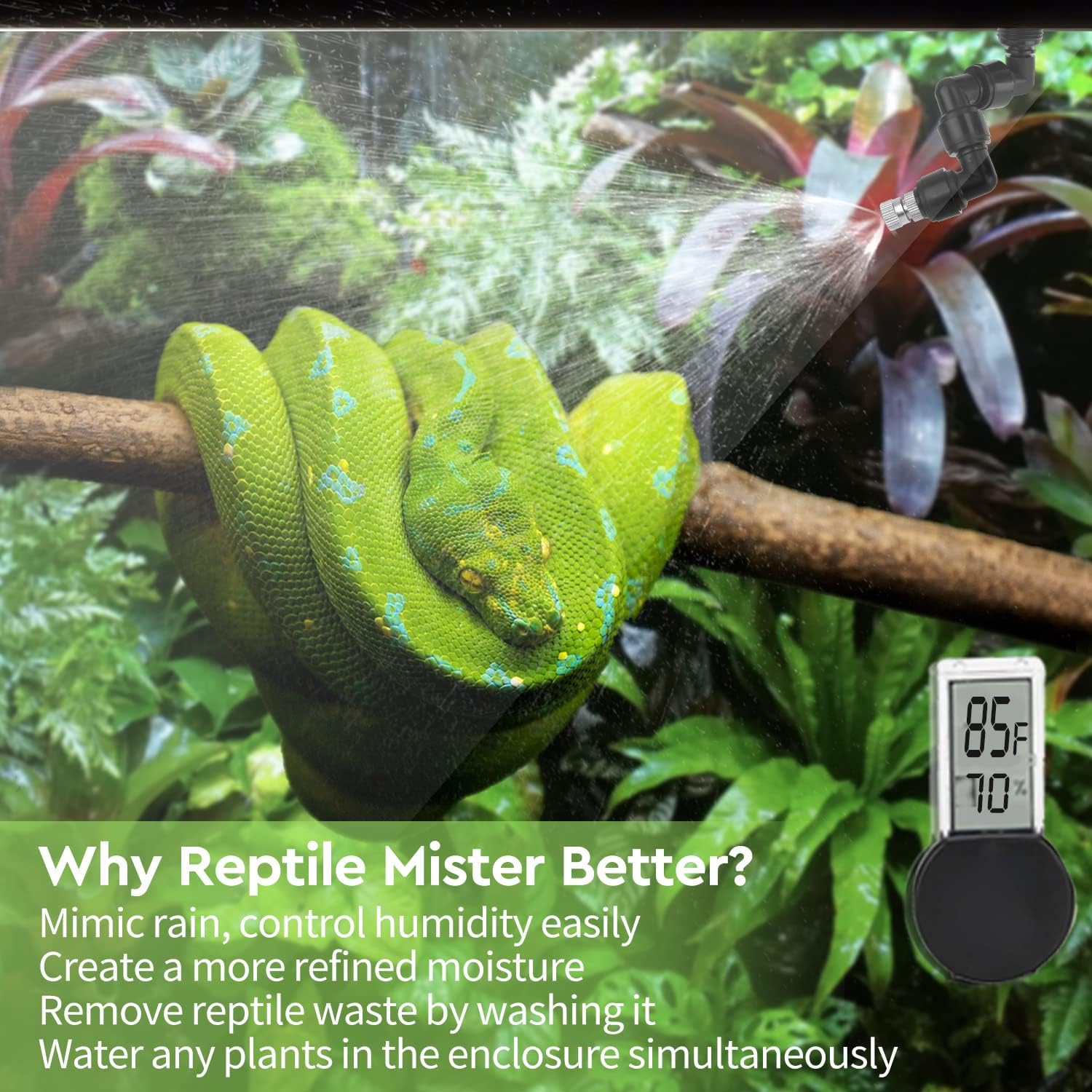
If you’ve ever read through reptile fogger reviews — the kind left by bearded dragon keepers, crested gecko enthusiasts, or anyone managing a bioactive terrarium — you’ll notice a frustrating pattern almost immediately. Unit after unit earns four or five stars at the three-week mark, then gets a devastating one-star follow-up at week six. A reptile fogger is a small appliance that generates a cool, fine mist (a suspension of tiny water droplets in air) to raise humidity inside a reptile enclosure to the levels those animals need to thrive — often 60 to 90 percent relative humidity for tropical species. When they work, they’re genuinely useful. When they fail, they fail fast, they fail at the worst possible moment for returns, and they often fail in ways that look identical whether the root cause is a design flaw or a maintenance lapse. This article is built around that distinction. By the end, you’ll have a clear framework for diagnosing failure type, a maintenance schedule that extends unit life significantly, and decision rules for when to repair, when to replace, and when to upgrade.
The 4–6 Week Failure Pattern: Design Flaw or Self-Inflicted Wound?
The timing is genuinely suspicious. REPTIZOO reviewers have noted explicitly that failure correlates with the closure of Amazon’s standard return window — and that perception is understandable, even if the cause is usually more mundane. Here’s the honest breakdown of what’s actually happening at that timeline.
Ultrasonic reptile foggers work by vibrating a small ceramic disc (called a transducer) at very high frequency — typically 1.7 MHz — which atomizes the water sitting above it into a fine mist. That disc is the single most failure-prone component in every consumer fogger on the market, regardless of brand or price tier. At the four-to-six-week mark, two distinct failure pathways converge:
Pathway 1 — Mineral scaling (maintenance failure). If you’re running hard tap water through your fogger, dissolved calcium and magnesium carbonate precipitate out as the water atomizes. That white mineral crust — the same stuff you see inside a kettle — deposits directly on the transducer surface and the float sensor. Once the float sensor is coated, the unit either runs dry (burning the transducer) or refuses to activate at all. This process accelerates in hard-water regions and in warm enclosures where evaporation rate is high. Per University of California Agriculture and Natural Resources documentation on hard water scaling, water with over 120 mg/L of dissolved calcium carbonate builds visible scale on heated or agitated surfaces within weeks.
Pathway 2 — Component fatigue at the quality floor. Consumer reptile foggers priced below roughly $40 use transducers and pump seals that are manufactured to tolerances that accept a meaningful failure rate. These aren’t defective in a warranty sense — they’re built to a price point. The failure manifests as reduced output, intermittent misting, or complete shutdown. This is a design-budget tradeoff, not a maintenance failure.
The critical insight from aggregated owner experience — most clearly documented by long-term MrReptile keepers who have run multiple units over several years — is that the majority of early failures they personally experienced were self-inflicted through skipping weekly cleaning, and cleaning always restored function. That’s not anecdote; it’s a consistent operational finding from serious hobbyists who eventually treated their foggers like the small appliances they are, with scheduled maintenance rather than set-and-forget use.
The honest editorial position: both pathways are real. Your job is to figure out which one you’re facing.
Water Quality: The Variable That Changes Everything
This is the highest-leverage intervention available to any fogger owner, and it costs almost nothing to address.
By the numbers:
- Hard tap water (>200 mg/L TDS) can coat an ultrasonic transducer with visible scale in as little as 2–3 weeks of daily operation.
- Reverse osmosis (RO) water or distilled water at <10 mg/L TDS reduces mineral deposition by roughly 95% under the same conditions.
- Most reptile-keeping communities recommend a target of <50 mg/L TDS for fogger water as a practical standard.
Serious reptile keepers — the ones running chameleon enclosures or rainforest bioactives that require sustained 70–90% humidity — routinely use RO water or distilled water as a deliberate infrastructure choice, not an afterthought. This is worth underscoring: water quality is not a premium-tier concern. It’s a baseline decision that affects every ultrasonic fogger equally, from a $25 budget unit to a $120 programmable model.
The mechanism matters here. An ultrasonic transducer atomizes water by cavitation — micro-bubbles of vapor collapse against the disc surface at enormous local pressure. Minerals don’t atomize; they accumulate. Once a transducer is scaled, output drops, the unit works harder to compensate, heat builds at the disc surface, and the piezoelectric element degrades faster than its design life. Ultralife Aquatics technical notes on ultrasonic transducer failure modes identify mineral fouling and running the unit dry as the two leading causes of premature disc failure — both of which are entirely preventable.
If you’re already using tap water and your unit is producing reduced mist, don’t replace it yet. Remove the transducer disc (most units allow this without tools), soak it in undiluted white vinegar for 20–30 minutes, rinse thoroughly with clean water, and retest. Across aggregated owner reports, this single intervention restores function in the majority of cases where mineral scaling is the root cause.
Cleaning Schedule: What “Weekly” Actually Means in Practice
MrReptile community documentation on fogger maintenance is unusually specific about what a cleaning cycle involves, and it’s worth encoding that into a repeatable schedule rather than leaving it vague.
Minimum viable maintenance (weekly):
- Empty the reservoir completely — don’t top off, drain fully.
- Wipe the interior reservoir walls with a soft cloth to remove biofilm (the thin slippery film that forms from standing water).
- Inspect the float sensor for mineral crust; if present, wipe with a vinegar-dampened cloth.
- Rinse the transducer disc under clean water; if output was reduced, do a full vinegar soak.
- Refill with fresh RO or distilled water only.
Monthly deep clean:
- Disassemble any removable nozzle components and soak in dilute vinegar solution.
- Inspect the silicone tubing (if your unit uses tubing to route mist into the enclosure) for interior biofilm or mineral deposits. Replace tubing if you see discoloration that won’t wipe out — silicone degrades from the inside under sustained moisture and biological load.
- Check the misting nozzle orifice with a pin or toothpick to clear any partial blockages.
Owners who implement this schedule consistently report substantially longer unit life — the pattern across serious keeper communities is that foggers on a proper maintenance cycle often run 12–18 months before requiring transducer replacement, versus 4–8 weeks for units running on tap water without cleaning.
Diagnosing Failure Type Before You Replace Anything
When your fogger stops working or produces dramatically reduced output, run through this decision tree before buying a replacement:
Step 1: Check whether the unit powers on and the float sensor activates. If the unit is silent and shows no sign of life, check power connections and the float level first — most units have a low-water shutoff that engages before the reservoir is visually empty.
Step 2: If it powers on but produces little or no mist, remove and inspect the transducer disc. White or gray crust = mineral scaling. Clean with vinegar. If the disc is physically cracked or shows visible pitting damage, that’s end-of-life for the disc — not the whole unit.
Step 3: If the unit mists intermittently or leaks water (rather than mist) into the enclosure, inspect the nozzle and tubing connection. Liquid water dripping from the mist outlet is almost always a nozzle blockage or a damaged nozzle tip that’s creating oversized droplets too heavy to remain airborne. This is not a pump failure — it’s a nozzle problem with a straightforward fix.
Step 4: If cleaning restores partial but not full function, and the unit is over a year old with regular use, transducer replacement is usually cost-effective. Many units use standardized 20mm or 25mm ceramic transducer discs available from electronics suppliers — Ultralife and similar vendors publish compatibility data.
Cross-Brand Compatibility: Salvaging Your Tubing Investment
If the pump in your fogger has failed but the silicone tubing, extension hose, and nozzle hardware are intact, those components have standalone value. Reviewers of third-party nozzle accessory kits — notably the REPTI ZOO-compatible accessory sets — consistently note cross-brand compatibility with standard barb fittings. Most consumer reptile fogger tubing runs 6mm inner diameter (ID), which is a common standard across brands including REPTIZOO, Zoo Med, and Evergreen Pet Supplies units.
The practical upshot: don’t throw the whole system away when the pump fails. The tubing investment (typically $15–25 for a complete nozzle kit) transfers to a new pump base, provided the new unit uses a standard fitting size. Verify the reservoir fitting size on your replacement unit before purchasing the tubing — 4mm and 6mm are both in circulation, and they’re not interchangeable without an adapter.
Matching Fogger Capacity to Species Requirements
For species requiring sustained 70–80% relative humidity — veiled chameleons, crested geckos, red-eyed tree frogs, Amazon tree boas — intermittent fogging from a single-nozzle consumer unit is often insufficient for larger enclosures (over 40 gallons). Owners consistently report that a single consumer fogger on a timer cycle struggles to maintain target humidity in enclosures with significant air exchange or in rooms with low ambient humidity during winter heating season.
The practical decision point: if you’re running a 40+ gallon enclosure for a high-humidity species and your single fogger runs more than 8–10 hours per day to maintain target levels, that’s a sign of undersizing, not unit failure. Consider either a dual-nozzle capable unit or a secondary humidification method (fogger plus substrate moisture management) rather than cycling through single-nozzle replacements.
Frequently Asked Questions
Why did my reptile fogger stop working after about a month? The most common cause is mineral scaling on the ultrasonic transducer disc from hard tap water, combined with the absence of a regular cleaning cycle. The timing correlates with how quickly scale accumulates under daily operation with unfiltered water. Before assuming the unit is defective, soak the transducer disc in white vinegar for 20–30 minutes and retest.
Does using tap water damage ultrasonic reptile foggers? Yes, over time and in hard-water regions, significantly so. Tap water with high dissolved mineral content deposits calcium and magnesium carbonate directly on the vibrating transducer disc. That scale reduces output, causes the unit to work harder, and accelerates disc degradation. RO water or distilled water is the single highest-impact maintenance decision you can make.
How often should I clean my reptile terrarium misting system? Weekly, at minimum. Empty and wipe the reservoir, inspect the float sensor, and check the transducer disc. Monthly, do a full disassembly and vinegar soak of all water-contact components including nozzles and tubing. Owners who follow this schedule consistently report unit lifespans well beyond the 4–6 week failure window.
What happens when the fogger leaks water into the enclosure — is it a design flaw or user error? Usually neither, in the traditional sense. Liquid water at the nozzle outlet is almost always a blocked or damaged nozzle tip creating droplets too large to remain airborne. Those oversized droplets fall out of suspension and run down the tubing. Clear the nozzle orifice with a pin, and if the tip is visibly damaged, replace the nozzle — most are standard-fit and inexpensive.
Can I use third-party nozzles and tubing to replace parts on a fogger whose pump still works? Yes, with a size check. Most consumer reptile foggers use 6mm ID barb fittings, and third-party nozzle kits reviewed by hobbyists confirm broad cross-brand compatibility at that size. Verify your unit’s fitting diameter before purchasing, and confirm the nozzle orifice size is appropriate for your target droplet output.
Which reptile fogger is best for a species that needs sustained high humidity like 70–80%? For high-demand enclosures over 40 gallons, look for units with dual-nozzle output capability and a reservoir capacity of at least 2–3 liters to reduce refill frequency. Run it on RO or distilled water, maintain the cleaning schedule above, and pair fogging with substrate moisture management rather than relying on the fogger alone for sustained humidity in large airspaces.