September 26, 2026 • Elena Garcia • 11 min reading time • Specs verified June 25, 2026
Propane Fogger Ignition Quirks, Runtime, and When to Switch to Electric
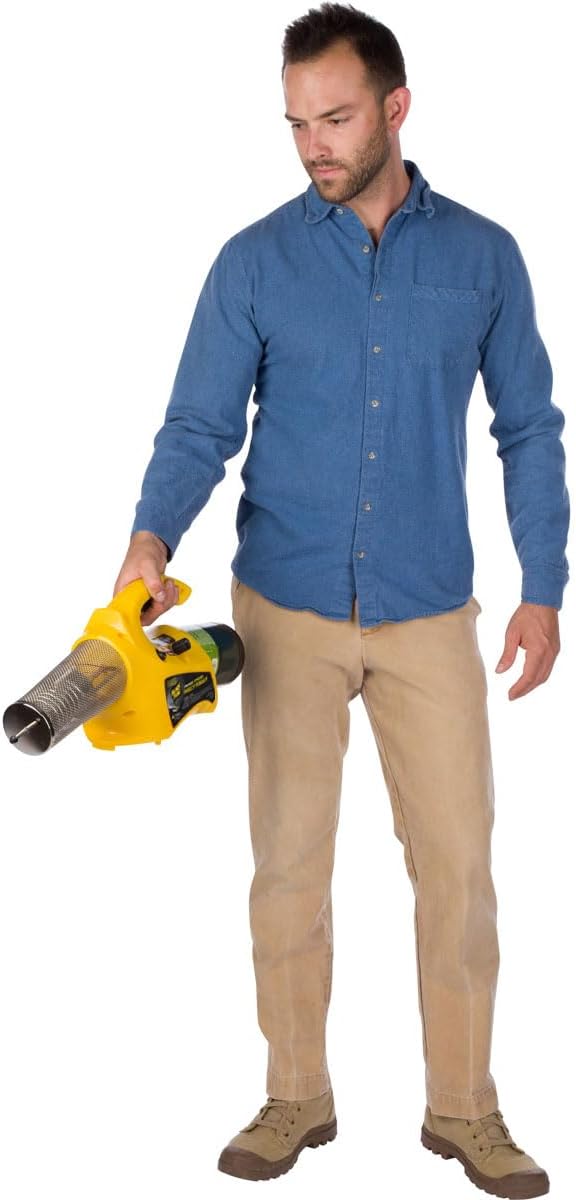
A propane fogger works roughly like a handheld flamethrower crossed with a garden sprayer: liquid insecticide flows into a heated barrel, vaporizes into an ultra-fine mist, and drifts outward to contact and kill flying insects — mainly mosquitoes. An electric fogger does the same thing, replacing the propane flame with a heated coil or electric pump and plugging into a standard outlet. Both produce a fine aerosol of insecticide particles small enough to hang in the air where mosquitoes fly, but the differences in how they start, how long they run, and how they behave in real conditions are significant enough that the wrong choice causes genuine regret. If you’ve seen frustrated reviews mentioning matches, smoky smells, or wind ruining a treatment session, this article is for you. We’ll map the real tradeoffs across three product tiers so you can make a clean call.
The Ignition Problem Nobody Warns You About
The most common complaint across propane fogger reviews isn’t performance — it’s ignition, and specifically the gap between what buyers expect and what they get.
Budget Tier: Burgess 1443
The Burgess 1443 is one of the best-selling residential propane foggers on the market, and its review record is instructive. Owners consistently report genuine surprise at discovering the unit has no built-in ignitor. The startup procedure requires holding a lit match or lighter under the shroud, waiting for the burner to heat, then applying insecticide flow. Several reviewers at major retail platforms explicitly state this would have changed their purchase decision — one notes it felt like buying a gas grill only to find out it has no starter button.
This isn’t a defect; it’s a design choice rooted in cost and simplicity. A thermal fogger at this price point (sub-$50 retail) trades convenience features for a lower sticker. But the expectation mismatch is real, and for buyers who prioritize ease of use — especially those fogging at dawn or dusk in poor lighting conditions — it’s a genuine friction point. If ignition ease matters to your workflow, this is the unit’s defining limitation.
Black
$74.88
In stock on Amazon
Check price on AmazonMid-Tier: Black Flag 190095
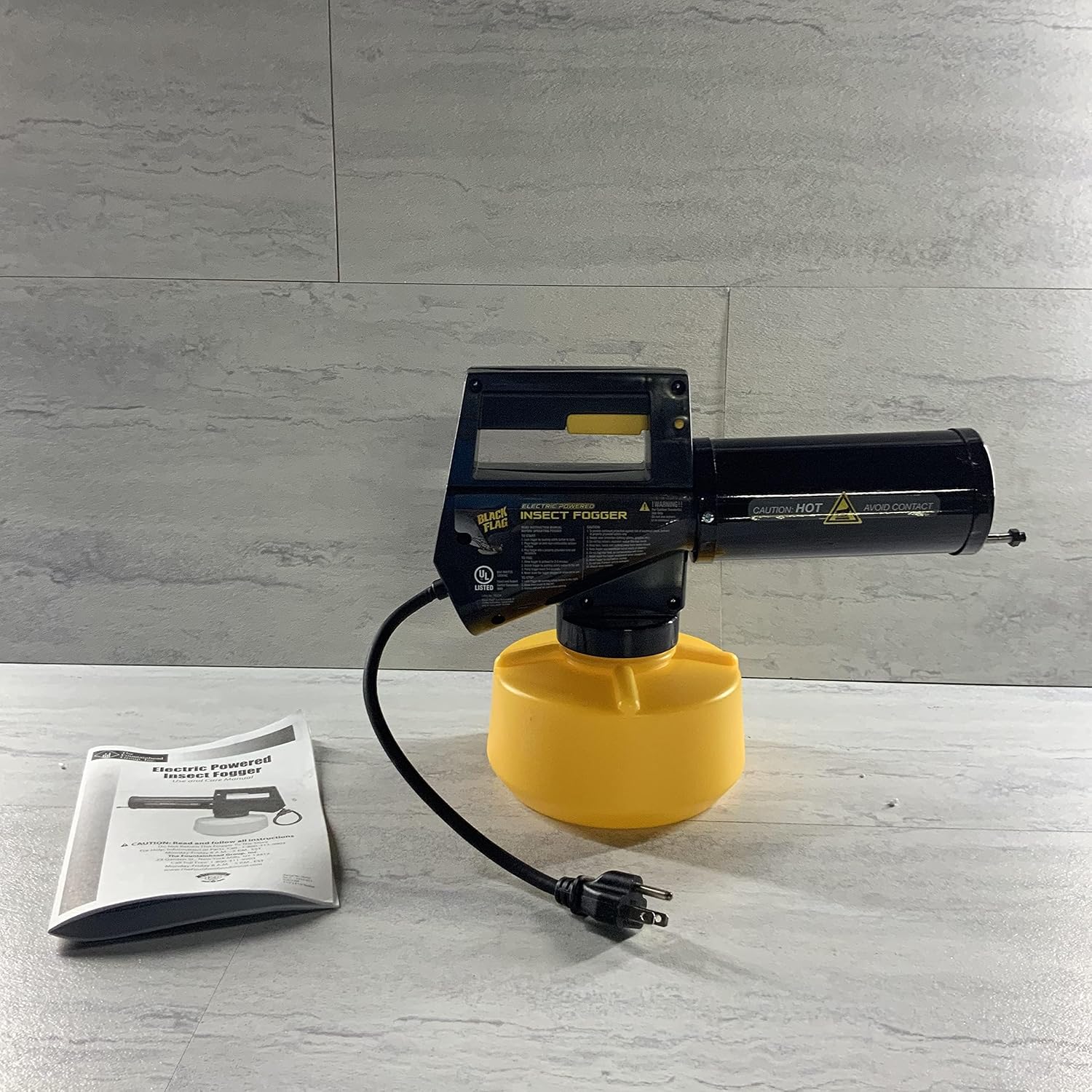
The Black Flag 190095 is the natural step up for buyers who want propane runtime without the match-and-lighter ritual. Owners consistently praise its built-in piezoelectric ignitor: push the button, wait roughly 30–45 seconds for the barrel to heat, and you’re fogging. The startup experience is closer to what most buyers intuitively expect from a handheld propane device.
Reviewers also note the economy angle: a single 10 oz propane canister on the Black Flag 190095 outperforms multiple aerosol fogger cans in coverage per dollar, which matters if you’re doing weekly treatments through a long mosquito season. The modest price premium over the Burgess 1443 is, for most regular operators, easily justified by the ignition convenience alone.
Black
$99.89
In stock on Amazon
Check price on AmazonPremium Tier: Black Flag 190107 Electric
The Black Flag 190107 is the electric counterpart to the propane 190095, and its review pattern tells a distinct story. Owners in tropical climates — Florida, Gulf Coast, high-humidity subtropical zones — specifically call out reliable restartability as the feature that pushed them toward electric. With a propane unit, a windy day or a cold morning can require multiple ignition attempts and barrel re-heating cycles. An electric fogger plugs in, heats to operating temperature in about 3–5 minutes, and restarts instantly if you need to move between treatment areas.
For customer-facing applications — outdoor dining, event spaces, commercial landscaping — the electric unit’s absence of smoky residual odor is a meaningful advantage. Owners who switched from propane to electric frequently cite this specifically: the smoky smell from a thermal propane fogger can linger long enough to be noticed by guests arriving shortly after treatment, particularly in humid conditions where fog residue disperses more slowly.
Repel
$104.99
In stock on Amazon
Check price on AmazonPropane Runtime, Wind Sensitivity, and Fog Quality in the Field
By the Numbers
| Spec | Burgess 1443 | Black Flag 190095 | Black Flag 190107 Electric |
|---|---|---|---|
| Ignition | Match/lighter required <a class="product-link" href="https://www.amazon.com/dp/B0001AUFAO?tag=greenflower20-20" rel="sponsored nofollow noopener" target="_blank" title="Affiliate link — we may earn a commission.">Black — $74.88</a> | Built-in piezo ignitor <a class="product-link" href="https://www.amazon.com/dp/B0000BYBSD?tag=greenflower20-20" rel="sponsored nofollow noopener" target="_blank" title="Affiliate link — we may earn a commission.">Black — $99.89</a> | Plug-in electric <a class="product-link" href="https://www.amazon.com/dp/B00V3H7T80?tag=greenflower20-20" rel="sponsored nofollow noopener" target="_blank" title="Affiliate link — we may earn a commission.">Repel — $104.99</a> |
| Fuel/power | 14.1 oz propane canister | 10 oz propane canister | Standard 120V outlet |
| Approx. coverage | Up to 5,000 sq ft per tank | Up to 5,000 sq ft per tank | Up to 5,000 sq ft per session |
| Typical runtime | ~10–12 min continuous | ~8–10 min continuous | Session-limited by cord length |
| Restartability | Re-light required | Re-light required | Instant |
| Odor profile | Smoky residual | Smoky residual | Minimal |
Coverage figures per manufacturer spec sheets; runtime estimates aggregated from owner reviews.
On runtime: a standard 14.1 oz propane canister (the camping-stove format) runs a residential fogger for roughly one to two full yard treatments, depending on how aggressively you’re flowing insecticide. The math is tight enough that serious weekly operators keep two or three canisters on hand. The Black Flag 190095’s 10 oz canister trades slightly shorter runtime for a lighter, more maneuverable unit — owners running large yards or wooded lots report finishing a session with fuel to spare, but the margin is thinner than with the full 14.1 oz format.
Wind is the universal propane fogger complaint. Because thermal fog consists of extremely fine droplets — typically in the 10–20 micron volume median diameter range — any meaningful breeze disperses the cloud before it settles where you want it. PCT Online’s field application guidance on ULV and thermal fogging consistently identifies wind speed as the primary environmental variable in thermal fogging effectiveness, recommending applications at wind speeds below 10 mph and ideally below 5 mph. Owners echo this in reviews: the best results come from calm mornings or evenings, and treatment scheduling has to account for it. This isn’t a flaw in any specific unit — it’s physics — but it shapes how you plan applications regardless of which fogger you choose.
Chemical Compatibility: Can You Use Any Fogging Insecticide?
The short answer is yes, with label verification — and this matters enough to say twice.
Propane foggers are oil-based fluid delivery systems. Most residential thermal fogging insecticides are formulated as ready-to-use oil-based concentrates designed for exactly this application. You are not locked into any specific brand’s proprietary fluid. What you must check:
1. The insecticide label must explicitly state approval for use in thermal foggers. Per the EPA Office of Pesticide Programs’ pesticide registration and label requirements guidance (epa.gov), the application method must appear as a registered use on the product label. Using a product in an unlisted application method is technically an off-label use, which can affect both efficacy and legality for commercial operators.
2. Water-based concentrates are generally not compatible with propane thermal foggers. The heating element designed for oil-based fluids won’t properly vaporize water-based formulations, producing uneven fog with degraded particle size and potentially damaging the unit over time. The National Pesticide Information Center’s insecticide foggers fact sheet (npic.orst.edu) notes that product formulation compatibility is a common source of performance failures in thermal fogging applications.
3. Electric fogger compatibility varies by design. Some electric cold-fogger designs can run water-based concentrates; others require oil-based formulations. Check the unit’s manual before switching fluid types.
The practical upshot: you have wide latitude in choosing your active ingredient — permethrin, pyrethrin, d-phenothrin, and others — as long as the product label clears thermal fogger use. Buying the manufacturer’s branded fluid is rarely necessary and is often significantly more expensive than compatible label-compliant alternatives.
Are the Black Flag and Repel Propane Foggers Actually the Same Unit?
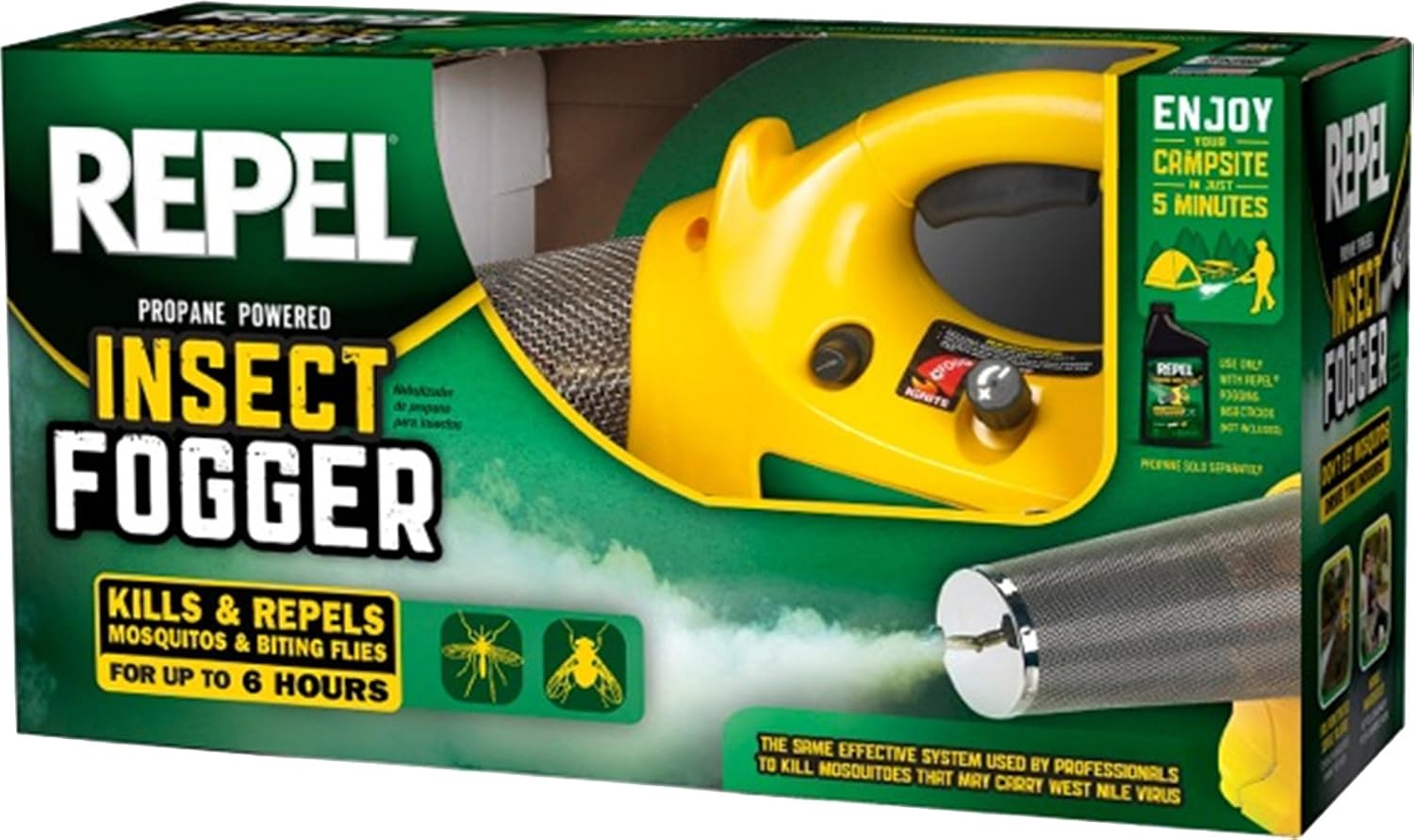
This is one of the most consistent “aha” moments in propane fogger reviews: the Repel 190397 and certain Black Flag propane units appear, by multiple owner accounts, to be physically identical products sold under different brand labels. Reviewers who purchased both — or who purchased one after owning the other — note matching dimensions, identical barrel geometry, and the same operating characteristics. This is a common practice in the hardware and pest-control category, where a single OEM manufacturer produces a platform that gets labeled and distributed under multiple consumer brands.
The practical implication: if you see a price difference between the Repel 190397 and a comparable Black Flag propane unit, the lower-priced option is likely the better buy. Insecticide compatibility and operating specs appear to be the same. Brand loyalty here is misplaced — pay for the price, not the label.
Effectiveness: Is Electric Fogger Knockdown Comparable to Propane?
The knockdown effectiveness question — “is electric as good as propane for mosquito kill?” — comes up constantly in buyer research, and the honest answer is: yes, with a caveat.
Both propane thermal foggers and electric foggers produce aerosol droplets in a broadly similar fine-particle range. The active ingredient does the killing; the fogger is the delivery system. The CDC’s mosquito control guidance (cdc.gov) identifies droplet size, active ingredient concentration, and environmental conditions — not the heat source used to vaporize the fluid — as the key variables driving knockdown effectiveness. Owners across both propane and electric platforms report similar results per treatment area, assuming calm conditions and proper insecticide concentration.
The caveat is cord management. An electric fogger’s 25–40 foot cord (typical for residential units) is a genuine constraint in large or complex yards. Operators covering more than roughly 8,000–10,000 square feet in a single session will find themselves managing extension cord logistics in a way that propane users simply don’t. For open residential lots, this is a minor annoyance. For commercial operators covering large properties or areas without convenient power access, it is potentially disqualifying.
If X, Then Y: The Decision Framework
After mapping the review record and published specifications, here’s where the decision lands:
If you want the lowest entry cost and don’t mind a match-ignition startup → Burgess 1443. It fogs effectively once running. The trade-off is ergonomic, not performance-related. Black — $74.88
If you want propane convenience with push-button ignition and plan regular seasonal treatments → Black Flag 190095. The built-in ignitor is worth the incremental cost, and the per-session operating economy relative to aerosol cans is genuine. Black — $99.89
If you’re in a tropical or high-humidity climate, fog frequently, and value restartability and odor control over cordless operation → Black Flag 190107 electric. The performance parity with propane is supported by owner accounts and consistent with CDC guidance on what actually drives mosquito knockdown effectiveness. Repel — $104.99
If you’re evaluating the Repel 190397 against a comparable Black Flag propane unit → buy whichever is cheaper. Available evidence from owner accounts suggests they are the same physical product.
If you’re a commercial operator covering properties larger than roughly half an acre per session → propane wins on mobility, but evaluate whether a backpack or wheeled ULV cold fogger is the right tool for your volume. Handheld thermal foggers are a residential-to-light-commercial solution; fleet-level pest-control operations quickly outgrow them.
Frequently Asked Questions
Does the Burgess 1443 have a built-in ignitor, or do you need a match? The Burgess 1443 does not have a built-in ignitor. You need an external flame — a match or lighter — to light the burner. This is consistently flagged in owner reviews as an unexpected inconvenience and would have changed the purchase decision for buyers who assumed push-button ignition was standard.
Can you use any fogging insecticide in a propane fogger, or only the brand’s own fluid? You can use any oil-based insecticide concentrate whose label explicitly approves use in thermal foggers. You are not required to use the manufacturer’s branded fluid. Water-based formulations are generally not compatible with thermal propane foggers. Always read the insecticide label and confirm the application method is a registered use, per EPA label requirements guidance.
How long does a standard propane canister last per yard treatment session? A standard 14.1 oz canister typically covers one to two full residential yard treatments (up to approximately 5,000 square feet per session), depending on insecticide flow rate. Continuous runtime is roughly 10–12 minutes. Operators running large properties or multiple sessions back-to-back should carry extra canisters.
Is the electric fogger as effective as propane for mosquito knockdown? Yes, in equivalent conditions. Both produce fine aerosol droplets in a similar particle-size range; the active ingredient delivers the knockdown. CDC mosquito control guidance identifies droplet size, concentration, and environmental conditions as the key effectiveness variables — not the heat source. Owners report comparable results, with the electric unit’s advantage being instant restartability and absence of smoky odor.
What is the difference between the Black Flag and Repel propane foggers — are they the same unit? Owners who have purchased both the Repel 190397 and comparable Black Flag propane foggers consistently report they appear to be physically identical products sold under different brand names — a common OEM arrangement in the consumer pest-control category. If both are available, buy the lower-priced option; the performance and compatibility specs appear to be the same.