September 24, 2026 • Elena Garcia • 14 min reading time • Specs verified June 25, 2026
Propane Fogger Ignition, Runtime, and Fog Quality: Black Flag vs. Burgess vs. Repel Honestly Tested
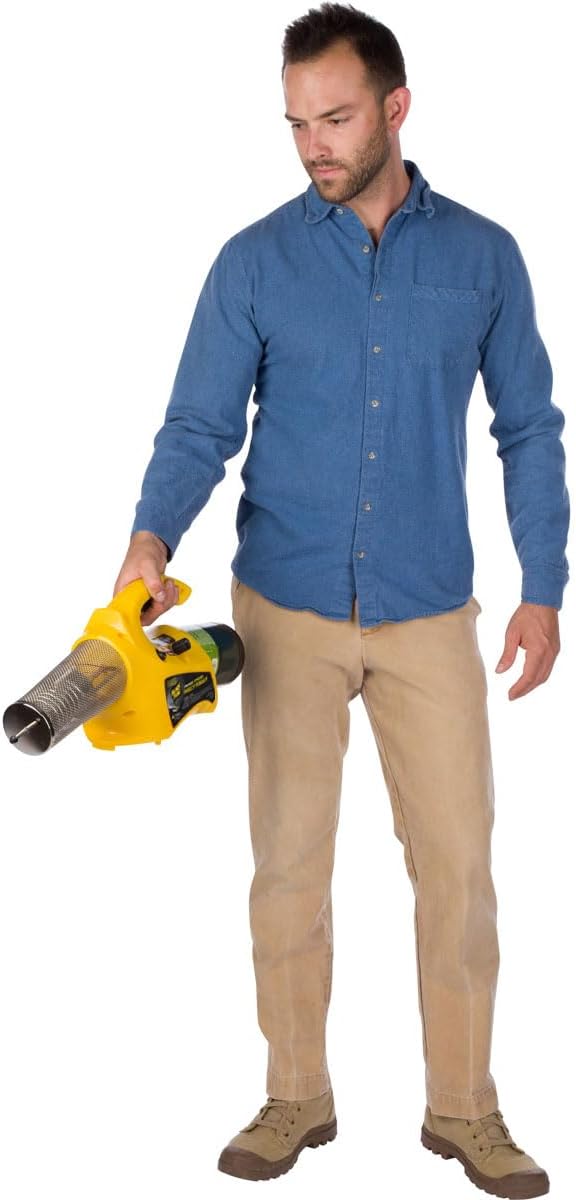
A propane fogger is essentially a handheld thermal applicator — a device that uses a small propane flame to superheat a metal coil, which then vaporizes a liquid insecticide solution into a dense, visible cloud of ultra-fine droplets. Those droplets drift through the air, making contact with mosquitoes and other flying insects on the wing. The appeal is straightforward: no electricity required, fast coverage of a large outdoor area, and a visible confirmation that something is actually happening. The three brands that dominate the consumer and prosumer propane fogger market — Black Flag, Burgess, and Repel — are sold in hardware chains and online marketplaces, price-clustered in the $30–$60 range, and frequently compared by backyard buyers who want a solution before the next cookout. What the box art does not fully explain is that the startup ritual, ignition method, and realistic fog output differ meaningfully across the three — and that several widely-reported negative reviews trace back to misunderstood expectations rather than defective hardware. This article digs into what owners across all three brands consistently report, where the real performance gaps are, and how to match the right unit to your actual use case.
The Shared Hardware Reality: Are These Really Three Different Foggers?
Here is the most clarifying piece of context you can carry into this decision: a significant number of Repel fogger owners — and some Black Flag owners — note in aggregated reviews that the units appear to share identical or near-identical underlying mechanisms, differing primarily in color, label, and included accessories. Reviewers on major retail platforms have explicitly compared the internal components of Repel and Black Flag units and found the coil assembly, tank fitting, and trigger mechanism to be functionally equivalent.
What this means practically: if you are agonizing over which of these three brands delivers a fundamentally superior fogging mechanism, you may be solving the wrong problem. The variables that actually drive performance — fog density, droplet size, consistent stream — are downstream of user technique and formulation choice far more than they are downstream of which label is on the tank.
The genuine differentiator between the three is ignition method, and this is where owners most often get surprised after unboxing.
Black Flag: Built-In Ignitor, Lowest Friction on Day One
Black Flag propane foggers in the current product lineup include a piezoelectric push-button ignitor — the same spring-loaded spark mechanism you find on a gas grill lighter. You press the button, the coil lights, you wait for warmup. For a first-time fogger buyer who wants to walk outside, light up, and get fogging without any accessories in hand, this is the most forgiving entry point in the category. Owner accounts consistently describe Black Flag as the easiest initial experience in the propane fogger segment, with the ignitor being the deciding factor for buyers who prioritize convenience over price.
Black
$74.88
In stock on Amazon
Check price on AmazonBurgess 1443: No Ignitor, Fully Capable Once You Know What to Bring
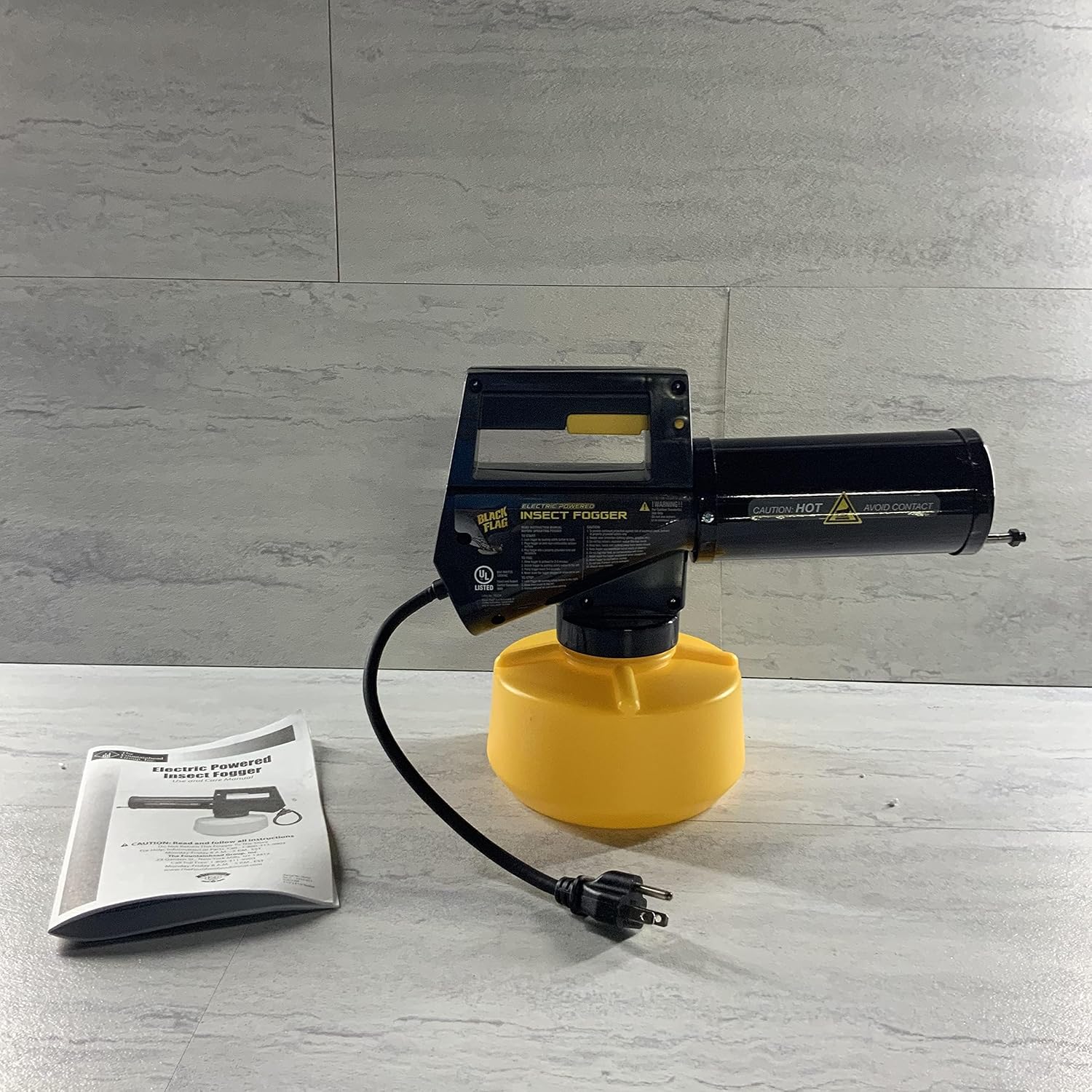
Burgess propane foggers — including the widely-sold 1443 model — do not include a built-in ignitor. This is the single most consistent source of one-star reviews for Burgess, and it is worth flagging clearly: owners across dozens of reviews describe receiving the unit, going outside to fog, and discovering only at that moment that they need a match or a separate lighter. The ignition method is a genuine operational variable for any thermal applicator, and the absence of a built-in ignitor is a documented Burgess design choice — not a manufacturing defect or a missing-parts shipping error. Per Pest Control Technology Magazine (pctonline.com), in its coverage of thermal fogger operation and maintenance best practices, ignition reliability is one of the primary service variables distinguishing thermal applicator models at the prosumer level. The Burgess is otherwise a well-regarded fogger; you simply need to bring a long-neck grill lighter every session. Owners who understand this going in consistently rate the Burgess as capable and reliable.
Black
$99.89
In stock on Amazon
Check price on AmazonRepel: Ignitor Included, But Long-Term Reliability Varies
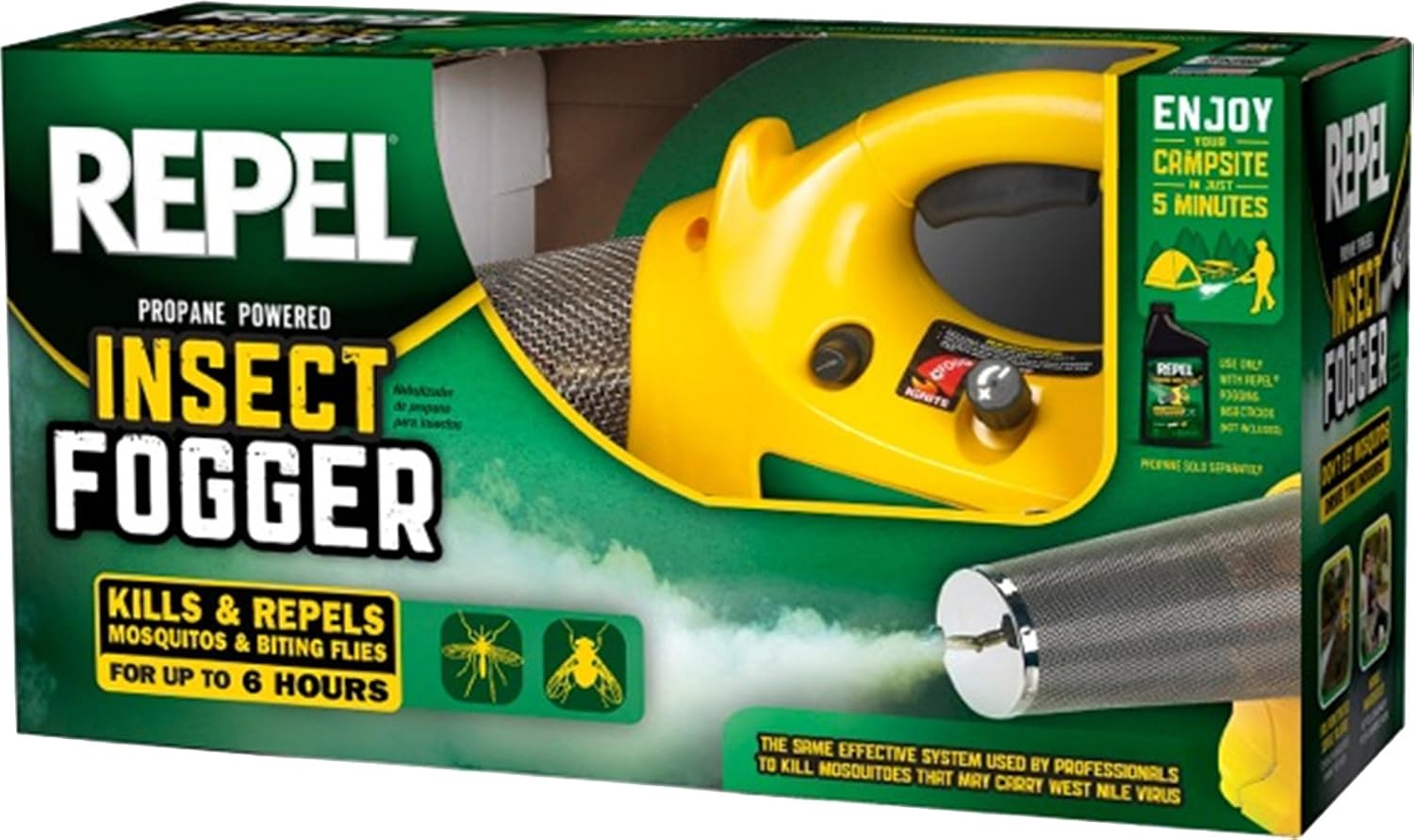
Repel occupies the middle ground in most owner accounts. Units in the current generation include a push-button ignitor in most configurations, though owners note that ignitor reliability over multiple seasons is a recurring concern — many experienced Repel users keep a backup lighter on hand regardless. The core fogging mechanism draws the same shared-hardware comparisons as Black Flag, and performance in use is comparable. Where Repel sometimes draws criticism is in price positioning: when it is priced above Black Flag for effectively equivalent hardware, owners question what the premium is actually buying. For buyers who want ignitor convenience and are comfortable with the possibility of sourcing a replacement lighter partway through the product’s lifespan, Repel is a workable choice — but the value case is harder to make when Black Flag is available at lower or equal cost.
Repel
$104.99
In stock on Amazon
Check price on AmazonKey Specifications at a Glance
| Feature | Black Flag | Burgess 1443 | Repel |
|---|---|---|---|
| Built-in Ignitor | Yes (piezo push-button) | No — match or lighter required | Yes (most models; reliability varies over time) |
| Approximate Warmup Time | ~2 minutes | ~2 minutes | ~2 minutes |
| Tank Compatibility | Standard 1 lb propane canister | Standard 1 lb propane canister | Standard 1 lb propane canister |
| Approx. Price Range | $30–$45 | $30–$45 | $35–$55 |
| Core Mechanism | Thermal coil vaporizer | Thermal coil vaporizer | Thermal coil vaporizer (shared design reported by owners) |
Warmup, Fog Stream, and the Two-Minute Rule
Every propane fogger in this category operates on the same thermal principle: the propane flame heats a metal coil (the heat exchanger), and fogging liquid fed into that hot coil instantly vaporizes into a fog cloud. The critical user variable that owners across all three brands learn — often the hard way on the first session — is that the coil needs approximately two full minutes to reach operating temperature before the fog stream develops properly.
Turn on a cold unit and pull the trigger immediately, and what you get is a thin, wet mist or a partial sputter — not the dense rolling fog cloud you were expecting. This leads to a predictable arc: owners assume the unit is broken, they leave a negative review, and then either a follow-up comment or a helpful response explains the warmup protocol. The United States Environmental Protection Agency, in its document “Insecticide Application Methods for Mosquito Control” (Office of Pesticide Programs), notes that thermal foggers require the applicator to reach full operating temperature before consistent particle sizing is achieved — this is physics, not a product flaw.
Practical protocol based on aggregated owner reports:
- Connect the propane canister securely, ensuring the valve is fully engaged.
- Open the fogging liquid reservoir and fill to the indicated line (typically 10–15 oz capacity on these units).
- Light the burner (push-button or match, depending on your unit) and set the fogger down or hold it level for approximately 2 minutes without pulling the trigger.
- After warmup, begin walking at a steady pace and pull the trigger in a consistent, sweeping motion — owners consistently report better fog density with a steady hold rather than rapid on-off cycling.
- Mid-session, if the fog stream thins unexpectedly, a brief re-prime of the trigger (releasing and re-engaging) often restores full stream. Multiple owners across Black Flag and Burgess reviews describe this behavior as normal and not indicative of a malfunction.
The warmup learning curve is steep on the first session and essentially disappears by the second. This single factor accounts for a meaningful share of the negative reviews that appear on all three products.
Runtime, Coverage, and Honest Expectations by Geography
A standard 1 lb propane canister paired with a full reservoir of fogging liquid yields roughly 8–12 minutes of active fogging time across all three brands, per owner runtime reports. Propane consumption and liquid consumption are generally balanced so that one ends near the same time as the other with normal use.
What this covers in practice depends heavily on your environment — and reviewers from different climate contexts tell very different stories.
Owners in Texas and the Gulf Coast report that propane fogging delivers meaningful, real-world mosquito knockdown — not elimination, but measurable reduction in biting pressure that lasts a few hours post-application. The Centers for Disease Control and Prevention, in its guidance document “Mosquito Control and West Nile Virus: Vector Control” (National Center for Emerging and Zoonotic Infectious Diseases), notes that adulticide fogging targeting adult mosquitoes in flight is a complement to source reduction, not a standalone solution — but for creating a patio relief window of a few hours, owners in Texas describe the fog as effective.
Owners in Minnesota and the upper Midwest, where seasonal pressure peaks in June and July, report similar satisfaction — a commonly-cited pattern describes buyers who had largely given up on backyard entertaining during peak season and found propane fogging meaningfully restored usability for evening hours.
The honest counterweight comes from Great Lakes region owners who note that coverage does not extend much beyond the immediate patio area. This is consistent with how thermal fogging works at a physics level: the fog cloud disperses, droplets settle or drift, and the knockdown zone is realistically 20–40 feet around the application path, not the entire backyard. If you have a large property or heavy tree coverage that creates still-air pockets deeper in the yard, one fogging session with a handheld unit will not saturate the full area. This is a coverage expectation issue, not a product defect.
The propane odor variable deserves a direct mention. Some owners who have switched from propane units to electric cold foggers name propane combustion odor as the deciding factor. If you are fogging near open windows, in tight urban yards, or in any situation where guests will notice a faint combustion smell during the warmup phase, this is a legitimate quality-of-life consideration. Cold foggers (ULV electric units) do not generate combustion odor; propane thermal foggers always will to some degree.
Chemical Compatibility: Can You Use Any Fogging Liquid?
This is a procurement question that comes up consistently, and the answer is more nuanced than the marketing suggests. The National Pesticide Information Center at Oregon State University (npic.orst.edu), in its “Pyrethrin and Pyrethroid General Fact Sheet,” identifies pyrethrins and pyrethroids as the active ingredients in virtually every consumer mosquito fogging liquid. The chemical class itself is not what creates compatibility issues with the fogger’s internal components. The concern is the carrier solvent in the formulation.
Burgess and Black Flag both market their own branded fogging liquids, and both units are designed around oil-based pyrethrin formulations. Owners who use water-based or water-diluted formulations in a thermal fogger consistently report poor fog quality — the water content resists vaporization at the temperatures these coils reach, and the result is a wet, spattering output rather than a true fog cloud. The hardware is not damaged per se, but the performance degrades significantly.
Pest Control Technology Magazine (pctonline.com), in its equipment maintenance guidance for thermal applicators, reinforces that the heat exchanger coil in consumer thermal foggers is designed around the vaporization temperature of petroleum-carrier formulations. Mismatched solvents — particularly water-based concentrates intended for cold fogger or ULV use — are among the leading causes of coil fouling and inconsistent output in the thermal fogger category.
The practical rule: use an oil-based fogging concentrate rated for thermal foggers. Brand interoperability is high — Burgess liquid works in a Black Flag unit and vice versa, and third-party oil-based pyrethrin concentrates from pest control suppliers work equally well in either. What does not work is substituting a water-based product or a cold-fogger concentrate not designed for thermal application.
Fogging in Wind: The Condition That Defeats All Three Units
There is no version of this comparison where wind is not a significant variable. All three brands — and every thermal propane fogger in this category — lose meaningful effectiveness in conditions above approximately 10 mph. The fog cloud disperses before achieving knockdown concentration, droplets drift away from the target area, and the coverage footprint shrinks substantially.
Owner accounts across all three brands consistently describe fogging as most effective in calm conditions: early morning, evening after sunset when wind typically drops, or overcast days with low airflow. Reviewers in Texas and Minnesota specifically note timing their sessions around early dusk — not only for reduced wind, but because that is when mosquito activity peaks in their regions, aligning application timing with target pest activity.
If your property consistently experiences afternoon wind, a propane fogger will underperform relative to calm-condition use regardless of which brand you choose. This is not a reason not to buy one; it is a reason to plan sessions around weather conditions rather than convenience.
Frequently Asked Questions
Do all these propane foggers use the same mechanism under different brand names?
Based on aggregated owner comparisons, Repel and Black Flag units in the current generation appear to share very similar or identical core mechanisms — coil assembly, tank fitting, trigger hardware — with differences primarily in color, labeling, and accessories. Burgess has historically used a design that does not include a built-in ignitor. The practical implication: fog output, droplet size, and runtime are comparable across brands, and the ignition method is the most meaningful operational differentiator.
Which propane foggers have a built-in ignitor and which require a match?
Black Flag includes a piezoelectric push-button ignitor. Repel includes one on most current configurations, though reliability varies with age and season count. Burgess does not include an ignitor — a match, grill lighter, or separate long-neck lighter is required every session. This is the most commonly misunderstood product specification in the Burgess category and is responsible for a significant share of its negative owner reviews.
How long does one propane canister last per session?
Owners report roughly 8–12 minutes of active fogging per standard 1 lb propane canister, with the liquid reservoir typically running out at approximately the same time. If you are fogging a large area, two canisters and two full reservoirs per session is a reasonable planning figure.
Can I use any brand of fogging liquid in a Burgess or Black Flag propane fogger?
Yes, with one important constraint: the formulation must be oil-based and rated for thermal fogger use. Burgess liquid works in a Black Flag unit, Black Flag liquid works in a Burgess unit, and third-party oil-based pyrethrin concentrates work in either. Water-based formulations and cold-fogger concentrates are incompatible with thermal units and will produce poor-quality fog output regardless of warmup time.
How do I get a consistent fog stream instead of a thin spray?
Allow the unit to warm up for a full two minutes before pulling the trigger. Maintain a steady walking pace and a consistent trigger hold rather than rapid cycling. If the stream thins mid-session, briefly release and re-engage the trigger to re-prime. Confirm you are using an oil-based fogging formulation — water-based liquids will produce a thin, wet output regardless of warmup time.
Is fogging effective in windy conditions?
No. Owner accounts and application physics consistently confirm that wind above approximately 10 mph disperses the fog cloud before it achieves effective knockdown concentration. Early morning and early evening — when wind typically drops and mosquito activity peaks — are the optimal application windows across all three brands.
The Decision Rule
If you want the simplest, lowest-friction entry into propane fogging: Black Flag, primarily because the built-in ignitor removes a friction point that derails first-session experiences with Burgess. The hardware is equivalent; the startup experience is better.
Black
$74.88
In stock on Amazon
Check price on AmazonIf you already own a grill lighter and the ignitor absence is genuinely not a factor for you, Burgess is equally capable and often priced at or below Black Flag — the negative reviews are almost entirely attributable to the ignitor surprise rather than actual performance issues.
Black
$99.89
In stock on Amazon
Check price on AmazonIf you are considering Repel and the unit you are looking at is priced above Black Flag or Burgess for comparable specs, ask what you are paying for — given the shared-hardware pattern owners report, the premium may not track to a performance difference.
Repel
$104.99
In stock on Amazon
Check price on AmazonIf propane combustion odor is a concern for your environment, none of these three is the right answer — a ULV cold electric fogger addresses that constraint directly. And if your primary goal is treating more than a 30–40 foot radius around a patio on a regular basis, the honest answer is that the propane handheld category as a whole is underspecified for that job. A motorized ULV applicator or a permanent misting system is the appropriate tier for that coverage requirement.