August 21, 2026 • Elena Garcia • 10 min reading time • Specs verified June 25, 2026
Patio Misting on a Budget: Garden-Hose Kits, Mid-Pressure Pumps, and Portable Battery Systems Compared
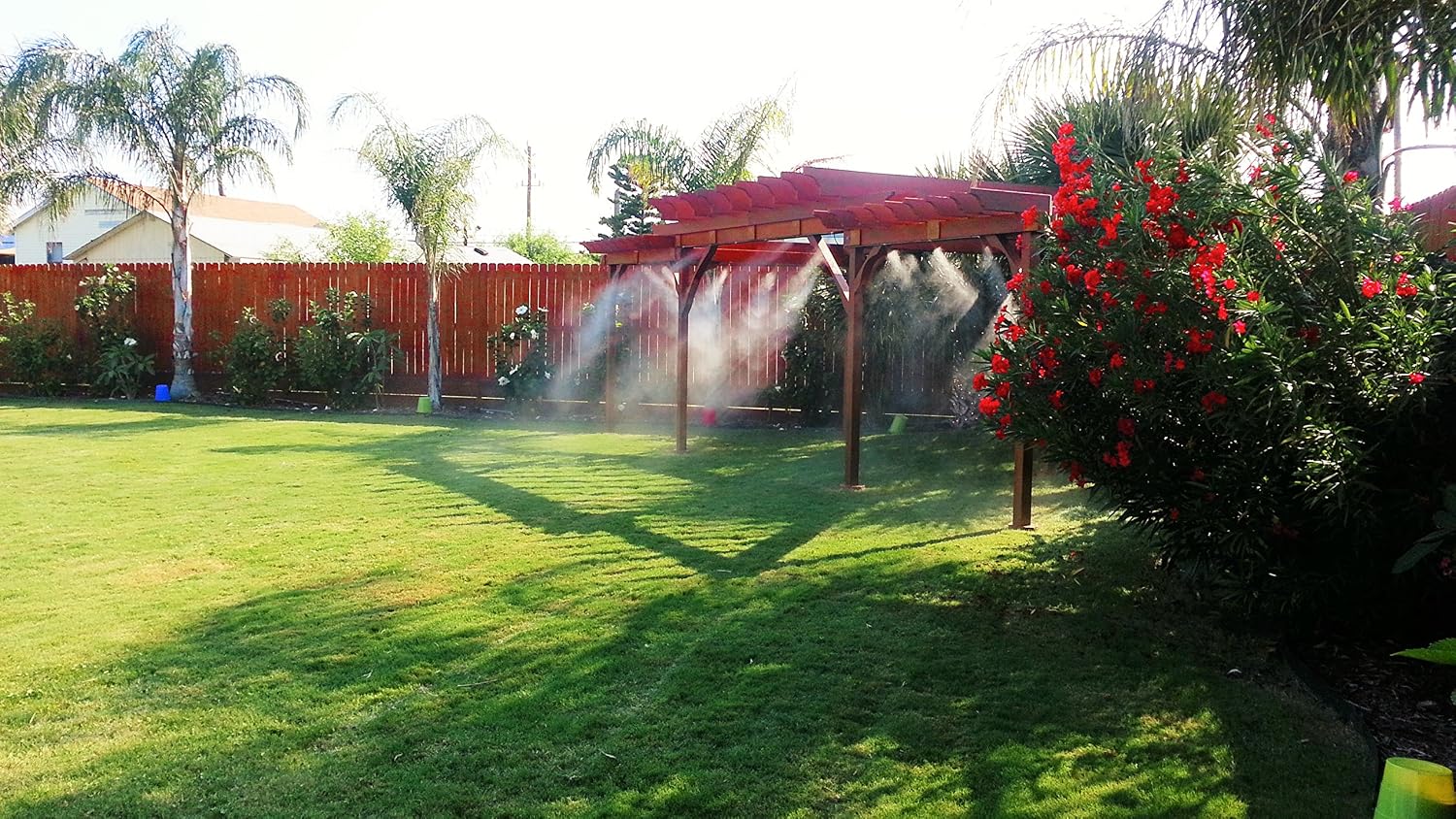
A patio misting system turns ordinary water into a fine spray of tiny droplets that evaporate quickly in hot air, pulling heat out of the surrounding space in the process. That evaporative cooling effect — the same physics behind sweating — can drop the perceived temperature in a shaded outdoor area by anywhere from 10°F to 20°F on a dry day. The catch is that “misting system” covers an enormous range of products, from $25 garden-hose add-ons to engineered high-pressure installations costing thousands. This article focuses on the budget and mid-range tiers: garden-hose kits that run directly off your outdoor spigot, mid-pressure pump systems that boost water pressure for a finer mist, and the newer category of rechargeable battery-powered portable misters. If you’re trying to decide which tier makes sense for your patio — or whether a pump upgrade is worth the money — this comparison gives you the decision framework and the honest tradeoffs.
| EDITOR'S PICKResidential Patio Misting Syste… | Mid-tierhomenote Misting Cooling System… | Budget pickhomenote Misting Cooling System… | |
|---|---|---|---|
| Misting line | — | 75 ft (23 m) | 59 ft (18 m) |
| Nozzles | 12 | 28 | 20 |
| Pump psi | 200 psi | — | — |
| Adapter size | — | 3/4" | 3/4" |
| Cooling claim | Up to 30°F | — | — |
| Made in USA | ✓ | — | — |
| Price | $259.99 | $26.35 | $22.17 |
| See on Amazon → | See on Amazon → | See on Amazon → |
How Each Tier Actually Works (And Where It Breaks Down)
Understanding the mechanism matters here because it explains why one misting kit soaks the patio furniture while another gently cools the air. It almost always comes down to operating pressure and nozzle orifice size.
Garden-Hose Kits
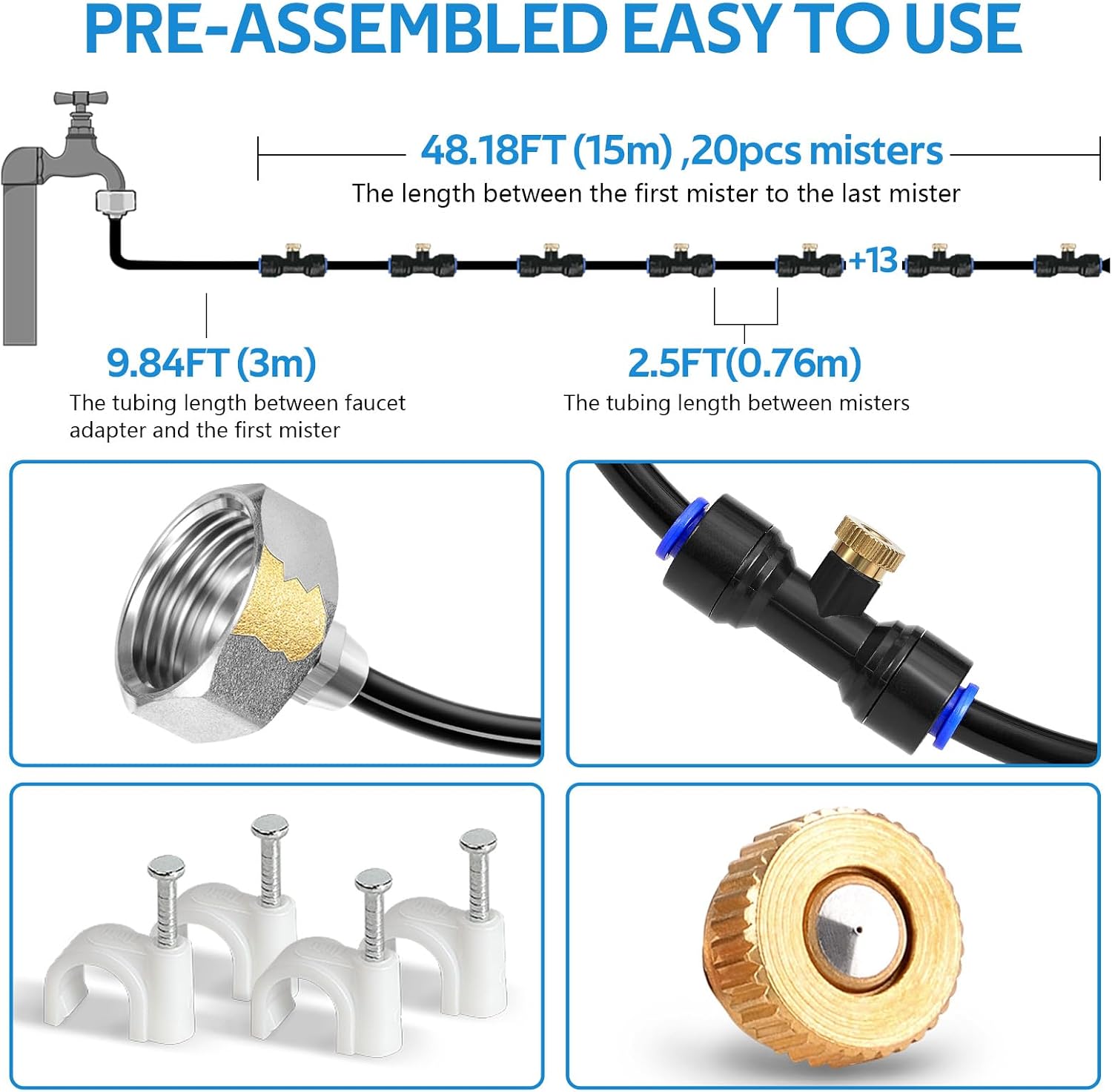
Garden-hose kits — the most widely reviewed entry-level products in this category — run on whatever pressure comes out of your outdoor spigot, typically 40–60 PSI (pounds per square inch) for a standard municipal residential supply. At that pressure, the nozzles produce a mist, but the droplet size is relatively large, in the 50–100 micron VMD (volume median diameter) range. Larger droplets fall faster before fully evaporating, which means some of the cooling happens at ground level rather than in the air you’re sitting in.
In very dry climates — Arizona, West Texas, inland California — this is still dramatically effective. Owners in those regions consistently report 10–15°F drops in shaded areas. In humid climates, larger droplets landing on surfaces before evaporating is more of a problem because the air is already closer to saturation and cannot accept moisture as quickly.
homenote 18M
$22.17
In stock on Amazon
Check price on AmazonMid-Pressure Pump Kits
Mid-pressure pump kits add a small electric booster pump to the system, typically targeting 100–160 PSI. That pressure boost produces a meaningfully finer mist — droplet VMD dropping toward 20–40 microns — which flash-evaporates before reaching surfaces. This is the practical difference between “cooling the air” and “wetting the patio furniture.”
The tradeoff is mechanical complexity. A pump running continuously on a hot afternoon is working hard, and lower-cost pumps in this tier have a documented overheating problem: the motor reaches thermal limits after two to three hours of continuous use and shuts down without warning — precisely when you need it most. The single most important pump specification to verify before buying is automatic thermal reset, a feature that allows the motor to cool briefly and restart on its own rather than requiring a manual intervention. This Old House, in their guide to misting system installation (thisoldhouse.com), identifies fitting compatibility as the most common source of leaks in DIY mid-pressure installations and recommends verifying that tubing and compression fittings are pressure-rated to match the pump’s output before committing to an upgrade.
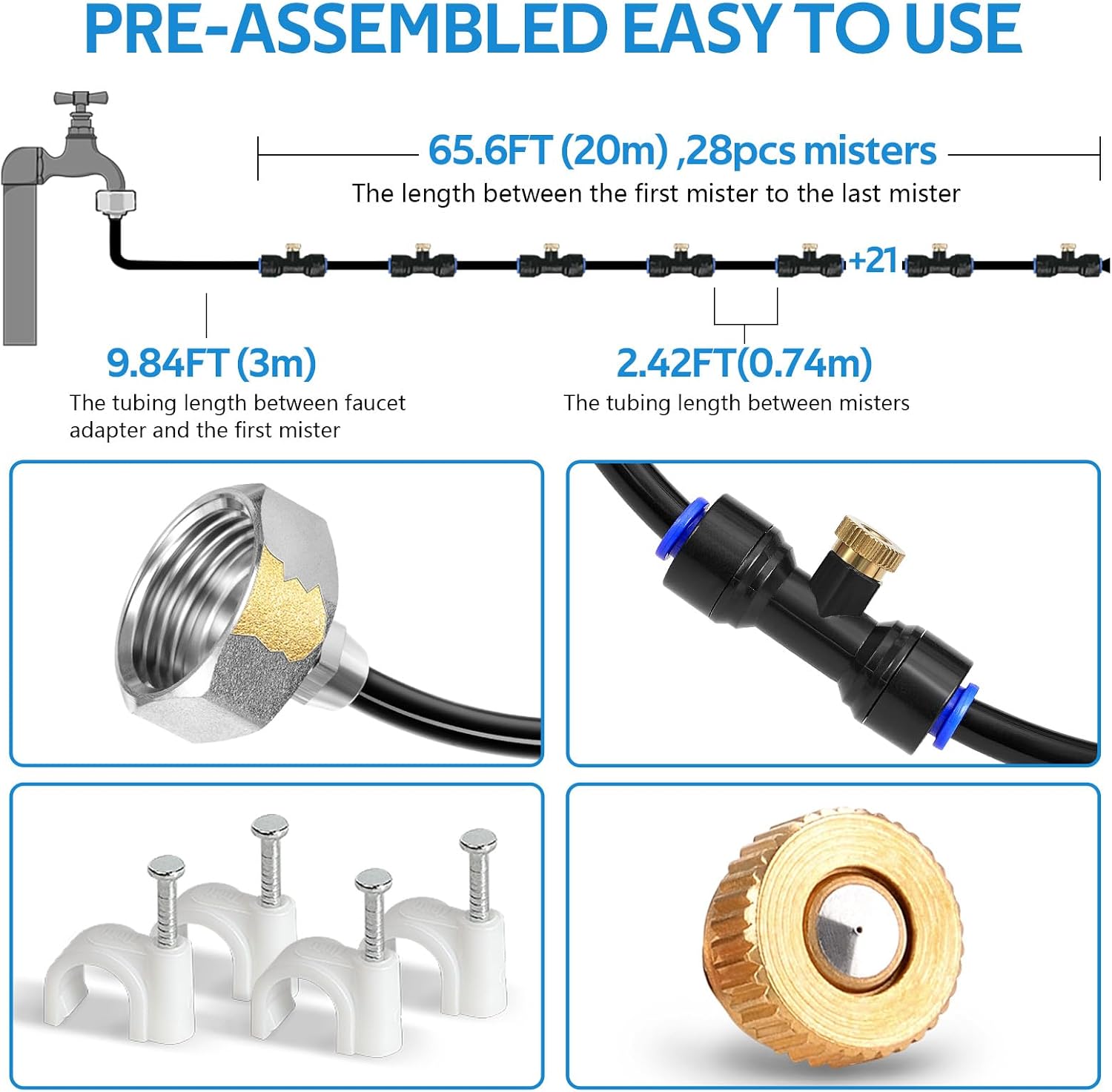
homenote 23M
$26.35
In stock on Amazon
Check price on AmazonBattery-Powered Portable Misters
Battery-powered portable misters are a fundamentally different product category. Rather than running a fixed line of nozzles around a pergola, these self-contained units combine a reservoir, a small pump, and a rechargeable battery pack that you carry or mount wherever cooling is needed. Owners use them on boat decks, golf carts, outdoor dining tables, and children’s play areas. Battery longevity in this category frequently exceeds buyer expectations — multiple owner accounts report 4–6 hours of runtime on a single charge at moderate mist settings, consistent with the output of comparable 4,000–6,000 mAh battery capacities at that draw rate.
One useful performance technique that appears independently across multiple owner accounts: filling the reservoir partially with ice on extreme heat days lowers the mist temperature at the nozzle and briefly converts the unit into a short-range evaporative pre-cooler. Good Housekeeping, in their review of outdoor misting products (goodhousekeeping.com), notes that portable units deliver directional cooling close to the body rather than conditioning an air volume, which changes the use case but also means they remain useful even in humid climates where ambient-air misting is less effective.
Residential
$259.99
In stock on Amazon
Check price on AmazonThe Numbers: Pressure, Droplet Size, and Cooling Potential
The table below summarizes the key performance variables across tiers. High-pressure systems are included for reference context; they are outside the budget scope of this article but represent the honest answer when true flash-evaporation across a large commercial patio is required.
| Tier | Typical Pressure | Approx. VMD Droplet Size | Best-Case Cooling Drop (Dry Climate) | Wet-Surface Risk |
|---|---|---|---|---|
| Garden-hose kit (no pump) | 40–60 PSI | 50–100 µm | 10–15°F | Moderate |
| Mid-pressure pump kit | 100–160 PSI | 20–40 µm | 15–20°F | Low |
| Battery portable | Low (reservoir-fed) | 30–80 µm | Localized / directional | Low (close range) |
| High-pressure system (reference) | 800–1,200 PSI | 5–15 µm | 20–30°F | Minimal |
homenote 18M
$22.17
In stock on Amazon
Check price on Amazonhomenote 23M
$26.35
In stock on Amazon
Check price on AmazonResidential
$259.99
In stock on Amazon
Check price on AmazonSources: University of California Cooperative Extension, UC ANR Publication 8574 on evaporative cooling; Good Housekeeping outdoor misting system review (goodhousekeeping.com); manufacturer-published specification sheets for representative products in each tier.
The Upgrade Path: Adding a Pump to a Kit You Already Own
One of the most common questions in the garden-hose kit category comes from owners who installed a basic kit and want more performance without replacing the entire system. This is a legitimate and cost-effective upgrade path, but two constraints must be verified before purchasing a pump.
Nozzle pressure rating. Most garden-hose kit nozzles — whether brass or plastic — carry a maximum operating pressure rating. Inexpensive plastic nozzles are often rated to 80 PSI; brass nozzles in the same kits typically handle 100–120 PSI. If you add a pump that delivers 150 PSI to a system with 80 PSI nozzles, you risk blowing nozzles out of their fittings or cracking the orifice — turning a mist line into an unintended sprinkler. Verify the nozzle pressure rating before sizing a booster pump.
Tubing and fitting compatibility. The compression fittings on most garden-hose kits are designed for low-pressure service. Upgrading to a quality pump often means also replacing tubing with nylon or LLDPE rated to the pump’s output pressure, and switching to stainless push-to-connect fittings. As noted by This Old House (thisoldhouse.com) in their misting system installation guide, fitting compatibility is the most commonly overlooked step in DIY mid-pressure upgrades and the most frequent source of post-installation leaks.
When selecting a pump for this application, prioritize units that include automatic thermal reset — the feature that allows the motor to cool briefly and restart on its own during extended hot-weather runs. This single specification separates pumps that reliably sustain an afternoon of use from those that require a manual reset at the worst possible moment.
Rough cost math for the upgrade path:
- Existing garden-hose kit (already owned): $0 additional
- Quality booster pump with thermal reset: approximately $80–120
- Fitting and tubing upgrade if needed: approximately $20–40
- Total to reach mid-pressure performance from an existing kit: $100–160
That compares favorably to purchasing an all-in-one mid-pressure kit from scratch at $150–250, assuming your existing nozzles and tubing are pressure-rated for the upgrade.
Climate Reality Check: Humidity Changes Everything
Consumer Reports, in their outdoor cooling buying guide (consumerreports.org), is direct on this point: evaporative cooling effectiveness drops sharply as relative humidity rises above 60%. In Phoenix or El Paso in July, where afternoon humidity runs 10–20%, even a basic garden-hose kit delivers dramatic cooling. In Miami, Tampa, or Houston — where summer humidity regularly exceeds 70–80% — the air is already close to saturation, and added moisture evaporates less efficiently. The mist contacts surfaces rather than flash-evaporating in midair, and the net result can be an uncomfortable damp environment rather than meaningful cooling.
This doesn’t mean misting systems are useless in humid climates, but it changes the product decision substantially:
- Higher pressure matters more in humid climates, not less. Finer droplets from a mid-pressure pump evaporate faster even in humid air because their surface-area-to-mass ratio is dramatically higher. A 15-micron droplet evaporates far faster than a 150-micron droplet at identical humidity, because the smaller drop presents proportionally more surface area relative to its water mass.
- Shading is a force multiplier. University of California Cooperative Extension research on outdoor evaporative cooling, published as UC ANR Publication 8574, consistently finds that combining shade with misting produces far better perceived comfort than misting alone, because radiant heat from direct sun is removed from the equation before misting begins.
- Battery portable units work differently in humidity. Because they deliver directional cooling close to the body rather than conditioning an air volume, they remain useful even in humid conditions — the cooling effect is on the surface of your skin, not the surrounding air mass.
- A garden-hose kit in a humid climate is genuinely marginal. Good Housekeeping’s misting system review (goodhousekeeping.com) specifically flags this for Gulf Coast and Southeast buyers: without higher pressure to produce finer droplets, the mist largely deposits on surfaces rather than evaporating, and the system may disappoint.
Frequently Asked Questions
Will a garden-hose misting kit actually cool my patio or just wet the ground?
In dry climates, yes — dramatically so. Owners in Arizona and Texas report 10–15°F drops in shaded areas with basic garden-hose kits. The key is that mist must evaporate before contacting a surface. If you’re seeing wet furniture, you likely need higher pressure — a booster pump — or fewer nozzles so each receives more flow pressure. In humid climates the evaporation is less complete and some surface wetting is more likely.
What pressure do I need for a truly fine, dry mist?
Truly dry mist — droplets that flash-evaporate in midair before reaching any surface — requires high pressure: 800–1,200 PSI in engineered systems. At standard garden-hose pressure (40–60 PSI), some droplets will land on surfaces. At mid-pressure pump levels (100–160 PSI), mist is significantly finer and mostly evaporates in dry conditions. If completely dry mist is a firm requirement for an occupied commercial patio, a high-pressure engineered system is the honest answer.
How long does the battery last on a rechargeable portable misting system?
Based on owner accounts across multiple products in this category, runtime at moderate mist output runs 4–6 hours on a full charge, consistent with manufacturer-rated capacity for 4,000–6,000 mAh packs at that draw rate. Running the unit at maximum output shortens that to 2–3 hours. The ice-reservoir technique adds effective cooling without increasing battery draw.
Can I add a booster pump to a garden-hose kit I already own?
Yes, with two caveats: verify that your existing nozzles are rated for the pump’s output pressure (look for 100+ PSI on the nozzle packaging or product listing), and confirm your tubing and fittings are rated to match. If both check out, prioritize pumps with automatic thermal reset to avoid the overheating shutdowns documented in lower-cost alternatives.
Do brass nozzles really last longer than plastic nozzles in hard-water areas?
Yes, meaningfully so. Mineral scale gradually occludes nozzle orifices regardless of material, but plastic orifices are more easily deformed during cleaning and more vulnerable to UV degradation in permanent outdoor installations — a concern Good Housekeeping’s outdoor misting review (goodhousekeeping.com) specifically flags for sun-belt climates. Brass nozzles tolerate the repeated wire-brush cleaning cycles that hard water requires, hold their orifice geometry longer, and do not become brittle over multiple seasons. If you’re in a hard-water region and planning to run the system for more than one season, brass is the correct material choice.
Will a misting system work in Florida or just add more humidity?
It adds some humidity to the environment, but the right system still provides meaningful comfort. The key shift in humid climates is that pressure matters more: finer droplets from a mid-pressure pump evaporate faster even at 75% relative humidity, while large droplets from a garden-hose-only kit mostly deposit on surfaces. Shade combined with mid-pressure misting is the effective combination for Florida-type climates, per University of California Cooperative Extension guidance on outdoor evaporative cooling, published as UC ANR Publication 8574. A garden-hose-only kit in high humidity is genuinely marginal and should be evaluated with realistic expectations.