August 19, 2026 • Elena Garcia • 11 min reading time • Specs verified June 25, 2026
Natural Mosquito Yard Sprays vs. Synthetic Concentrates: Smell, Residual, and Honest Expectations
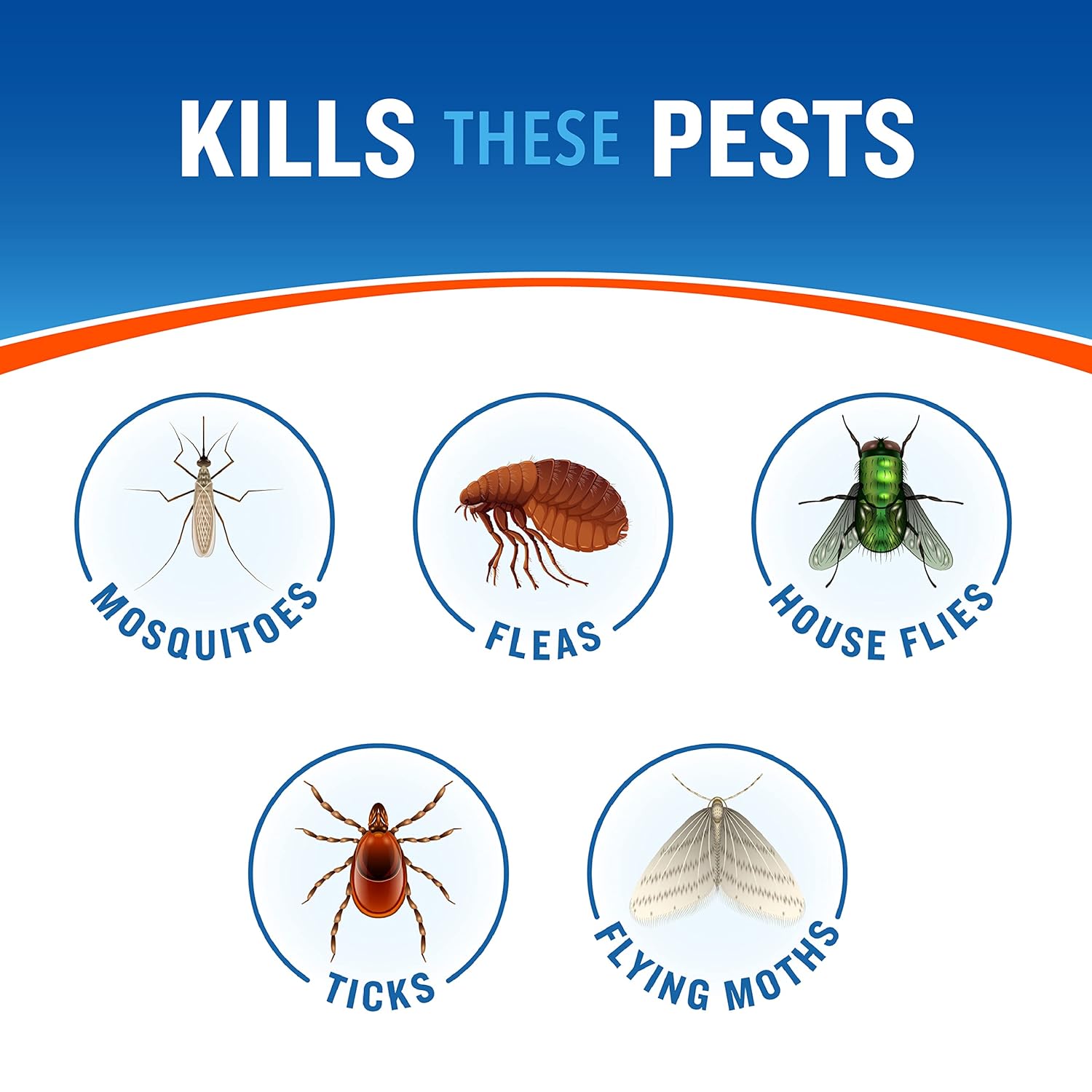
If you’ve ever stood in a big-box store aisle comparing “natural” mosquito yard sprays to the conventional synthetic ones, you know the marketing copy on both sides is nearly useless. The natural products lean hard on words like plant-based and family safe, while the synthetics promise weeks of residual protection without explaining what “residual” — meaning how long the active ingredient stays effective after application — actually means in your specific yard conditions. This article cuts through both sales pitches. A concentrate is a product you dilute with water and then apply — either through a hose-end sprayer, a backyard pump sprayer, or a powered ULV (ultra-low-volume) fogger that breaks the liquid into fine airborne droplets. We’re specifically looking at three products that generate the most buyer conversation right now: Mosquito Magician (garlic-oil-based, natural category), Cutter Backyard Bug Control (synthetic pyrethroid), and ULD BP-100 (professional-tier synthetic). By the end, you’ll have a clear decision framework — not a marketing pitch.
| EDITOR'S PICKMosquito Magician Backpack Fogg… | Mid-tierULD BP-100 Fogging Concentrate… | Budget pickCutter Backyard Bug Control Spr… | |
|---|---|---|---|
| Fogger included | ✓ | ✗ | ✗ |
| Concentrate volume | 2 gal | 1 gal | 96 fl oz |
| Power source | Gas | — | — |
| Application method | Fogger | Fogging | Spray |
| Target pests | Mosquitoes, fleas, fire ants | — | Mosquitoes, fleas, ants |
| Pack count | 1 | 1 | 3 |
| Price | $599.95 | $99.95 | $20.33 |
| See on Amazon → | See on Amazon → | See on Amazon → |
What You’re Actually Trading Off: Natural vs. Synthetic
The core tradeoff isn’t really “safe vs. dangerous.” It’s odor livability vs. chemical exposure concerns, and neither category gives you a permanent solution. Full stop. That framing matters because buyers in both camps sometimes arrive with unrealistic expectations — natural buyers assuming zero environmental footprint, synthetic buyers assuming they’ll never see a mosquito again.
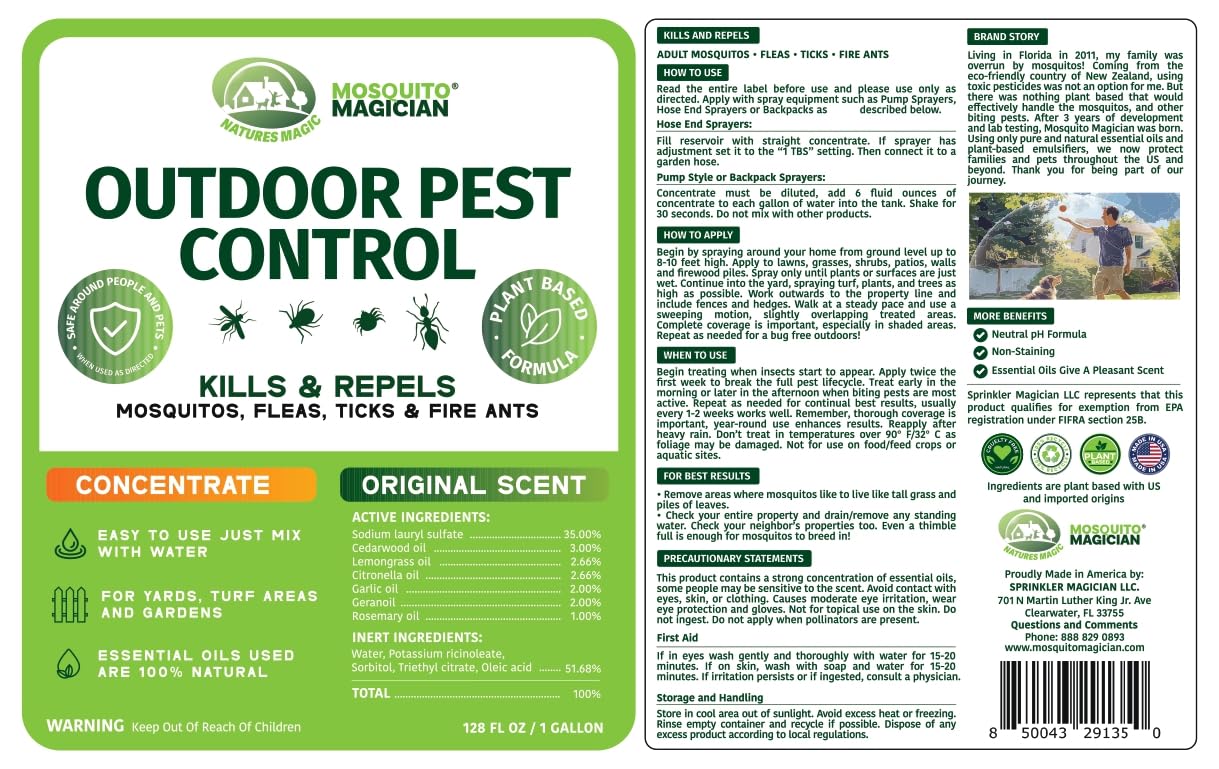
Natural concentrates — primarily garlic-oil formulas like Mosquito Magician — work through a combination of repellency and short-term contact action. The sulfur compounds in garlic oil irritate mosquito sensory receptors, and when sprayed on foliage, the coating creates an environment mosquitoes find hostile for a period of days. The mechanism is real. What’s also real: the smell.
The odor issue with Mosquito Magician isn’t subtle. Buyers who’ve received the product report the smell penetrating cardboard shipping boxes strongly enough to permeate enclosed spaces for days after delivery. That’s not a one-off anecdote — it reflects the sulfur compound volatility that makes the product work in the first place. Counterbalancing this, buyers who specifically sought a natural formula describe the scent as acceptable for properties where they have children or pets they’re trying to keep away from synthetic chemicals. The divide is genuine: odor is simultaneously Mosquito Magician’s mechanism of action and its livability challenge, and your tolerance is a legitimate variable in the buying decision.
Synthetic concentrates based on pyrethroids — the family of synthetic insecticides that includes bifenthrin and lambda-cyhalothrin — work differently. According to the National Pesticide Information Center’s Bifenthrin General Fact Sheet (NPIC, npic.orst.edu), these compounds disrupt the sodium channels in insect nerve cells, causing paralysis and death on contact, and they persist on treated surfaces after the liquid carrier has dried. That persistence is the residual. It’s also what makes them contentious for buyers worried about pollinator exposure: as documented in the EPA’s Pyrethrins and Pyrethroids Registration Review (U.S. Environmental Protection Agency, epa.gov), pyrethroids are toxic to bees and aquatic invertebrates. Avoiding spray drift onto flowering plants and water features isn’t optional best practice — it’s the difference between responsible and harmful use.
Product-by-Product Reality Check
The three products below represent meaningfully different tiers of the concentrate market. Each H3 section closes with a tier marker so you can jump directly to your decision point.
Mosquito Magician: Consistent Schedule Required
The honest answer on whether garlic oil works is: yes, within a realistic window. Owners who apply Mosquito Magician on a consistent weekly or bi-weekly schedule — especially during peak mosquito season — consistently report meaningful reduction in mosquito activity. The keyword there is consistent. The residual window for garlic-oil products is materially shorter than for pyrethroids, particularly after rain. In a high-pressure mosquito area — coastal Florida, Gulf Coast states, anywhere with standing water nearby — owners describe needing to reapply every 7–10 days or immediately after a rainfall event to maintain the effect.
Where Mosquito Magician earns its strongest reviews is in the backpack fogger bundle format, where buyers deliberately chose it because they wanted a natural option and accepted the odor as part of the deal. For a property owner with young children or dogs who spend significant time on treated grass, the tradeoff calculation often tips toward natural despite the shorter residual. The University of California Cooperative Extension IPM Program’s Mosquitoes Pest Note (UC Davis IPM Program) notes that cultural controls — eliminating standing water, adjusting timing of outdoor activity — must accompany any chemical or botanical spray program to get meaningful long-term results, and that advice applies doubly for shorter-residual natural products.
Cutter
$20.33
In stock on Amazon
Check price on AmazonCutter Backyard Bug Control: The Repeat-Purchase Champion
Cutter Backyard Bug Control concentrate is where the most credible long-term, repeat-purchase language appears in owner experience. Buyers in Wisconsin and Florida — two states with very different mosquito pressure profiles — describe it as their definitive choice after years of trying alternatives. That geographic spread matters: Wisconsin represents a seasonal, moderate-to-high pressure scenario; Florida represents year-round, heavy pressure. The fact that the same product earns “definitive choice” language from both cohorts suggests genuine versatility.
The active ingredient is lambda-cyhalothrin, a pyrethroid in the same family as bifenthrin. Residual claims from manufacturers suggest 4–8 weeks under ideal conditions, but owner reports are more conservative in practice. In high-humidity, high-rain environments like Florida, 3–4 weeks between applications is a more realistic planning interval. In drier climates or on surfaces with less UV exposure — the underside of deck boards, shaded shrub foliage — the residual runs longer.
Rough cost comparison at scale:
| Product | Dilution ratio | Approx. coverage per gallon concentrate | Est. cost per acre |
|---|---|---|---|
| Mosquito Magician | 4 oz / gallon water | ~10,000 sq ft | $12–$18 |
| Cutter Backyard Bug Control | 3 oz / gallon water | ~5,000 sq ft | $8–$14 |
| ULD BP-100 | 1–3 oz / gallon (varies) | Scales to property | $6–$12 at volume |
Estimates based on manufacturer dilution guidance and published concentrate pricing as of Q1 2026. Actual costs vary by purchase quantity and supplier.
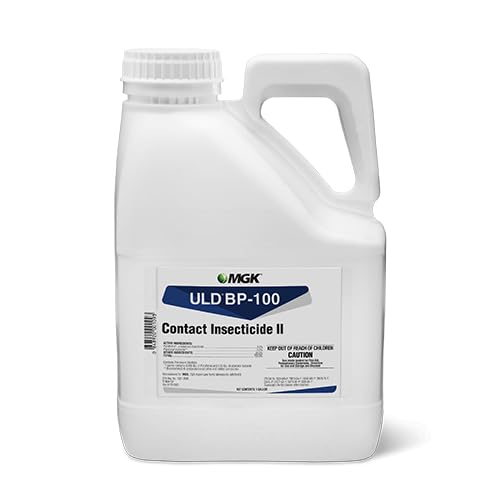
ULD
$99.95
In stock on Amazon
Check price on AmazonULD BP-100: For the Operator Who’s Done Experimenting
ULD BP-100 occupies a different tier entirely. Buyers describing viscosity characteristics, custom blending experiments, and tick control alongside mosquito suppression are telling you something about the product’s intended audience: these are people running regular spray programs on multiple properties, not homeowners making one purchase decision per season.
The active ingredient mix — typically combining a synthetic pyrethroid with a synergist such as piperonyl butoxide (PBO) — is formulated for ULV (ultra-low-volume) cold fogger application as well as conventional dilution-and-spray use. This is an important clarification: ULD BP-100 is not a thermal fogger-only concentrate. Its viscosity profile is compatible with cold ULV fogger equipment, though operators should confirm compatibility with their specific machine manufacturer before committing to a large-volume purchase, since viscosity requirements vary by machine model.
The tick control capability distinguishes ULD BP-100 from most yard spray concentrates, which are formulated and marketed primarily for flying insects. Operators managing properties with deer pressure and tick habitat — wooded edges, tall grass transition zones — describe it as a meaningful differentiator that justifies the higher per-unit cost at small purchase sizes. The CDC’s Mosquito Control guidance (Centers for Disease Control and Prevention, cdc.gov) consistently emphasizes that integrated vector management — combining physical, biological, and chemical controls — outperforms single-method programs, and ULD BP-100’s dual flying/crawling pest coverage fits that integrated approach better than most residential-tier concentrates.
Mosquito
$599.95
In stock on Amazon
Check price on AmazonApplication Method: Does Equipment Actually Matter?
Short answer: yes, meaningfully — but not equally for all products.
For natural concentrates, a hose-end sprayer delivers adequate results for most homeowners. The larger droplet size produced by hose-end sprayers — typically 200–400 microns VMD (volume median diameter, the droplet size at which half the spray volume is in larger drops and half in smaller) — is not ideal for airborne mosquito contact knockdown, but it’s effective for foliage coating, which is the primary mechanism for garlic-oil residual.
For synthetic concentrates, smaller droplet sizes — in the 20–50 micron VMD range from a ULV cold fogger, versus 150–300 microns from a pump sprayer — dramatically increase the proportion of active ingredient that reaches resting mosquitoes on foliage surfaces and suspended in the air column. This is where equipment investment genuinely changes outcomes. A cold ULV fogger running Cutter or ULD BP-100 at manufacturer-specified dilution will out-perform the same chemical applied through a hose-end sprayer — not because of the product, but because of droplet distribution physics.
That said, a hose-end sprayer running Cutter concentrate is still a substantial improvement over no treatment, and for homeowners managing a standard residential lot under half an acre, the equipment upgrade math may not pencil out immediately. For pest-control operators managing multiple accounts or property owners working acreage, the cost-per-acre efficiency of a powered ULV or backpack mist blower justifies the capital expense quickly.
Frequently Asked Questions
Does Mosquito Magician actually work, or is the garlic smell the only thing it repels?
The active mechanism — sulfur compounds from garlic oil irritating mosquito sensory receptors — is documented and real. Owners who apply it consistently on a 7–10 day schedule report genuine activity reduction. The smell is a byproduct of the mechanism, not a substitute for it. Expect shorter residual windows than synthetic alternatives, especially after rain.
How long does Cutter Backyard Bug Control concentrate actually last between applications in a high-mosquito area?
Manufacturer claims of 4–8 weeks represent ideal conditions. In high-humidity, high-rainfall regions like the Florida Gulf Coast, owner reports consistently cluster around 3–4 weeks as the practical reapplication interval. In drier climates with less UV exposure on treated surfaces, you may stretch closer to 6 weeks.
Can I use ULD BP-100 in a cold ULV fogger, or is it only for thermal foggers?
ULD BP-100’s viscosity profile is compatible with cold ULV fogger application. Operators describe using it in exactly that configuration. Confirm compatibility with your specific fogger manufacturer before a large purchase, as viscosity requirements vary by machine. It is not exclusively a thermal fogger product.
Do I need a fogger machine to apply these concentrates, or does a hose-end sprayer work just as well?
A hose-end sprayer works and is sufficient for foliage-coating applications, especially with natural concentrates. For synthetic concentrates used for knockdown of flying mosquitoes, smaller droplet sizes from powered equipment improve effectiveness meaningfully. For a standard residential lot, a sprayer is an acceptable starting point. For operators or large-property owners, equipment investment changes cost-per-acre math quickly.
Is it safe to let pets back into the yard after spraying synthetic mosquito concentrates?
Per the National Pesticide Information Center’s guidance on pyrethroid compounds (NPIC, npic.orst.edu), the label-specified re-entry interval after application and full drying is the relevant safety standard — typically when the spray has completely dried, which can take 30 minutes to a few hours depending on temperature and humidity. Following label instructions is not optional guidance; it is the legal condition of use. Keep pets off treated areas until dry, and avoid applying near water features where pets drink.
What is the most cost-effective concentrate per acre for large property owners?
Based on published dilution rates and concentrate pricing as of early 2026, ULD BP-100 purchased at volume offers the lowest cost-per-acre for operators running regular programs, particularly when applied via ULV equipment that maximizes coverage efficiency. For homeowners making a single-season purchase, Cutter concentrate delivers competitive cost-per-treatment with strong repeat-purchase credibility. Natural concentrates run higher cost-per-acre and require more frequent application, which narrows their economic case outside of situations where chemical exposure concerns are the primary driver.
The Decision Rule
If your primary concern is chemical exposure for children, pets, or pollinators and you’re managing a residential lot, Mosquito Magician on a consistent 7–10 day schedule is a legitimate choice — but go in with honest odor expectations and a realistic residual window. This is the budget-accessible, lowest-chemical-exposure entry point.
If you’re managing significant mosquito pressure on a residential or small commercial property and want the most-proven repeat-purchase option with longer residual and application flexibility, Cutter Backyard Bug Control is where the long-term buyer evidence is strongest. It’s the mid-tier workhorse.
If you’re an operator, a large-property owner, or someone blending tick control into a mosquito suppression program and running powered equipment, ULD BP-100 is the tier where the spec profile matches the use case. The higher per-unit cost at small purchase sizes becomes the lowest cost-per-acre option at operator volumes.
None of these products eliminate the need for source reduction. Draining standing water, treating ornamental water features with larvicides, and timing spray applications around peak mosquito activity hours remain essential companion steps. As the UC Davis IPM Program’s Mosquitoes Pest Note explains, integrated approaches — combining habitat modification, biological controls, and targeted chemical application — consistently outperform any single-product chemical program. The concentrate choice matters. It’s just not the whole answer.