August 19, 2026 • Elena Garcia • 12 min reading time • Specs verified June 25, 2026
Mosquito Dunks, Yard Sprays, and Fogger Concentrates: Which Products Actually Last
Mosquito Dunks, Yard Sprays, and Fogger Concentrates: Which Products Actually Last
If you’re new to active mosquito control, here’s the core idea: every product in this category either kills larvae before they become flying adults, kills or repels adult mosquitoes already in the air and on vegetation, or both — and none of them last forever. “Residual life” is the industry term for how long a product keeps working after you apply it. It’s the single number that determines your reapplication schedule, your cost per season, and whether you actually solve the problem or just treat it on event days. This article breaks down five real-world products — Summit Mosquito Dunks, Cutter Backyard Bug Control concentrate, OFF! Yard Fogger, ULD BP-100 concentrate, and Black Flag fogging insecticide — comparing their residual life, application logic, and honest tradeoffs so you can build a program that fits your site rather than just your budget.
If you’re already managing mosquitoes seasonally, here’s what this analysis adds: the gap between label claims and field reality is significant across every product category, and the products most likely to deliver on their label claims are those matched correctly to application method and site conditions. The ones most likely to disappoint are mismatched to the wrong fogger type or deployed as standalone solutions against sustained mosquito pressure.
The Baseline: What “Residual” Actually Means for Each Product Type
Before comparing products, you need to understand that “residual life” means something fundamentally different depending on the product’s mode of action.
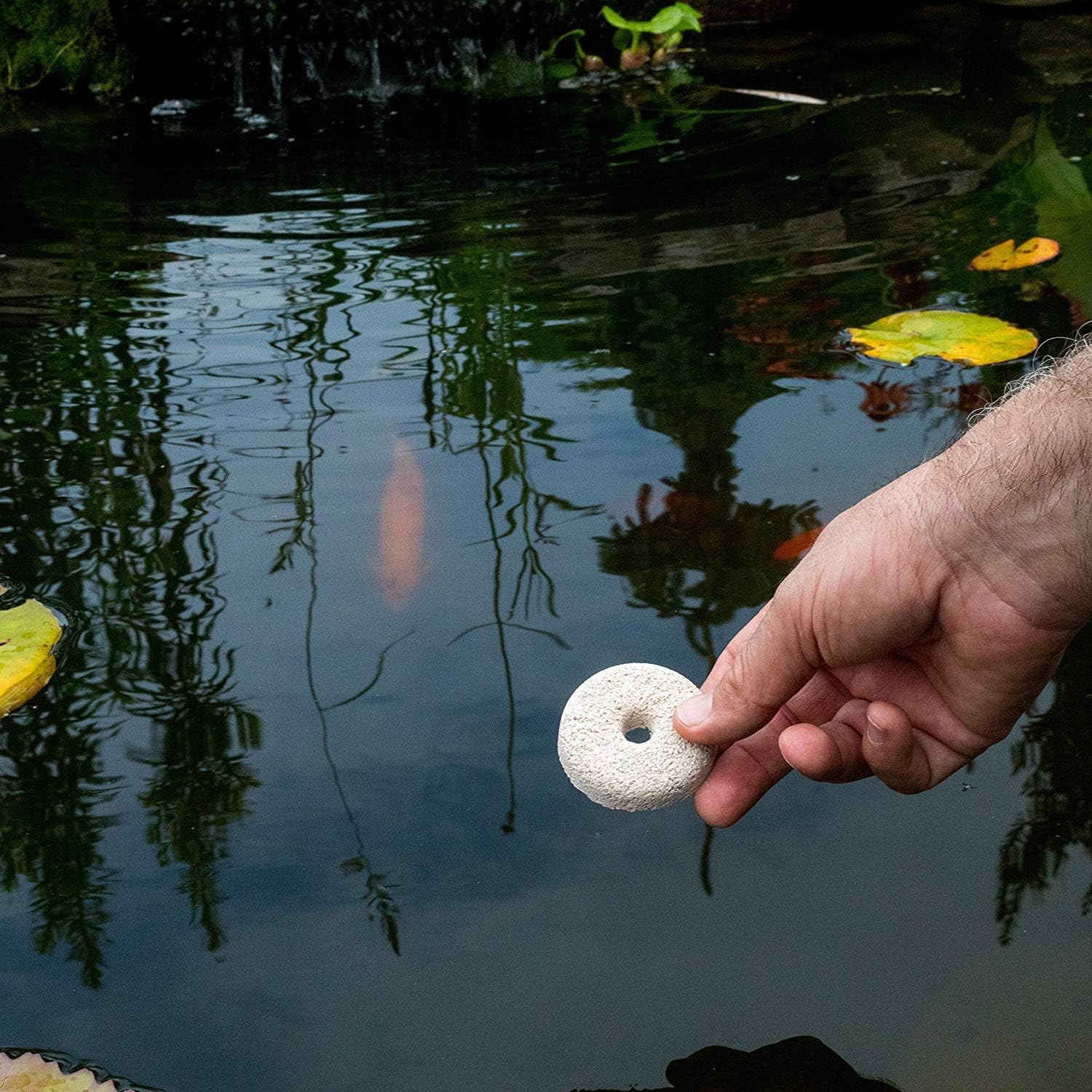
Larvicides (like Mosquito Dunks) work by releasing a biological agent — specifically Bacillus thuringiensis israelensis, or Bti — into standing water where mosquito larvae live. According to the U.S. Environmental Protection Agency, Office of Pesticide Programs, in their document “Bacillus thuringiensis israelensis (Bti): Ingredients Used in Pesticide Products,” Bti is lethal to mosquito and black fly larvae upon ingestion, is non-toxic to other wildlife, and breaks down naturally in the environment. The residual is measured in weeks from the moment a dunk begins dissolving. Summit labels its dunks at 30 days per application; the key variables are water volume, turnover rate, and whether sunlight is accelerating Bti degradation.
Adulticide sprays and concentrates work by depositing a thin layer of active ingredient — most commonly a pyrethrin or synthetic pyrethroid like permethrin or lambda-cyhalothrin — on vegetation, where resting adult mosquitoes make contact with it. According to the National Pesticide Information Center’s “Permethrin General Fact Sheet” (NPIC, Oregon State University, in cooperation with the U.S. EPA), permethrin residuals on vegetation degrade via UV light exposure, rainfall, and plant surface chemistry, with typical real-world residual in the range of one to four weeks depending on environmental conditions.
Space sprays and fogger concentrates are designed for knockdown — immediate kill of airborne adults — not long residual. They rely on fine droplets reaching mosquitoes in flight or at rest. The residual is measured in hours, not weeks.
Understanding this three-way split is the first decision frame: if you’re treating a swamp-adjacent property with a rotating mosquito population, a space spray alone will never solve the problem. You need source reduction (dunks) plus residual surface spray plus tactical knockdown for events.
Product-by-Product Residual Reality Check
Summit Mosquito Dunks — The Larvicide Anchor
Summit Mosquito Dunks are the most straightforward product in this comparison because their mode of action is well-documented and their residual is relatively predictable. Owners consistently report noticeably fewer adult mosquitoes after treating standing water sources — a result that tracks with the mechanism: kill the larvae, reduce the adult population in 7–10 days as the current generation fails to emerge.
The 30-day label claim holds up in static, shaded water — think a neglected rain barrel or a dense planter saucer with no sun exposure. In open, sunny containers, the Bti degrades faster, and effective kill tapers off closer to two to three weeks. The UC IPM Program, University of California Agriculture and Natural Resources, in their pest management guidelines document “Mosquitoes: Pest Management Guidelines for Homes and Landscapes,” identifies UV degradation as the primary field variable affecting Bti effectiveness in shallow, exposed water.
One widely praised practical feature: dunks can be broken into pieces for small containers like planter saucers, window boxes, or pond margins. This allows accurate dosing without wasting product — important when you’re treating dozens of small sources across a large property. Half a dunk in a five-gallon planter is proportionally appropriate and will refresh faster at lower cost than a whole dunk.
What dunks can’t do: They have zero effect on adult mosquitoes already flying. Dunks are prevention, not rescue treatment. The biology supports this entirely, and honest field use confirms it.
Summit...responsible
$8.58
In stock on Amazon
Check price on AmazonCutter Backyard Bug Control Concentrate — The Workhorse Surface Spray
Cutter concentrate uses a lambda-cyhalothrin base and is designed to be diluted and applied via hose-end sprayer to lawn, shrubs, and landscaping — the resting sites where adult mosquitoes spend most of their day. The label suggests up to eight weeks of residual.
Real-world owner reports in high-pressure regions — Florida, coastal Georgia, Wisconsin lake properties — consistently put effective residual closer to three to four weeks, not eight. Rainfall is the primary culprit: a heavy thunderstorm will wash active ingredient off grass blades faster than label assumptions account for. The Centers for Disease Control and Prevention, Division of Vector-Borne Diseases, in their guidance document “Integrated Mosquito Management,” recommends combined approaches rather than single-product programs specifically because environmental factors routinely compress real-world residuals below label maximums.
The mixing question is critical. Mixing Cutter stronger than label directions is both legally prohibited under FIFRA — pesticide labels carry the force of federal law — and practically counterproductive. Exceeding label concentration does not extend how long residual lasts on vegetation; it only raises surface concentration at application, which then degrades at the same UV and rainfall rate. If you need longer coverage, the correct answer is shorter reapplication intervals or a different active ingredient with documented longer surface persistence, not a stronger mix.

OFF!
$14.49
In stock on Amazon
Check price on AmazonOFF! Yard Fogger — Tactical Knockdown, Not a Season Solution
OFF! Yard Fogger is a pressurized aerosol space spray: it generates a cloud of pyrethrin-based active ingredient that knocks down adult mosquitoes in its immediate area. The CDC’s vector management guidance draws a clear distinction between space sprays designed for immediate knockdown and residual sprays designed for lasting surface deposits. OFF! fogger falls firmly in the knockdown category.
Owners in dense-mosquito environments — New Hampshire lakefront properties, Minnesota cabin country — describe its role accurately: spray the area 15–20 minutes before an outdoor gathering, get one to two hours of meaningful reduction, then reapply if the event continues. It is a perimeter event tool, not a seasonal installation. The active ingredient at aerosol concentration does not persist on plant surfaces long enough to function as a residual treatment.
A commonly asked question: does it work against ticks and black flies? Pyrethrins have contact activity against both, but the aerosol droplet pattern is not designed for the ground-level and brush-edge environments where ticks live. The National Pesticide Information Center’s “Pyrethrins General Fact Sheet” (NPIC, Oregon State University, in cooperation with the U.S. EPA) notes that aerosol applications provide only brief exposure to organisms on soil or dense low vegetation. For ticks, a directed permethrin surface spray to brush edges and leaf litter is the more appropriate tool.
Summit...responsible
$8.58
In stock on Amazon
Check price on AmazonULD BP-100 Concentrate — High-Performance, Higher Investment
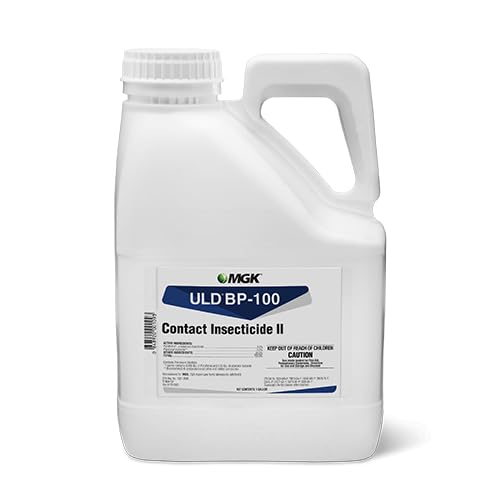
ULD BP-100 is a professional-grade concentrate combining multiple active ingredients, including permethrin, in an oil-based carrier designed for ULV cold fogger application. Field users describe stronger tick and wasp knockdown alongside mosquito control compared to water-based concentrates, with some property owners reporting a single perimeter application with near-zero tick encounters sustained through a full summer season.
The tradeoffs are real: it is thick, it is expensive per unit volume, and the oil-based carrier requires compatibility checks with your specific fogger’s pump and tubing materials before purchase. The National Pesticide Information Center’s “Permethrin General Fact Sheet” notes that oil-based carriers can improve surface adhesion relative to water-based formulations, which supports the longer residual reports from field users. Surface adhesion means less wash-off per rain event, which is the primary reason oil-based permethrin products tend to outperform water-based alternatives in wet climates.
Pet and plant safety: Per the National Pesticide Information Center’s “Permethrin General Fact Sheet,” treated areas should be allowed to dry completely before pets re-enter. Permethrin is a well-documented feline toxin; surfaces cats regularly contact, sleep on, or groom from must be strictly avoided. For garden plants, the oil carrier can cause phytotoxicity on sensitive species — test a small area first, apply in early morning when temperatures are lower, and avoid direct application to the edible portions of food crops.
ULD
$99.95
In stock on Amazon
Check price on AmazonBlack Flag Fogging Insecticide — Match to Your Equipment First
Black Flag RTU fogging insecticide is labeled specifically for thermal foggers. This distinction matters more than it might initially appear. Thermal foggers vaporize solution using heat; cold ULV foggers atomize solution using a high-speed fan or pressurized air. The droplet physics and particle size — measured as volume median diameter — differ substantially between the two systems, and those differences affect coverage, penetration, and kill efficiency.
Black Flag’s formulation is designed to vaporize cleanly at thermal fogger temperatures. Running it through a cold ULV fogger will not generate the correct droplet size for effective mosquito knockdown, and petroleum-based carriers not engineered for cold atomization can damage impeller fans and seals in electric ULV units over time. Owners who mismatched this product to cold fogger equipment reported poor coverage and in some cases equipment wear. If you’re running a cold ULV unit, use a concentrate explicitly rated and labeled for cold fogging applications and verify pump and seal material compatibility before purchase.
OFF!
$14.49
In stock on Amazon
Check price on AmazonSide-by-Side Residual Comparison
| Product | Claimed Residual | Realistic Field Residual | Mode of Action | Tier |
|---|---|---|---|---|
| Summit Mosquito Dunks | 30 days | 14–30 days (UV/water turnover dependent) | Larvicide (Bti) | Summit…responsible — $8.58 |
| Cutter Backyard Concentrate | Up to 8 weeks | 3–4 weeks in rain/heat | Adulticide surface deposit | OFF! — $14.49 |
| OFF! Yard Fogger | 2–6 hours | 1–2 hours | Knockdown space spray | Summit…responsible — $8.58 |
| ULD BP-100 Concentrate | 4–8 weeks | 4–6 weeks per field reports | Adulticide surface deposit (ULV) | ULD — $99.95 |
| Black Flag Fogging Insecticide | Hours | Hours | Knockdown (thermal only) | OFF! — $14.49 |
Frequently Asked Questions
How long do Mosquito Dunks actually keep working in a bucket or planter? In a shaded, static container like a covered rain barrel, the 30-day label claim is realistic. In open, sunny planters or containers that receive regular water refills, effective Bti activity typically drops to 14–21 days. Break dunks into half or quarter pieces for containers under five gallons — you’ll get proportional dosing and can refresh more frequently without wasting product.
Can I mix Cutter concentrate stronger than the label says for heavy mosquito pressure? No, and not just because exceeding label rates is a federal violation under FIFRA — it genuinely won’t extend residual. Higher concentration at application degrades at the same UV and rainfall rate as a correctly mixed application. The right answer is shorter reapplication intervals, every two to three weeks instead of four, or adding a larvicide layer to reduce incoming adult populations from nearby breeding sources.
Does the OFF! yard fogger work against ticks and black flies? It has some contact activity against both but is not well-suited to either. Ticks live in leaf litter and brush edges at ground level; aerosol clouds do not penetrate those microhabitats effectively, as documented in the National Pesticide Information Center’s “Pyrethrins General Fact Sheet.” For ticks, a directed permethrin spray to brush margins is the more appropriate tool. For black flies, source management and personal repellents tend to outperform yard treatments.
Is ULD BP-100 safe to use around pets and garden plants? Allow treated areas to dry fully before pets return. Permethrin is particularly hazardous to cats — a well-documented toxicity described in the National Pesticide Information Center’s “Permethrin General Fact Sheet” — so treated surfaces cats sleep on or groom from must be strictly avoided. For garden plants, the oil-based carrier can cause phytotoxicity on sensitive foliage; test a small area, apply in cooler morning temperatures, and avoid direct application to edible portions of plants.
Can I use Black Flag fogging insecticide in a cold ULV fogger? The label specifies thermal fogger use, and that restriction is formulation-driven. Thermal fogger chemistry is designed to vaporize at heat; running it through a cold ULV unit can produce incorrect droplet sizes and risk damage to pump components. Use a concentrate explicitly formulated and labeled for cold ULV application if that’s your equipment.
How often should I reapply yard spray concentrate near a wetland? Every two to three weeks during peak season, not the six to eight weeks that “up to” label language might suggest. Wetland-adjacent properties face constant adult mosquito immigration from untreatable off-property breeding sites. No surface spray interrupts that influx — it only reduces the population that lands and rests on your treated vegetation. The Centers for Disease Control and Prevention’s “Integrated Mosquito Management” guidance specifically recommends layered approaches for high-pressure sites: dunks in every controllable water source, a fresh surface spray cycle every two to three weeks, and space sprays deployed tactically for events.
The Decision Frame: If X, Then Y
If your primary mosquito source is identifiable standing water on your property — planters, barrels, birdbaths, low spots — start with dunks and eliminate the breeding problem first. Surface sprays layered over active breeding sites treat symptoms, not causes.
If you’ve addressed standing water but still face high adult pressure from neighboring wetlands, a permethrin-based concentrate on a two-to-three-week cycle is your workhorse. ULD BP-100 is worth the cost premium if you’re running a ULV fogger and treating a large area; Cutter concentrate is the appropriate choice for hose-end application on smaller residential properties.
If you’re managing a single event — a Saturday afternoon cookout, a wedding tent, a restaurant patio opening — a space spray like OFF! Yard Fogger is the right tool for the right window. Don’t expect it to function as a season-long solution.
If you run a thermal fogger and want a tested commercial RTU option, Black Flag fogging insecticide matches the equipment. If you run a cold ULV fogger, source a concentrate rated explicitly for cold atomization and verify pump material compatibility before you buy.
The pattern across all five products is consistent: honest residual expectations, correct equipment matching, and a layered application strategy will outperform any single product used in isolation. That’s not hedging — it’s what the biology, the regulatory guidance from the EPA and CDC, and the field data collectively support.