August 4, 2026 • Elena Garcia • 12 min reading time • Specs verified June 25, 2026
Garden-Hose Misting Kits vs. Booster Pumps: When Low Pressure Is Enough and When It Isn't
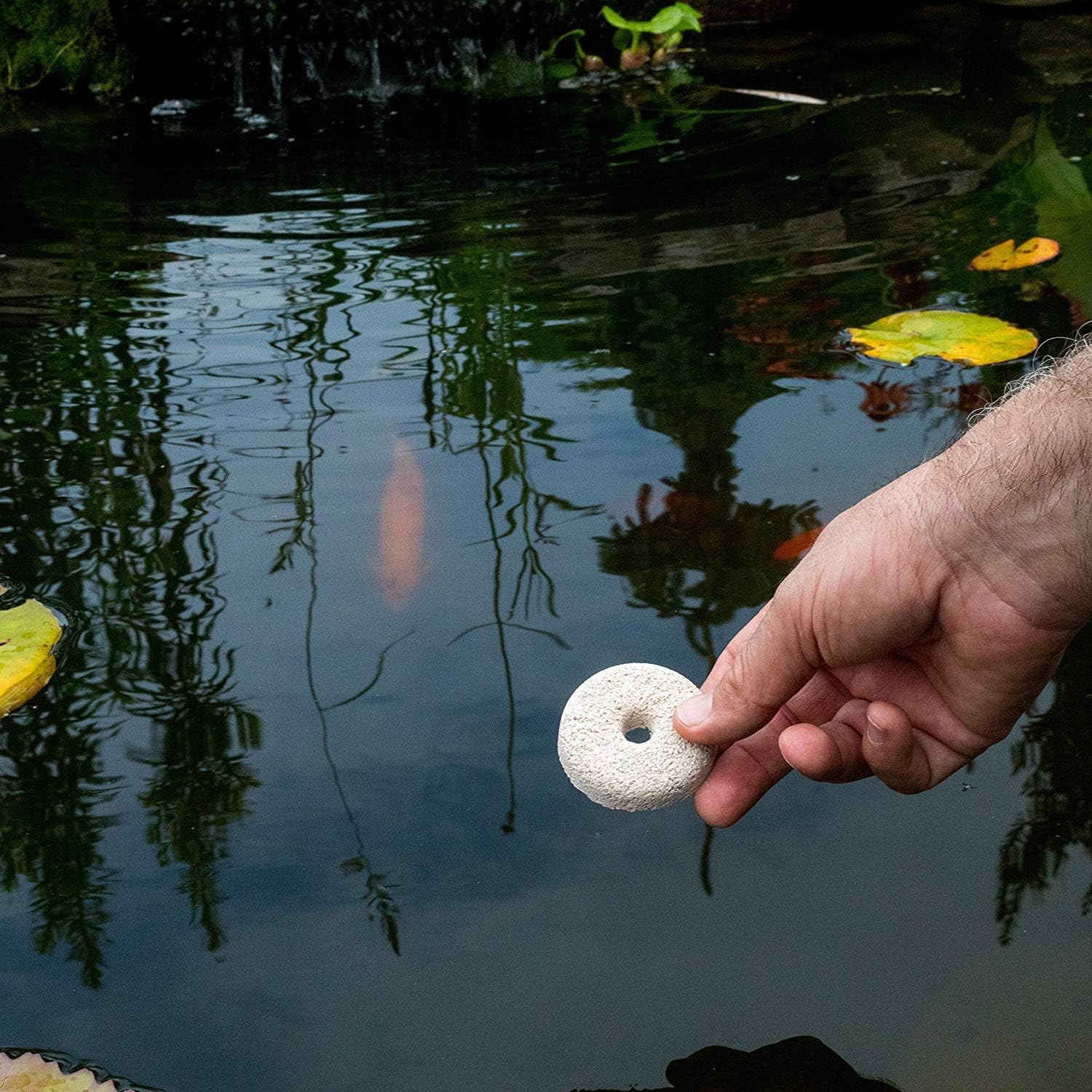
A misting system is exactly what it sounds like: a network of small nozzles connected by tubing that breaks water into a fine spray, cooling the surrounding air through evaporation. You’ve probably walked past one at a restaurant patio or theme park. The residential version — what this article is about — typically connects directly to a standard garden hose, which delivers water at roughly 40–60 PSI (pounds per square inch) depending on your municipal supply. That “garden-hose pressure” tier of kit costs $30–$120 and works well in a lot of situations. But buyers in hot, low-humidity climates like Phoenix, Tucson, or central Texas keep running into the same problem: the mist isn’t fine enough, the droplets don’t evaporate before they land, and people or furniture end up wet. The solution — adding a booster pump that raises line pressure to 80–160 PSI — costs more and adds complexity. This guide will help you decide which situation you’re actually in, walk through the underlying physics, and flag the real-world failure modes that field buyers consistently surface.
| EDITOR'S PICKOrbit Arizona Mist 92100 Booste… | Mid-tierhomenote Misting Cooling System… | Budget pickSummit...responsible solutions… | |
|---|---|---|---|
| Hose fit | — | 3/4" brass adapter | — |
| Nozzle count | — | 28 | — |
| Run length | — | 75 ft / 23 m | — |
| Booster pump | ✓ | ✗ | ✗ |
| Pre-assembled | — | ✓ | — |
| Primary use | Boosts pressure | Misting / cooling | Mosquito control |
| Price | $128.99 | $26.35 | $8.58 |
| See on Amazon → | See on Amazon → | See on Amazon → |
What “Pressure” Actually Changes — and Why Desert Climates Expose the Gap
The core physics here is straightforward. Droplet size — measured as VMD, or volume median diameter, the point at which half your water volume is in smaller drops and half is in larger ones — shrinks as pressure increases. At garden-hose pressure (40–60 PSI), most residential nozzles produce droplets in the 50–100 micron range. At booster-pump pressure (100–160 PSI), well-matched nozzles can push that down to 10–30 microns. That matters because smaller droplets have a dramatically higher surface-area-to-volume ratio, which means they evaporate faster — often before they travel more than a foot from the nozzle.
In a climate with 50–60% relative humidity (think coastal California or the mid-Atlantic in summer), evaporation is already slow enough that even 60-micron droplets may evaporate before landing. You get pleasant cooling, and the system works as advertised. In Phoenix in July, where afternoon relative humidity can drop below 10%, evaporation is aggressive — but the droplets need to be small enough to catch it. A 90-micron droplet at 45 PSI in that environment often hits a chair cushion before it has time to flash off. Buyers in hot climates surface this pattern constantly: “works great until it’s actually hot” is a shorthand worth taking seriously.
The University of California Cooperative Extension document Evaporative Cooling for California Agriculture makes this relationship explicit: effective flash evaporation in arid environments requires finer atomization than ambient-humidity environments, and achieving that fine atomization from a fixed-orifice nozzle requires higher operating pressure.
By the numbers:
| Pressure Range | Typical VMD | Effective Cooling Band (RH) | Wetness Risk |
|---|---|---|---|
| 30–60 PSI (garden hose) | 60–120 µm | RH 40%+ | Moderate–High in dry climates |
| 80–120 PSI (entry booster) | 30–60 µm | RH 20%+ | Low–Moderate |
| 150–250 PSI (mid-pressure system) | 10–30 µm | RH 10%+ | Very Low |
The takeaway: if you’re in a high-humidity region, the low-pressure kit probably solves your problem. If you’re in an arid region, it might not — and adding a booster pump is the minimum meaningful intervention.
Kit-Level Performance: Where Garden-Hose Pressure Delivers and Where It Doesn’t
The Mild-Climate Case
Entry-level garden-hose misting kits draw a consistent pattern of satisfied buyers in the Pacific Northwest, the Midwest, and coastal regions. In these climates, ambient humidity does some of the evaporative work, and the difference between 50 PSI and 100 PSI is less consequential. Greenhouse Grower magazine’s coverage of humidity management in controlled cultivation environments notes a related principle: in already-humid spaces, coarser droplets can be deliberately useful for boosting moisture levels rather than purely cooling through evaporation.
For a homeowner running 15–20 nozzles across a 200-square-foot patio in a 65% humidity environment, a kit that runs directly off municipal supply pressure is genuinely sufficient — and the all-in cost of $60–$90 is hard to argue with.
Summit...responsible
$8.58
In stock on Amazon
Check price on AmazonWhere the Cracks Show
A recurring pattern in buyer accounts of entry-level misting kits is the mid-season realization that a pump is needed — not because the kit is poorly built, but because the buyer discovered post-installation that the physics don’t match their climate. That’s the gap this article exists to close. Someone noting they plan to add a pump after purchase is essentially real-time data: they did the research after installation rather than before.
The plastic nozzles on most entry kits compound the problem. At garden-hose pressure, plastic nozzles perform adequately. Under booster-pump pressure, orifice geometry matters more — and plastic nozzles sized for 40–50 PSI don’t produce the same spray pattern at 100 PSI. If you’re planning to eventually add a pump, buy a kit with brass nozzles from the start, or purchase the nozzles separately.
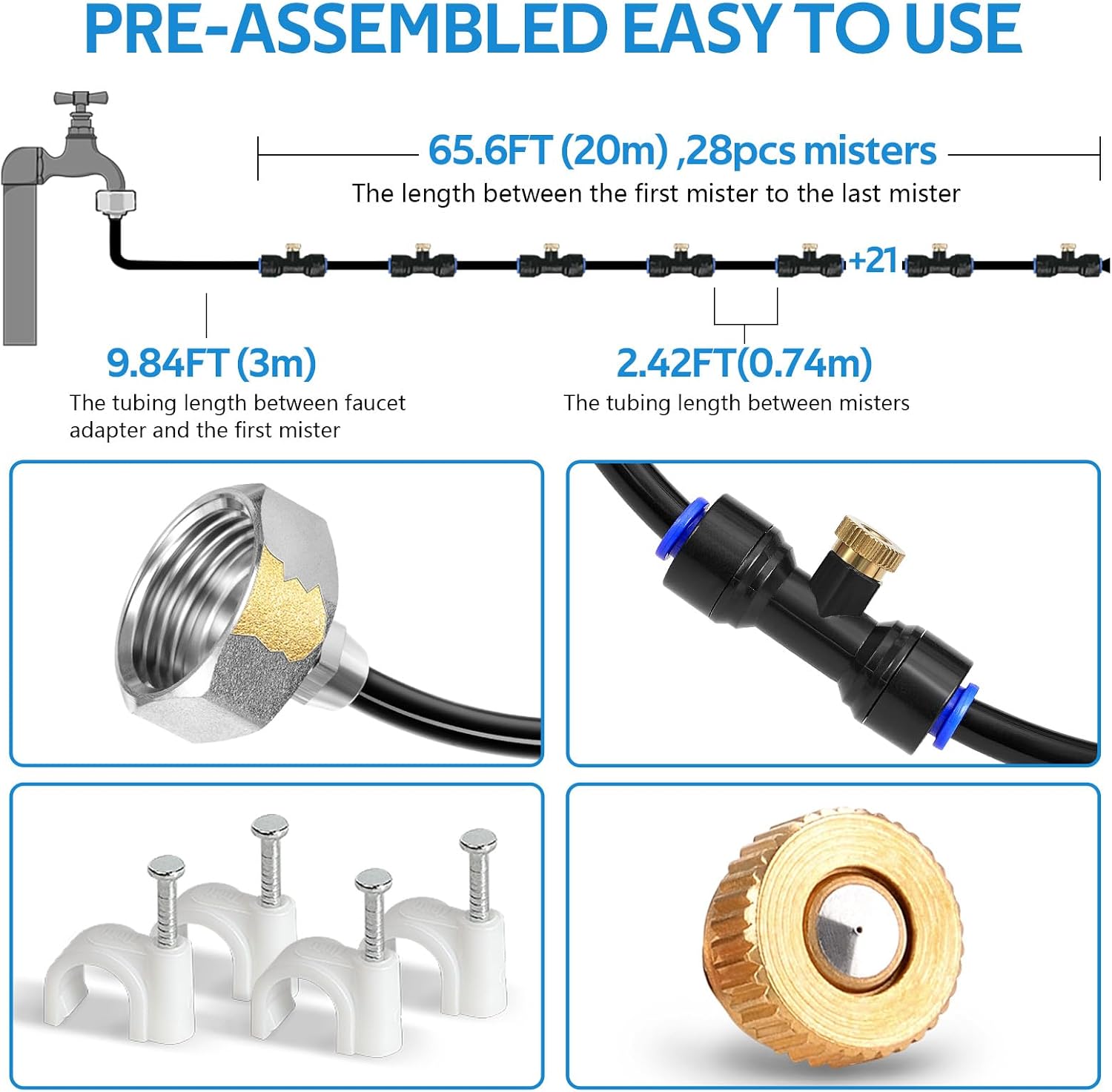
homenote 23M
$26.35
In stock on Amazon
Check price on AmazonWhen to Skip the Entry Tier Entirely
If you’re in an arid climate and your primary goal is dry evaporative cooling — meaning you want meaningful temperature reduction without wetting people, furniture, or plant foliage — the honest answer is that a garden-hose kit alone is unlikely to fully deliver. In that case, starting with a booster-capable setup from day one saves money and frustration compared to buying a low-pressure kit and retrofitting it within the same season.

Orbit
$128.99
In stock on Amazon
Check price on AmazonBooster Pumps: The Orbit Arizona Mist Case Study and the Overheating Problem
The Orbit Arizona Mist booster pump generates the most consistently credible positive field reports in the residential booster category for 2025–2026. A Phoenix owner running 20 nozzles across horse stalls describes it as the only pump in its price range that reliably does what it claims — meaningful because Phoenix horse-property use represents nearly the hardest climate-application combination in the continental US: extreme ambient heat, low humidity, and long daily runtimes. That’s a genuine stress case, not a casual patio setup.
The specification picture supports the pattern: the Orbit Arizona Mist pump is rated to push system pressure into the 70–100 PSI range on residential supply, and its duty cycle is designed for extended outdoor operation.
But there’s an honest counterweight. Residential booster pumps sold into the greenhouse and equestrian market — including several mid-pressure diaphragm units popular with small commercial growers — include documented reports of overheating in extreme-heat outdoor installations. This isn’t unusual: centrifugal and diaphragm pumps generate heat during operation, and in an outdoor installation where ambient temperatures may already exceed 100°F, thermal management becomes a design constraint, not an afterthought. The same pump that earns praise from a greenhouse grower operating in a shaded, actively ventilated structure can fail for a buyer who mounts it in direct sun on a south-facing fence in Tucson.
This Old House’s outdoor installation guidance for pressure-pump equipment consistently emphasizes thermal clearance as a leading field-failure driver — a point worth taking seriously before you choose a mounting location.
The lesson is situational, not a verdict on any single product: where you mount the pump matters as much as which pump you buy. Shade the motor, ensure airflow around the housing, and don’t mount it flush against a heat-absorbing masonry or metal surface.
Can You Add a Pump to Any Kit?
Almost always yes — with caveats. Most garden-hose misting kits use standard 1/4” or 3/8” compression fittings on their inlet side. A booster pump with a matching outlet fitting threads in without modification. The real compatibility questions are:
- Nozzle orifice sizing. Nozzles calibrated for 40–60 PSI will flow differently at 100 PSI. Some will atomize beautifully; others will mist inconsistently or build upstream pressure that stresses fittings. Manufacturers typically rate nozzles at a specific operating pressure; use that rating as your ceiling.
- Tubing material. The thin PE (polyethylene) tubing in entry kits is often rated to 100–150 PSI burst, but sustained operating pressure near that ceiling — especially in UV-degraded tubing — is a failure point. More on this below.
- Fitting threads. Standard kits use compression fittings that work across brands. Proprietary push-lock fittings, common on some imported kits, may require adapters.
Brass Nozzles, UV Degradation, and Scale-Buying Signals
Brass vs. Plastic: The Maintenance Argument
The consistently positive signal around brass nozzles in long-run buyer accounts isn’t about atomization performance at equivalent pressures — it’s about serviceability. Brass nozzles disassemble. You can soak them in a descaling solution (diluted citric acid or white vinegar), clear the orifice with a soft bristle, reassemble, and return to spec. Plastic nozzles clog and get thrown away. In any installation running more than a few months in hard-water territory — which includes most of Arizona, Texas, Nevada, and California’s Central Valley — calcium and mineral deposits will clog nozzles. That’s not a defect; it’s chemistry. Brass handles it economically; plastic makes it a disposable-consumption cycle.
For buyers purchasing in bulk — 72-piece nozzle packs are common for commercial and semi-commercial greenhouse builds — quality-control distribution matters. Buyers who purchase at that scale consistently report two to four defective nozzles per 72-piece pack: off-center orifices, cross-threaded fittings, incomplete washer seating. For a 10-nozzle backyard install, one bad nozzle is annoying. For a 200-nozzle greenhouse row, a 3% defect rate is a planning input — order 10–15% over your target count and inspect before installation.
UV Degradation of Tubing
The EPA’s outdoor water use publication Residential Outdoor Water Use in the United States and materials data from irrigation manufacturers converge on a consistent finding: standard black PE tubing in direct sun loses meaningful tensile strength and flexibility within 18–36 months in high-UV climates. The visible sign is surface crazing and cracking, usually starting at fittings where mechanical stress concentrates. In Arizona or Southern California, this is a maintenance cycle, not a product defect.
UV-stabilized tubing — sometimes marketed as “UV-resistant” or formulated with carbon black at higher concentrations — extends that service interval to roughly 4–6 years under comparable conditions. The price premium is small, typically $0.05–$0.10 per foot, and worth it for any permanent or semi-permanent installation.
Frequently Asked Questions
Will a garden-hose misting kit work in Arizona or Texas heat without a pump?
It depends on what “work” means to you. A garden-hose kit will produce mist and some cooling in those climates. But in the hottest, driest hours of the day, the droplets are often too large to evaporate before landing — meaning you’ll wet furniture, people, or surfaces. If your primary goal is dry evaporative cooling, garden-hose pressure alone is unlikely to fully deliver in arid climates. A booster pump pushing 80–100 PSI is the practical minimum for reliable dry-mist performance in those conditions.
What PSI do I need to get a truly dry, fine mist?
For most residential applications in arid climates, 100 PSI is the practical entry point for reliably dry mist at typical residential nozzle sizes. Higher-end systems running 150–250 PSI produce sub-30 micron droplets that are nearly invisible and rarely land wet. The Orbit Arizona Mist booster and comparable residential pumps typically operate in the 70–100 PSI output range — sufficient for most patio and equestrian applications, though not equivalent to a purpose-built high-pressure commercial system.
How do I clean clogged brass misting nozzles?
Remove the nozzle from the fitting. Soak it for 30–60 minutes in a diluted citric acid solution (one to two tablespoons per cup of warm water) or white vinegar. Use a soft bristle brush — not a metal tool, which will enlarge or deform the orifice — to clear loosened deposits. Rinse thoroughly. If the orifice remains restricted, a single strand of thin nylon filament (not a pin or needle) can clear stubborn blockage without damaging orifice geometry. In hard-water climates, a monthly or bimonthly cleaning interval extends nozzle life significantly.
Can I add a booster pump to any garden-hose misting kit?
Most garden-hose misting kits accept a booster pump inline without requiring a purpose-matched system, provided you verify fitting compatibility and that your nozzles are rated for the increased pressure. The main incompatibility risks are proprietary fittings and nozzles sized only for low-pressure operation. If you plan to run a pump from day one, starting with a kit that includes brass nozzles and higher-rated tubing is worth the modest additional cost.
How many nozzles can the Orbit Arizona Mist booster pump handle?
Field reports describe successful operation across 15–20 nozzles — a 20-nozzle horse-stall installation in Phoenix is the most cited upper-bound data point. Beyond that range, flow demand exceeds what the pump can sustain at target pressure, and mist quality at the far end of the run degrades. If your layout requires more than 20 nozzles, either zone the system into two circuits or step up to a higher-capacity commercial pump.
Does the tubing on entry-level kits crack or degrade in UV-heavy climates?
Yes, and it’s worth planning for. Standard PE tubing in direct high-UV sun typically shows cracking and embrittlement within 18–36 months, with fittings as the first failure point. This is a material science limitation of non-UV-stabilized polyethylene, not a defect specific to inexpensive kits. In Arizona, Southern California, or similar environments, look for UV-stabilized tubing, replace tubing at the first sign of surface crazing rather than waiting for a full failure, and route runs in partial shade where your layout allows.
The Decision Rule
If you’re still deciding:
-
High-humidity climate (RH consistently above 45%), fewer than 20 nozzles, standard patio: A quality garden-hose misting kit is very likely sufficient. Spend on brass nozzles and UV-resistant tubing rather than a pump you may not need.
-
Arid climate (Arizona, West Texas, Nevada, Southern California’s inland valleys) or primary goal is dry evaporative cooling: Budget for a booster pump from the start. The Orbit Arizona Mist is the most field-validated residential option in its price tier. Mount it in shade, ensure thermal clearance, and size your nozzle count to stay within its rated flow.
-
Greenhouse, equestrian facility, or commercial outdoor venue with 20+ nozzles and hours of daily runtime: A residential booster pump is an undersized solution. Purpose-built mid-pressure systems from commercial irrigation suppliers are the correct reference category, and the total-cost-of-ownership math changes substantially at that scale. Greenhouse Grower magazine’s equipment coverage is a useful starting point for evaluating commercial-tier options.
The pressure question always comes back to the same variable: what does the air around your nozzles actually want to do with the water? In humid climates, it’s forgiving. In desert climates, it isn’t. Match the system to the physics of your location, not to the sticker price you’d prefer to pay.